
Weight Loss Medication Canada
Medically reviewed by Dr. Sarah Mitchell, RPh, Clinical Pharmacist — Updated April 2026
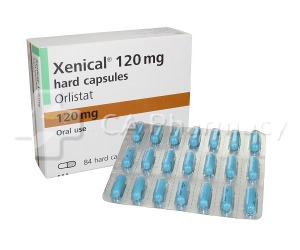
Obesity is one of Canada's most significant public health challenges — affecting approximately 27.6% of Canadian adults (roughly 8 million people) according to Statistics Canada, with an additional 36.3% classified as overweight. Obesity is directly associated with increased risk of type 2 diabetes, cardiovascular disease, hypertension, obstructive sleep apnea, certain cancers, and musculoskeletal conditions — making effective medical weight management a clinical priority in Canadian healthcare. This category offers Xenical Generic (Orlistat 120mg) — the only prescription gastrointestinal lipase inhibitor approved by Health Canada for the long-term medical management of obesity, acting directly in the intestinal lumen to block the absorption of approximately 30% of ingested dietary fat. From $1.75 per pill — with discreet delivery to all Canadian provinces and territories in 4 to 9 business days. A valid Canadian prescription is required.
Our Weight Loss Product
| Product | Active Ingredient | Drug Class | Mechanism | Average Weight Loss (1 year) | From |
|---|---|---|---|---|---|
| Xenical Generic | Orlistat 120mg | Gastrointestinal lipase inhibitor | Blocks ~30% of dietary fat absorption in the intestine | ~5–7% of body weight (vs 1–3% with placebo) | $1.75/pill |
Xenical Generic (Orlistat) — How It Works
Xenical Generic (Orlistat 120mg) works through a unique mechanism that is entirely distinct from appetite suppressants, stimulants, or hormonal weight loss drugs — it acts locally in the gastrointestinal tract without significant systemic absorption.
Mechanism — pancreatic and gastric lipase inhibition: Dietary triglycerides (fats) cannot be absorbed directly through the intestinal wall — they must first be hydrolysed (broken down) into free fatty acids and monoglycerides by pancreatic lipase and gastric lipase enzymes in the intestinal lumen. Orlistat forms a stable covalent bond with the active serine residue of these lipase enzymes, irreversibly inhibiting their activity. With lipase inhibited, approximately 30% of ingested dietary fat passes through the intestine undigested and is excreted in the faeces rather than absorbed into the bloodstream — creating a caloric deficit of approximately 150 to 200 kcal per day at a standard fat intake. The unabsorbed fat is eliminated in the stool.
Why minimal systemic absorption is a key safety advantage: Because orlistat acts locally in the intestinal lumen and is minimally absorbed systemically (less than 1% of an oral dose reaches systemic circulation), it does not affect the central nervous system, cardiovascular system, or hormonal axes. This distinguishes orlistat from older weight loss medications (fenfluramine, sibutramine) that had significant central or cardiovascular effects and were withdrawn from the market. Orlistat's lack of systemic activity means it does not cause the palpitations, insomnia, elevated blood pressure, or psychiatric effects associated with stimulant-based weight loss agents.
Health Canada Eligibility Criteria — Who Qualifies for Orlistat
Xenical (orlistat 120mg) is approved by Health Canada for adults who meet specific clinical criteria — it is not appropriate for all patients seeking weight loss:
- BMI ≥ 30 kg/m² (obesity): Primary indication — Canadian adults with a body mass index of 30 or higher qualify for orlistat treatment
- BMI ≥ 27 kg/m² with obesity-related comorbidities: Adults with BMI 27–29.9 who also have at least one weight-related comorbidity also qualify. Relevant comorbidities include: type 2 diabetes, hypertension (high blood pressure), dyslipidaemia (elevated cholesterol/triglycerides), obstructive sleep apnea, non-alcoholic fatty liver disease (NAFLD), osteoarthritis, or polycystic ovary syndrome (PCOS)
- Combined with diet and exercise: Orlistat is not a standalone treatment — Health Canada approval is specifically for use in conjunction with a reduced-calorie diet and increased physical activity. Clinical trials consistently show that orlistat combined with lifestyle intervention produces significantly greater weight loss than lifestyle intervention alone
- Adults 18 years and older: Orlistat 120mg is approved for adults; the OTC version (orlistat 60mg — Alli) is approved for adults and adolescents 12+ in some jurisdictions but is not the same product as Xenical Generic
Contraindications — who should NOT take orlistat:
- Chronic malabsorption syndrome (e.g., Crohn's disease with significant small bowel involvement, short bowel syndrome)
- Cholestasis (impaired bile flow — biliary obstruction)
- Pregnancy and breastfeeding — orlistat is not recommended
- Known hypersensitivity to orlistat or any excipient
- Organ transplant recipients on cyclosporin — orlistat significantly reduces cyclosporin absorption (see drug interactions)
Obesity in Canada — Clinical Context
Canadian obesity rates have risen substantially over the past three decades. Key Canadian statistics from Statistics Canada and the Public Health Agency of Canada:
- 27.6% of Canadian adults are classified as obese (BMI ≥30)
- 36.3% are classified as overweight (BMI 25–29.9)
- Combined, approximately 64% of Canadian adults have a BMI above the healthy range
- Obesity costs the Canadian healthcare system an estimated $4.6 billion annually in direct healthcare costs
- Adults with obesity have 5 to 7 times the risk of developing type 2 diabetes compared to normal-weight adults
- Obesity is the leading preventable risk factor for multiple cancers, including breast, colorectal, endometrial, and kidney cancer
Canadian clinical practice guidelines for obesity management (Obesity Canada, Canadian Medical Association) emphasise that obesity is a chronic, multifactorial medical condition — not a lifestyle choice — requiring evidence-based medical management combining dietary and physical activity counselling, behavioural support, pharmacotherapy when indicated, and bariatric surgery for severe cases. Orlistat is one of several pharmacotherapy options that Canadian physicians use within this comprehensive framework.
Xenical Generic vs Other Weight Loss Medications Available in Canada
Canadian patients frequently ask how orlistat compares to other weight management medications. The landscape of approved weight loss medications in Canada has evolved significantly:
| Xenical/Orlistat (Xenical Generic) | GLP-1 Receptor Agonists (Ozempic/Wegovy — semaglutide; Saxenda — liraglutide) | Contrave (Naltrexone/Bupropion) | |
|---|---|---|---|
| Mechanism | Intestinal lipase inhibition — blocks fat absorption | GLP-1 receptor agonism — reduces appetite and food intake via central and peripheral pathways | Opioid antagonist + dopamine/norepinephrine reuptake inhibitor — reduces appetite and food cravings |
| Route of administration | Oral tablet — 3× daily with meals | Subcutaneous injection (weekly for semaglutide; daily for liraglutide) | Oral tablet — twice daily |
| Average weight loss (1 year) | ~5–7% of body weight | ~15–20% (semaglutide 2.4mg); ~7–8% (liraglutide 3mg) | ~5–6% of body weight |
| Cardiovascular benefits | Modest lipid improvements (LDL reduction) | Significant CV risk reduction demonstrated in major trials (LEADER, SUSTAIN-6, SELECT) | Modest; no dedicated CV outcomes trial for weight indication |
| Main side effects | GI effects (oily stool, faecal urgency) — dose-dependent | Nausea, vomiting, diarrhoea (usually improve over time); injection site reactions | Nausea, constipation; contraindicated in seizure disorders, opioid use |
| Systemic absorption | Minimal — local GI action; no CNS effects | Systemic | Systemic |
| Canadian coverage (public) | Limited provincial coverage; generally out-of-pocket | Some provincial coverage (diabetes indication); expanding for obesity | Limited coverage |
| Available at drugs-canada.com | Yes — from $1.75/pill | Not currently available (separate products) | Not currently available |
Important context: GLP-1 receptor agonists (semaglutide/Ozempic/Wegovy, liraglutide/Saxenda) represent a major advance in obesity pharmacotherapy — producing substantially greater weight loss than orlistat. However, they require injection, are substantially more expensive, carry supply availability challenges in Canada (ongoing Ozempic shortages), and have different side effect profiles. Orlistat remains a relevant, affordable oral option for patients who: prefer oral medication, cannot tolerate or afford GLP-1 agents, have primarily high-fat dietary patterns, or require a medication that works peripherally without CNS effects. The best medication choice depends on individual patient factors — discuss with your Canadian physician.
Clinical Efficacy — What Canadian Patients Can Expect
Setting realistic expectations is critical for successful long-term orlistat use:
Clinical trial evidence (XENDOS trial and meta-analyses):
- The landmark XENDOS trial (4-year, 3,304 patients) demonstrated that orlistat 120mg three times daily + lifestyle intervention produced significantly greater weight loss than placebo + lifestyle: average 5.8kg weight loss vs 3.0kg with placebo at 4 years
- Orlistat reduced the incidence of new-onset type 2 diabetes by 37.3% compared to placebo in the XENDOS trial — a clinically meaningful risk reduction for patients with obesity and impaired glucose tolerance
- Meta-analyses of multiple trials: average additional weight loss vs placebo of approximately 2.5 to 3.4 kg at 12 months
- Approximately 57% of patients on orlistat lost ≥5% of body weight at 1 year, vs approximately 31% with placebo
- Additional cardiometabolic benefits: modest reduction in LDL cholesterol (independent of weight loss effect), modest reduction in blood pressure, improvement in glycaemic parameters in patients with impaired glucose tolerance
Important for Canadian patients: Orlistat produces modest weight loss compared to GLP-1 agents — its benefit is real and clinically meaningful (5–7% weight loss significantly reduces obesity-related health risks) but expectations must be calibrated to the evidence. Patients who eat a very low-fat diet will experience fewer GI side effects but also less benefit — orlistat's effect is directly proportional to dietary fat intake. Maximum benefit requires adherence to a reduced-calorie, moderate-fat diet combined with physical activity.
Dosing in Canada
Standard dose: Orlistat 120mg three times daily — one 120mg capsule with each main meal (breakfast, lunch, dinner) containing fat.
Timing of administration:
- Take immediately before, during, or up to 1 hour after each meal
- If a meal is skipped or contains no fat, omit that orlistat dose — there is no benefit from taking orlistat with a fat-free meal
- Take with a full glass of water
- Consistent daily dosing at all three main meals produces the best results
Duration of treatment: Orlistat is approved for long-term use in Canada. Assess effectiveness at 12 weeks — if 5% of initial body weight has not been lost by week 12, continued treatment is unlikely to be beneficial and the prescribing physician should reassess. Patients who respond well may continue indefinitely as part of long-term weight maintenance, in consultation with their physician.
Fat-soluble vitamin supplementation — essential: Because orlistat reduces fat absorption, it also reduces the absorption of fat-soluble vitamins: Vitamin A, Vitamin D, Vitamin E, and Vitamin K (the ADEK vitamins). All patients taking orlistat must take a daily multivitamin supplement containing fat-soluble vitamins. Take the multivitamin at least 2 hours before or after the orlistat dose (at bedtime is practical) to avoid the vitamin being caught in the reduced fat-absorption window.
Side Effects — What Canadians Need to Know
Orlistat's side effects are directly related to its mechanism of action — they occur because unabsorbed fat reaches the colon. The frequency and severity of GI side effects are proportional to the fat content of meals eaten while taking orlistat:
Very common — affecting >10% of patients, especially initially:
- Oily spotting from the rectum: Small amounts of oily, orange-coloured spots may appear on underwear — caused by unabsorbed fat. The most common orlistat side effect; can be managed by wearing dark underwear or pads during the first weeks
- Fatty/oily stools: Stools may appear greasy or oily due to fat content
- Faecal urgency: Sudden, urgent need to pass a bowel movement — can be socially disruptive if not anticipated. Most pronounced early in treatment and after high-fat meals
- Increased bowel movement frequency: More frequent stools than usual
- Flatulence with oily discharge: Passing wind accompanied by small amounts of oily liquid — an important side effect to anticipate; can be embarrassing if unexpected
- Abdominal discomfort and pain: Cramping, particularly after high-fat meals
Key practical management strategy — the "fat gram counting" approach: The single most effective way to minimise orlistat GI side effects is to limit dietary fat to approximately 30% of total caloric intake — equivalent to approximately 15g of fat per meal for a typical 2,000 kcal/day diet. Meals with more than 20g of fat reliably trigger significant GI effects. Many Canadian patients find that the GI consequences of orlistat act as a powerful real-time deterrent to high-fat food consumption — making the side effects part of the behavioural change mechanism.
Timeline of side effects: GI side effects are most pronounced in the first 1 to 4 weeks of treatment as the body adjusts. Most patients find side effects substantially diminish over time as they naturally adapt their dietary fat intake. Patients who maintain a consistently moderate-fat diet typically experience minimal ongoing GI disturbance after the initial period.
Serious — rare but important:
- Kidney stones (oxalate nephrolithiasis): Increased urinary oxalate excretion has been reported with orlistat — increasing kidney stone risk in susceptible patients. Risk is higher in patients with pre-existing renal disease, history of kidney stones, or inflammatory bowel disease. Adequate hydration (minimum 2 litres of water daily) is recommended; report flank pain or haematuria to a physician
- Liver injury: Rare cases of serious hepatic injury (hepatitis, liver failure) have been reported in post-marketing surveillance. Report jaundice, dark urine, or severe right upper quadrant abdominal pain immediately to a physician. Health Canada and the FDA have communicated on this rare but serious risk
- Fat-soluble vitamin deficiency: If multivitamin supplementation is not taken, deficiencies in Vitamins A, D, E, and K can develop with long-term orlistat use — with potential for night blindness (Vitamin A), osteoporosis (Vitamin D), coagulopathy (Vitamin K), and neurological effects (Vitamin E). Supplementation is not optional — it is essential
- Pancreatitis: Rare cases reported; report severe upper abdominal pain radiating to the back with nausea/vomiting to a physician urgently
Key Drug Interactions
- Ciclosporin (Cyclosporine) — major interaction, contraindicated: Orlistat significantly reduces ciclosporin oral bioavailability by up to 50% — by reducing fat absorption that is necessary for ciclosporin's absorption. This can lead to therapeutic failure of ciclosporin immunosuppression in transplant patients, with risk of organ rejection. Orlistat is contraindicated in transplant patients on ciclosporin. Administer ciclosporin and orlistat at least 3 hours apart if unavoidable, with close ciclosporin level monitoring
- Levothyroxine (thyroid medication): Orlistat may reduce levothyroxine absorption — hypothyroidism or reduced thyroid replacement efficacy has been reported. Administer levothyroxine and orlistat at least 4 hours apart; monitor thyroid function
- Warfarin: Reduced Vitamin K absorption from orlistat can potentiate warfarin anticoagulation — INR may increase. Monitor INR closely when starting, stopping, or changing orlistat dose in patients on warfarin
- Anticonvulsants (valproate, lamotrigine): Reduced fat-soluble vitamin absorption may affect these medications; monitor for reduced anticonvulsant efficacy
- Amiodarone: Orlistat may reduce amiodarone absorption — monitor cardiac status; administer separately
- HIV antiretrovirals (protease inhibitors, integrase inhibitors): Potential for reduced absorption of lipophilic antiretrovirals — clinical significance varies; discuss with HIV specialist before starting orlistat
Delivery to All Canadian Provinces and Territories
drugs-canada.com ships Xenical Generic discreetly to all Canadian provinces and territories. Standard delivery: 4–9 business days.
Ontario (Toronto, Ottawa, Hamilton, London, Brampton, Mississauga, Kitchener-Waterloo) — Quebec (Montreal, Quebec City, Laval, Gatineau, Sherbrooke) — British Columbia (Vancouver, Surrey, Burnaby, Victoria, Kelowna, Abbotsford) — Alberta (Calgary, Edmonton, Red Deer, Lethbridge) — Manitoba (Winnipeg, Brandon) — Saskatchewan (Saskatoon, Regina) — Nova Scotia (Halifax, Sydney) — New Brunswick (Moncton, Saint John, Fredericton) — Newfoundland and Labrador (St. John's, Corner Brook) — Prince Edward Island (Charlottetown) — Northwest Territories (Yellowknife) — Yukon (Whitehorse) — Nunavut (Iqaluit).
All orders are dispatched in plain, unmarked packaging with no reference to the contents or sender. Every order includes a tracking number.
Frequently Asked Questions — Weight Loss Medication in Canada
Who qualifies for Xenical (orlistat) in Canada? Health Canada approval criteria require: BMI ≥30 kg/m² (obesity), OR BMI ≥27 kg/m² with at least one obesity-related comorbidity (type 2 diabetes, hypertension, dyslipidaemia, sleep apnea, NAFLD, PCOS, or osteoarthritis). Orlistat must be combined with a reduced-calorie diet and increased physical activity. It is for adults 18 years and older. Your Canadian physician will assess your BMI, comorbidities, and overall health profile before prescribing.
Why does orlistat cause GI side effects and how can I manage them? Orlistat GI side effects (oily stools, faecal urgency, oily spotting) occur because it blocks fat absorption — the unabsorbed fat reaches the colon and causes the GI effects. The single most effective management strategy is limiting dietary fat to approximately 15g per meal (about 30% of calories from fat daily). Meals with more than 20g of fat reliably cause significant GI effects. Most patients find that limiting fat intake substantially resolves GI side effects after the initial adjustment period. The GI effects can be used as real-time feedback about dietary fat content — many patients find this reinforces positive dietary behaviour change.
Do I need to take vitamins while on orlistat? Yes — this is not optional. Orlistat reduces the absorption of fat-soluble vitamins A, D, E, and K along with dietary fat. All patients must take a daily multivitamin containing these vitamins. Take the multivitamin at a different time from orlistat — at bedtime is a practical option that ensures the vitamin is absorbed effectively. Vitamin D deficiency is particularly significant in Canada given limited sun exposure during long winters — maintaining adequate Vitamin D with supplementation is important both for bone health and for the general health of Canadians.
How does orlistat compare to Ozempic or Wegovy for weight loss? GLP-1 receptor agonists (semaglutide/Ozempic/Wegovy, liraglutide/Saxenda) produce substantially greater weight loss than orlistat — typically 15 to 20% of body weight vs 5 to 7% with orlistat. However, GLP-1 agents require injection, are significantly more expensive (often $300–500/month vs under $100/month for orlistat), have faced major supply shortages in Canada (Ozempic shortages have been ongoing), and have different side effect profiles (GI side effects of nausea/vomiting are common). Orlistat remains a relevant oral option for patients who prefer tablets, cannot tolerate or access GLP-1 agents, or for whom a locally-acting fat blocker aligns with their specific dietary pattern. Discuss with your Canadian physician which option is best for your individual situation.
How long does delivery to Canada take? Standard delivery to all Canadian provinces and territories takes 4 to 9 business days. All orders arrive in plain, unmarked packaging with no reference to the contents or sender. Every order includes a tracking number.
All information on this page is for general informational purposes only and does not constitute medical advice. Xenical Generic (Orlistat 120mg) is a prescription medicine in Canada — a valid prescription from a licensed Canadian healthcare provider is required. Orlistat is indicated as an adjunct to a reduced-calorie diet and exercise for weight management in adults with obesity (BMI ≥30) or overweight adults (BMI ≥27) with weight-related comorbidities. Always consult a qualified Canadian physician before starting any weight loss medication.