


Medically reviewed by Dr. Sarah Mitchell, RPh, Clinical Pharmacist — Updated April 2026
How Champix (Varenicline) Works — The Science
Varenicline is a selective partial agonist at the α4β2 nicotinic acetylcholine receptor — the primary receptor subtype responsible for nicotine addiction and the rewarding effects of smoking. This mechanism is fundamentally different from all other smoking cessation medications and explains why Champix consistently outperforms them in clinical trials.
The dual mechanism — two effects simultaneously:
Effect 1 — Partial agonism (nicotine-like effect): Varenicline partially activates the α4β2 receptor, releasing a modest amount of dopamine in the brain's reward centres. This produces a mild, controlled stimulation that reduces nicotine cravings and alleviates the physical withdrawal symptoms (irritability, anxiety, difficulty concentrating, restlessness) that make quitting so difficult. Unlike nicotine replacement therapy, this effect does not require ongoing nicotine exposure and does not create a new nicotine dependency.
Effect 2 — Competitive antagonism (blocking nicotine): Because varenicline is already occupying the α4β2 receptors, nicotine from cigarettes cannot fully bind to them. If a patient smokes while taking Champix, the nicotine produces significantly less dopamine release and far less reward — dramatically reducing the reinforcement of smoking behaviour. This means that even accidental or deliberate smoking during treatment produces a reduced pleasurable effect, making relapse less reinforcing and easier to recover from.
Why this is superior to NRT and bupropion:
- NRT (patches, gum, inhalers, lozenges) provides nicotine to reduce withdrawal — but does not block the reward of smoking. If a patient smokes while on NRT, the cigarette still produces its full reward. NRT also perpetuates nicotine dependence during the quit period
- Bupropion (Zyban/Wellbutrin) reduces cravings via dopamine/norepinephrine reuptake inhibition — effective but works through a different, less targeted pathway. Does not block smoking reward
- Varenicline (Champix) simultaneously addresses craving (partial agonism) and removes the smoking reward (competitive antagonism) — a unique dual approach that no other available medication replicates
Clinical Evidence — Champix vs Other Smoking Cessation Options in Canada
| Treatment | Mechanism | 12-week continuous abstinence rate | Relative to placebo | Health Canada approval | Available without prescription |
|---|---|---|---|---|---|
| Champix (Varenicline) | Partial α4β2 nicotinic agonist + competitive antagonist | ~44% | 3.1× placebo | Yes | No — Schedule F prescription |
| Zyban/Wellbutrin (Bupropion) | Dopamine/norepinephrine reuptake inhibitor | ~29.5% | 2.0× placebo | Yes | No — prescription required |
| Nicotine patch (NRT) | Nicotine replacement | ~23.4% | 1.6× placebo | Yes | Yes — over the counter |
| Nicotine gum/lozenge (NRT) | Nicotine replacement | ~20–23% | 1.5× placebo | Yes | Yes — over the counter |
| Cold turkey (willpower only) | None | ~3–5% | — | — | — |
| Placebo | None | ~17.7% | 1.0× | — | — |
Source: Cochrane Systematic Review (Cahill et al.) — the most comprehensive meta-analysis of smoking cessation pharmacotherapy, involving trials with over 50,000 participants. Varenicline (Champix) demonstrated statistically superior abstinence rates compared to all other pharmacological interventions in head-to-head comparisons.
Extended treatment (24 weeks): For smokers who successfully quit during the initial 12-week Champix course, an additional 12-week maintenance course further reduces the relapse rate. Long-term (52-week) abstinence rates in extended treatment trials were approximately 44% vs 37% for 12 weeks only — a clinically meaningful improvement in sustained quit rates.
Health Canada Status and Canadian Provincial Coverage
Health Canada approval: Champix (varenicline tartrate) is fully approved by Health Canada as a prescription smoking cessation medication for adult smokers. It is manufactured by Pfizer Canada and is available at all Canadian pharmacies with a valid prescription from a physician, nurse practitioner, or pharmacist (in provinces with expanded pharmacist prescribing authority).
Provincial drug benefit coverage — Champix may be covered for eligible Canadians:
- Ontario (ODB): Champix is listed on the Ontario Drug Benefit formulary for eligible recipients — seniors, those on Ontario Works, ODSP recipients. Private insurance coverage is widespread
- British Columbia (BC PharmaCare): Covered under Plan G (smokers assistance program) for eligible patients
- Quebec (RAMQ): Covered for RAMQ cardholders meeting clinical criteria
- Alberta (AHCIP/Blue Cross): Covered for eligible provincial employees and seniors; confirm with your pharmacist
- Most private Canadian insurance plans: Champix is widely covered — check your employer benefit plan for stop-smoking medication coverage
Our recommendation for Canadian patients: Before purchasing Champix online, check whether your provincial drug plan or private insurance covers it — many Canadians qualify for partial or full coverage with a valid prescription. A Canadian physician or pharmacist can prescribe Champix and advise on coverage options. Canadian telehealth platforms including Maple, Dialogue, and Tia Health offer convenient consultations for smoking cessation prescriptions.
Standard Dosage Schedule — Champix 12-Week Course
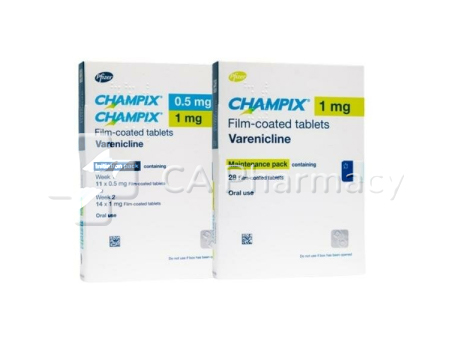
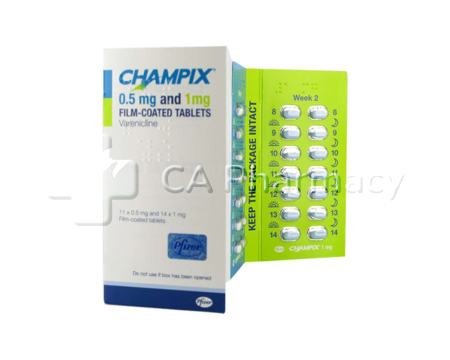
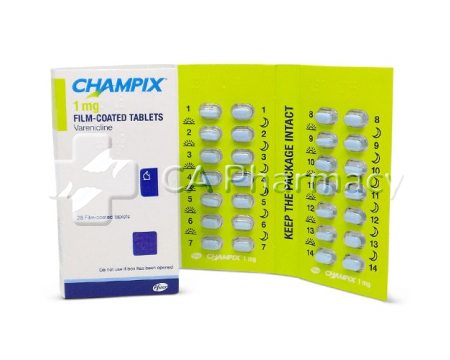
The Champix dosage follows a structured titration schedule designed to minimise side effects (particularly nausea) during the initial period while building to the full therapeutic dose. The titration schedule is the same whether you are using 0.5mg or 1mg tablets.
Phase 1 — Titration (Days 1–7): Starting low to minimise nausea
- Days 1–3: 0.5mg once daily (morning)
- Days 4–7: 0.5mg twice daily (morning and evening)
Phase 2 — Full dose (Day 8 through Week 12):
- Day 8 onwards: 1mg twice daily (morning and evening)
Quit date: Set a target quit date during the first or second week of Champix treatment — ideally between Day 8 and Day 14. This timing allows the medication to reach therapeutic levels before the quit attempt. Champix can also be used with a flexible quit date approach — where smoking is gradually reduced during the first 12 weeks and cessation occurs by Week 12.
Administration: Take tablets orally with a full glass of water. Always take Champix after a meal — eating before taking the tablet substantially reduces the nausea that is Champix's most common side effect. The morning dose should be taken after breakfast; the evening dose after dinner.
Missed dose: If a dose is missed, take it as soon as remembered on the same day. If it is close to the time of the next scheduled dose, skip the missed dose and continue the regular schedule. Never take a double dose to make up for a missed one.
Extended course (Weeks 13–24): For patients who have successfully quit smoking during the initial 12-week course, your Canadian physician may recommend a further 12-week maintenance course. Clinical data shows this extended treatment meaningfully increases long-term (one-year) abstinence rates and is recommended for patients at higher relapse risk.
Patients with severe renal impairment (CrCl <30 mL/min): The dose should be reduced to 0.5mg once daily — varenicline is renally excreted and accumulates with severe kidney disease. Discuss with your prescribing physician or pharmacist.

Choosing Your Quit Date — Strategy for Canadian Smokers
The quit date is one of the most psychologically significant elements of a successful Champix course. Canadian smoking cessation experts recommend the following approach:
- Choose a date in the second week of Champix treatment (Day 8–14). By this point, varenicline is at therapeutic levels and has begun reducing the rewarding effect of cigarettes. Many patients report that cigarettes already taste worse or feel less satisfying before their quit date arrives
- Choose a meaningful but realistic date: Not a high-stress date (moving day, major deadline), not so far in the future that motivation wanes. A date 10–14 days from starting Champix works well for most Canadian patients
- Tell people about your quit date: Social accountability increases success rates. Tell family, friends, and colleagues
- Remove cigarettes, lighters, and ashtrays before your quit date: Environmental triggers are a major cause of relapse in the first weeks
- Access behavioural support alongside Champix: The combination of pharmacotherapy and behavioural counselling produces significantly better outcomes than either alone. The Smokers' Helpline Canada (1-877-513-5333) offers free telephone counselling in all provinces
Critical Safety Warning — Neuropsychiatric Effects
Champix carries a Health Canada warning regarding neuropsychiatric effects — mood and behaviour changes that have been reported in some patients during treatment. This is the most important safety consideration for Champix and requires careful monitoring by both the patient and their close contacts.
What to watch for during Champix treatment:
- New or worsening depression
- Unusual mood changes — agitation, hostility, aggression
- Anxious or paranoid thoughts
- Suicidal thoughts or self-harm ideation
- Bizarre behaviour changes noticed by family members or close friends
- Vivid, disturbing, or violent dreams
Important context: It is clinically well-established that nicotine withdrawal itself causes significant mood disruption — depression, anxiety, irritability — which can be difficult to distinguish from varenicline-related effects. A 2016 large-scale randomised trial (EAGLES trial) published in The Lancet found that neuropsychiatric adverse events with varenicline were not significantly more common than with nicotine patch or placebo in smokers without psychiatric history. However, patients with pre-existing psychiatric conditions (depression, bipolar disorder, schizophrenia, history of suicidal ideation) should discuss this risk carefully with their physician before starting Champix.
What to do if you notice neuropsychiatric symptoms:
- Stop Champix immediately and contact your physician or local healthcare provider
- If experiencing suicidal thoughts: call 911 or go to your nearest emergency department immediately
- Canadian crisis line: 1-833-456-4566 (24/7, all provinces)
- Do not stop Champix without medical guidance for any other reason — abrupt discontinuation can cause withdrawal irritability
Tell the people closest to you: Health Canada recommends that patients starting Champix inform a family member or close friend about this potential side effect and ask them to alert the patient and seek medical help if they notice behavioural changes — since the patient themselves may not recognise when their mood or behaviour has changed.
Side Effects of Champix (Varenicline)
Very common side effects — affect more than 1 in 10 users:
- Nausea — the most common side effect, affecting approximately 30% of users. Taking Champix after a full meal significantly reduces nausea. For most patients it decreases after the first 1–2 weeks. If severe and persistent, discuss dose adjustment with your physician
- Headache
- Insomnia and unusual or vivid dreams — very common, particularly in the first weeks. Taking the evening dose earlier (e.g. after dinner rather than at bedtime) can reduce sleep disturbance
Common side effects — affect up to 1 in 10 users:
- Nausea and vomiting
- Constipation, diarrhoea, flatulence
- Appetite changes and modest weight gain
- Drowsiness and fatigue
- Dizziness
- Dry mouth
Important — Champix and alcohol: Varenicline can alter the way the body responds to alcohol — some patients report lower alcohol tolerance or intensified alcohol effects during Champix treatment. Canadian patients should be aware that alcohol consumption during Champix treatment may affect behaviour in unexpected ways. Reduce or avoid alcohol, particularly in the early weeks of treatment.
Important — Champix and driving: Champix can cause dizziness, drowsiness, and loss of concentration. Canadian patients should assess their individual response before driving, operating machinery, or performing tasks requiring alertness. If dizziness or drowsiness is significant, do not drive until the symptom resolves.
Uncommon side effects — affect up to 1 in 100 users:
- Mood changes — anxiety, depression, irritability (note: some of these may reflect nicotine withdrawal rather than varenicline directly)
- Palpitations, chest tightness
- Skin rash, itching
Rare but serious — seek immediate medical attention, call 911:
- Suicidal thoughts or thoughts of self-harm — stop Champix immediately and call 911 or go to nearest ER
- Severe allergic reactions — swelling of face, lips, tongue, throat; difficulty breathing. Stop and call 911
- Seizures
- Serious skin reactions (Stevens-Johnson syndrome) — blistering, peeling, or severe rash with fever
- Severe cardiovascular events — in patients with pre-existing cardiovascular disease
Who Should Not Take Champix
Champix is contraindicated or requires specific medical evaluation before use in:
- Patients with known hypersensitivity to varenicline or any component of the formulation
- Patients with end-stage renal disease (dialysis) — varenicline cannot be adequately cleared
- Patients under 18 years of age — not approved for paediatric use
Use with caution and mandatory physician consultation in:
- Patients with current or prior psychiatric history — depression, bipolar disorder, schizophrenia, history of suicidal ideation or attempts. The EAGLES trial showed overall safety in this population but careful monitoring is essential
- Patients with significant cardiovascular disease — a modest increase in cardiovascular events was observed in some early trials in patients with pre-existing cardiovascular disease; discuss risk-benefit with your cardiologist or physician
- Patients with severe renal impairment (CrCl <30 mL/min) — dose reduction required
- Pregnant or breastfeeding women — safety not established; smoking cessation in pregnancy is critical, but pharmacotherapy options should be discussed with an obstetrician
- Patients taking insulin — smoking cessation (regardless of Champix) alters insulin requirements; blood glucose monitoring required
- Patients taking warfarin — smoking cessation alters warfarin metabolism; INR monitoring required when stopping smoking
Drug Interactions
Varenicline has fewer drug interactions than most smoking cessation medications because it is primarily renally excreted without significant hepatic metabolism. However, several interactions are clinically relevant:
- Cimetidine (Tagamet): Reduces varenicline renal clearance, increasing varenicline exposure by approximately 29%. This is not clinically significant for most patients but should be noted in patients with renal impairment
- Alcohol: See warning above — can intensify behavioural effects of alcohol
- Insulin: Smoking cessation itself (not varenicline directly) reduces insulin resistance — blood glucose levels may change as smoking stops and insulin doses may need adjustment
- Warfarin: Smoking cessation changes the hepatic metabolism of warfarin — INR should be monitored more frequently when stopping smoking
- Theophylline: Smoking induces theophylline metabolism — cessation increases theophylline levels; monitor levels
- Clozapine: Smoking induces clozapine metabolism — cessation increases clozapine levels substantially; close psychiatric monitoring needed
- Other NRT: Combining Champix with NRT increases side effects (particularly nausea, dizziness, vomiting) without meaningfully increasing quit rates. Not recommended as standard practice

Champix and Behavioural Support — The Most Effective Combination
All major clinical guidelines — including Health Canada, the Canadian Action Network for the Advancement, Dissemination and Adoption of Practice-informed Tobacco Treatment (CANADAPT), and the Canadian Lung Association — recommend combining Champix pharmacotherapy with behavioural counselling for optimal quit rates. The combination of medication and support produces substantially better outcomes than either alone.
Free behavioural support resources available to all Canadian smokers:
- Smokers' Helpline: 1-877-513-5333 — free telephone counselling in all Canadian provinces and territories, available in English and French
- Health Canada's Quit Smoking Resources: canada.ca/en/health-canada/services/smoking-tobacco/quit-smoking
- QuitNow.ca (British Columbia): Free online and phone support programme
- Quit4Life (Ontario): Free youth-focused smoking cessation programme
- J'Arrête (Quebec): French-language free support programme — jarrete.qc.ca
Price Overview — Champix in Canada
| Champix Brand (Canadian retail, private prescription) | Champix (drugs-canada.com) | With provincial coverage (ODB/PharmaCare) | |
|---|---|---|---|
| 0.5mg / 10 pills | CAD$120–150 | $97.17 USD | Reduced or free — confirm with pharmacist |
| 1mg / 10 pills | CAD$125–160 | $103.55 USD | Reduced or free — confirm with pharmacist |
| Full 12-week course (1mg × 84 maintenance pills) | CAD$700–900 | From ~$870 USD (all packs) | Often fully or substantially covered |
| Delivery | Same day at pharmacy | 4–9 business days, all provinces | Same day at pharmacy |
Important note for Canadian patients: If you have provincial drug coverage (ODB, PharmaCare, RAMQ, etc.) or private insurance that covers smoking cessation medications, obtaining Champix with a Canadian prescription through your local pharmacy may be significantly cheaper — or even free. We strongly encourage checking coverage first.
Delivery to All Canadian Provinces
drugs-canada.com ships discreetly to all Canadian provinces and territories. Standard delivery: 4–9 business days.
Ontario (Toronto, Ottawa, Mississauga, Hamilton, Brampton) — British Columbia (Vancouver, Victoria, Surrey, Kelowna) — Quebec (Montreal, Quebec City, Laval, Gatineau) — Alberta (Calgary, Edmonton, Red Deer) — Manitoba (Winnipeg) — Saskatchewan (Saskatoon, Regina) — Nova Scotia (Halifax) — New Brunswick (Moncton, Fredericton) — and all remaining provinces and territories.
All orders are delivered in plain, unmarked packaging with no reference to the contents or sender. A tracking number is included with every order.
Frequently Asked Questions — Champix in Canada
Is Champix the most effective way to quit smoking in Canada? Based on clinical evidence, varenicline (Champix) is the single most effective pharmacological smoking cessation treatment available. A Cochrane meta-analysis found approximately 44% 12-week abstinence with Champix vs 29.5% for bupropion (Zyban), 23.4% for nicotine patch, and 17.7% for placebo. Combining Champix with behavioural counselling (Smokers' Helpline: 1-877-513-5333) produces the highest quit rates of any approach.
Is Champix covered by provincial drug plans in Canada? Champix is listed on most major provincial formularies for eligible patients — including ODB (Ontario), BC PharmaCare, RAMQ (Quebec), and Alberta Blue Cross. Most private Canadian employer insurance plans also cover smoking cessation medications. Check with your pharmacist or insurance provider before purchasing — you may qualify for partial or full coverage with a prescription.
What is the difference between Champix and nicotine patches? Nicotine patches (NRT) simply replace the nicotine from cigarettes to reduce withdrawal — they do not block the smoking reward and do not reduce cravings as effectively. Champix works differently: it partially activates nicotinic receptors to reduce cravings (without nicotine) while simultaneously blocking nicotine from producing its full reward. Clinical trials show Champix achieves approximately 44% abstinence vs 23.4% for nicotine patch at 12 weeks.
What is the difference between Champix and Zyban (bupropion)? Zyban (bupropion) is an antidepressant that reduces cravings through dopamine/norepinephrine pathways — effective but does not block smoking reward. Champix achieves both craving reduction and smoking reward blockade. Clinical trials show approximately 44% abstinence with Champix vs 29.5% with bupropion. Both require a prescription in Canada.
How long does Champix take to work? Craving reduction typically begins within the first week of treatment during the titration phase. Most patients set their quit date between Day 8 and Day 14 — by which time therapeutic varenicline levels have been established and cigarettes typically begin to feel less satisfying. The full pharmacological effect of blocking nicotine reward is present from approximately Day 8 when the 1mg twice-daily dose begins.
Can I drink alcohol while taking Champix? Caution is strongly recommended. Varenicline can alter alcohol tolerance and intensify alcohol's behavioural effects in some patients. Canadian patients should reduce alcohol consumption during Champix treatment and be alert to unexpected behavioural changes when drinking. Some patients report increased aggression or other mood effects when combining Champix with alcohol.
Can I smoke while taking Champix? Yes — in fact, continued smoking before your quit date is expected and part of the design. You do not need to quit immediately on Day 1. Choose a quit date in the second week of treatment. Many patients notice cigarettes beginning to taste worse or feel less satisfying before their quit date as varenicline takes effect. If you smoke after your quit date, the blocking effect of Champix means the cigarette will produce less reward — making relapses easier to recover from.
What should I do if I experience mood changes on Champix? Stop Champix and contact your physician or local healthcare provider immediately. If you experience suicidal thoughts or feel you may harm yourself or others, call 911 or go to your nearest emergency department immediately. Canadian crisis line: 1-833-456-4566 (24/7). Inform a trusted family member or friend before starting Champix and ask them to alert you and seek help if they notice behavioural changes.
How long does delivery to Canada take? Standard delivery to all Canadian provinces takes 4 to 9 business days. All orders arrive in plain, unmarked packaging with no reference to contents or sender. Every order includes a tracking number.