
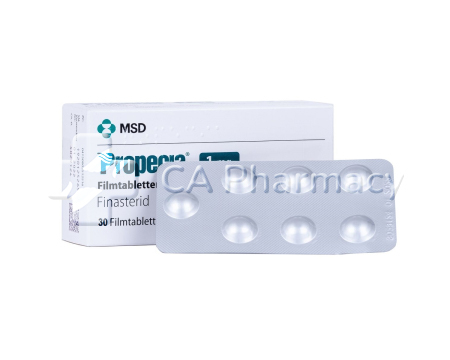
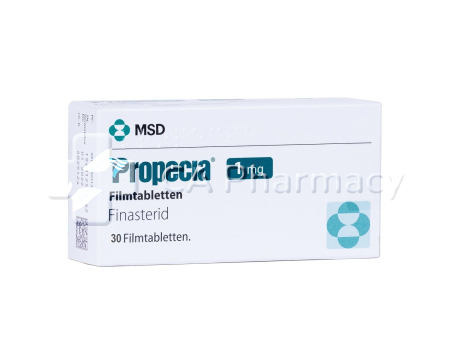
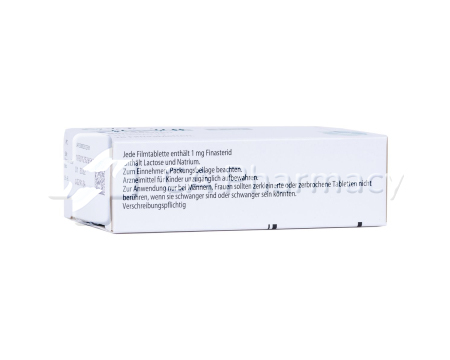


Generic Propecia vs Brand Propecia vs Proscar — What Is the Difference?
A common source of confusion for Canadian men: the relationship between these three finasteride products. The active molecule is identical across all three — the differences are dose, manufacturer and price.
| Parameter | Generic Propecia (this product) | Brand Propecia (Merck) | Proscar / Generic Finasteride 5mg |
|---|---|---|---|
| Active ingredient | Finasteride 1mg | Finasteride 1mg | Finasteride 5mg |
| Approved indication | Male pattern baldness | Male pattern baldness | Benign prostatic hyperplasia (BPH) |
| Manufacturer | WHO-GMP certified generic labs | Merck & Co. | Merck or generic manufacturers |
| DHT reduction | ~60–70% scalp DHT | ~60–70% scalp DHT | ~65–70% serum DHT |
| Can be used for hair loss? | Yes — primary indication | Yes — primary indication | Yes — off-label (pill splitting) |
| Price per tablet (Canada online) | From C$0.50–1.50 | C$3–5 at Canadian pharmacy | C$1–2 (divided into quarters) |
Note on Proscar splitting: Some men purchase Proscar 5mg and split each tablet into four 1.25mg quarters using a pill splitter — an off-label cost-reduction strategy. The pharmacological effect is similar, but the split is never perfectly equal, storage of divided tablets is problematic, and Proscar is not formulated for hair loss. Generic Propecia 1mg is the cleanest, most precise approach for hair loss treatment.
How Finasteride Works — The DHT Mechanism Explained
Male pattern baldness (androgenetic alopecia) is not caused by testosterone itself — it is caused by dihydrotestosterone (DHT), a more potent androgen derived from testosterone by the enzyme 5-alpha-reductase Type II. Understanding this distinction is key to understanding why finasteride works:
- Genetic predisposition: Men with androgenetic alopecia have hair follicles on the scalp (but not on the sides or back) that are genetically sensitive to DHT. The follicles on the crown and frontal hairline contain androgen receptors that, when activated by DHT, progressively miniaturise
- Progressive miniaturisation: Each growth cycle, DHT-sensitive follicles produce thinner, shorter, lighter hair — a process called miniaturisation. Eventually the follicle becomes dormant and ceases producing visible hair altogether
- Finasteride blocks the conversion: Finasteride is a competitive inhibitor of 5-alpha-reductase Type II — the enzyme that converts testosterone to DHT in the scalp, skin and prostate. By blocking this enzyme, finasteride reduces scalp DHT levels by approximately 60–70%
- Follicles recover: With DHT levels reduced, miniaturised follicles can gradually recover their normal cycle, producing progressively thicker and longer hairs over time. This process takes months — which is why patience is essential
- Why the sides and back are unaffected: Follicles on the sides and back of the scalp lack the androgen receptor density of crown follicles — DHT does not affect them. This is why hair transplants (which move these DHT-resistant follicles to the crown) work — and why finasteride cannot restore already dormant follicles, only preserve and regrow those still active
What finasteride cannot do: It cannot restore hair from follicles that have been completely dormant for many years. The earlier treatment begins, the better the outcome. Finasteride is most effective in men with mild to moderate hair loss (Norwood Scale II–IV). Men with advanced hair loss (Norwood V–VII) see less regrowth but still benefit from preservation of remaining hair.

Clinical Evidence — What the Studies Show
| Study outcome | Finasteride 1mg | Placebo |
|---|---|---|
| Hair count maintained at 2 years | 83% | 28% |
| Measurable hair regrowth at 2 years | 66% | 7% |
| Patient self-assessment: improved appearance | 68% | 16% |
| Continued hair count maintenance at 5 years | 90% (of those maintaining at 2 years) | Continued decline |
| Hair loss reversal after stopping finasteride | Returns to pre-treatment baseline within 12 months | N/A |
Key takeaway: finasteride works best when started early and used consistently. The benefit is cumulative — the longer you use it, the more hair is preserved. Stopping treatment reverses all gains within approximately 12 months as DHT levels return to pre-treatment levels and follicle miniaturisation resumes.
Finasteride vs Minoxidil — Which Is Right for You?
Canadian men frequently ask whether to choose finasteride (Propecia) or minoxidil (Rogaine) — or whether to use both. These are the two most evidence-backed hair loss treatments available, but they work differently and suit different situations:
| Factor | Finasteride (Generic Propecia) | Minoxidil (Rogaine) |
|---|---|---|
| Mechanism | Blocks DHT production (addresses root cause) | Increases blood flow to follicles (symptomatic) |
| Administration | Oral tablet once daily — most convenient | Topical solution or foam — applied to scalp 1–2×/day |
| Prescription required? | Yes (Schedule F in Canada) | No — available OTC at Canadian pharmacies |
| Effectiveness for crown hair loss | Superior — addresses the cause | Good — best for vertex (crown) |
| Effectiveness for frontal hairline | Good | Less effective than for crown |
| Sexual side effects | ~2% of users (see side effects section) | None |
| Combined use | Finasteride + Minoxidil together — complementary mechanisms, better outcomes than either alone. The most common combination prescribed by Canadian hair loss specialists. | |

Dosage and How to Take Generic Propecia
| Parameter | Details |
|---|---|
| Standard dose | 1mg once daily — there is no benefit to higher doses for hair loss |
| Timing | Any time of day — take at the same time each day for consistency |
| Food interaction | None — take with or without food |
| First visible results | 3–6 months of consistent daily use |
| Peak results | 12–24 months of continuous treatment |
| Duration of treatment | Indefinite — stopping reverses all gains within 12 months |
| Missed dose | Take as soon as remembered — if next dose is soon, skip the missed one. Never double dose |
Initial shedding — what to expect: Some men experience increased hair shedding in the first 1–3 months of finasteride use. This is not a sign the medication is failing — it is a sign that the hair growth cycle is resetting. Miniaturised hairs are shed to make way for stronger, thicker growth. This shedding phase is temporary and resolves within 3–4 months.
Side Effects of Generic Propecia (Finasteride 1mg)
Putting side effects in perspective: In the pivotal clinical trials, sexual side effects occurred in approximately 3.8% of men taking finasteride 1mg versus 2.1% in the placebo group — a difference of 1.7 percentage points. In the majority of cases, these effects resolved upon discontinuing the medication. The risk-benefit calculation for most men with progressive hair loss strongly favours treatment, but this should be discussed with a healthcare provider.
Prostate cancer screening: Finasteride reduces PSA (prostate-specific antigen) levels by approximately 50%. If you undergo PSA screening while taking finasteride, inform your doctor — they will need to double the PSA reading to obtain an accurate baseline comparison.
Contraindications — Who Should Not Take Generic Propecia
- Women — absolute contraindication: finasteride is not approved for women and is specifically contraindicated in women who are or may become pregnant. Finasteride can cause abnormalities of the external genitalia of a male foetus. Pregnant women must not handle crushed or broken finasteride tablets — absorption through skin is possible
- Children and adolescents: not approved for anyone under 18
- Men with prostate cancer: while finasteride reduces the risk of low-grade prostate cancer, it should not be used as a cancer treatment. Consult a urologist
- Severe hepatic impairment: finasteride is metabolised by the liver — use with caution and medical supervision
- Allergy to finasteride or excipients
Drug Interactions
Finasteride has a relatively clean drug interaction profile. However:
| Drug / Substance | Interaction | Recommendation |
|---|---|---|
| Testosterone / Anabolic steroids | Exogenous testosterone increases DHT substrate — may partially counteract finasteride | Discuss with doctor; higher dose finasteride may be considered |
| Alpha-blockers (tamsulosin, doxazosin) | Additive hypotension possible when combined (especially at higher finasteride doses) | Monitor blood pressure; relevant mainly for Proscar 5mg not Propecia 1mg |
| Warfarin | Isolated case reports of increased INR — not well established | Monitor INR if starting finasteride while on warfarin |
Getting a Finasteride Prescription in Canada
Finasteride is a Schedule F prescription medication in Canada — it requires a valid prescription from a licensed Canadian physician to be dispensed from a licensed Canadian pharmacy.
How to obtain a finasteride prescription in Canada:
- Family physician or GP — most straightforward; hair loss is a recognised medical condition. Request a finasteride prescription at your next appointment
- Dermatologist — specialists in hair loss (alopecia); can provide the most complete assessment including Norwood scale staging and blood work to rule out other causes
- Telehealth — fastest option: Canadian digital health platforms including Maple, Tia Health, Felix Health and Hims Canada offer same-day or next-day physician consultations specifically for hair loss, with electronic prescriptions issued within hours. Felix and Hims are particularly well-known in Canada for hair loss treatment access
What to tell your doctor: Describe when you first noticed hair thinning, your family history of hair loss (father, maternal grandfather), any medications you currently take, and whether you have had any bloodwork done recently. A baseline PSA test may be recommended before starting finasteride if you are over 40.
Delivery to All Canadian Provinces and Territories
We ship Generic Propecia with complete discretion to all provinces and territories across Canada in 4–9 business days. Every order is dispatched in plain, unmarked packaging with no indication of contents on the outside.
Ontario (Toronto, Ottawa, Mississauga, Brampton, Hamilton, London) — Quebec (Montreal, Quebec City, Laval, Gatineau) — British Columbia (Vancouver, Surrey, Burnaby, Victoria, Kelowna) — Alberta (Calgary, Edmonton, Red Deer, Lethbridge) — Manitoba (Winnipeg, Brandon) — Saskatchewan (Saskatoon, Regina) — Nova Scotia (Halifax, Dartmouth) — New Brunswick (Fredericton, Moncton, Saint John) — Newfoundland and Labrador (St. John's) — Prince Edward Island (Charlottetown) — Northwest Territories, Yukon, Nunavut — and all other cities and communities across Canada.
Frequently Asked Questions — Generic Propecia Canada
Is generic Propecia as effective as brand-name Propecia? Yes. Both contain finasteride 1mg — the same molecule at the same dose. Health Canada's generic drug approval requires proof of bioequivalence: the generic must achieve the same plasma concentration as the brand within an accepted margin (in practice, typically within ±5%). There is no pharmacological reason for any difference in efficacy.
How long before I see results? Most men notice reduced shedding within 3 months. Visible regrowth or density improvement typically becomes apparent at 6–12 months. Peak results occur at 12–24 months of continuous treatment. Some men see earlier response; others require the full 2 years. Try not to evaluate results before the 6-month mark.
Will finasteride affect my testosterone levels? No — finasteride does not reduce testosterone. It blocks the conversion of testosterone to DHT. Total testosterone levels may actually increase slightly (because less is being converted), while DHT decreases. Free testosterone is unaffected.
Can I take finasteride if I am trying to conceive? Discuss with your doctor. Some studies show a small reduction in sperm count and motility in a minority of men taking finasteride, which resolves after stopping. If you are actively trying to conceive and concerned, take a break from finasteride — though note that any hair gains will reverse within 12 months of stopping.
Does finasteride work for women? Finasteride is not approved for female hair loss in Canada and is absolutely contraindicated during pregnancy due to risk of foetal harm. Post-menopausal women occasionally receive finasteride off-label from some specialists, but this is outside Health Canada's approved indications and not covered here.
What happens if I stop taking Generic Propecia? Within approximately 6–12 months of stopping, DHT levels return to pre-treatment levels. The hair loss that finasteride was suppressing resumes, and any regrowth achieved gradually reverses. Within 12–18 months of stopping, hair count returns to approximately where it would have been had you never taken finasteride. This is why finasteride is considered a lifelong treatment for most men.
Is there a connection between finasteride and depression? Some men report mood changes including depression while taking finasteride. Health Canada has updated the product monograph to include depression as a possible side effect. The biological mechanism is not fully understood. If you experience mood changes while taking finasteride, discuss with your doctor promptly.
Can I drink alcohol while taking Generic Propecia? There is no clinically significant interaction between finasteride and alcohol. Moderate alcohol consumption does not affect finasteride's efficacy or safety profile.
The information on this page is for educational purposes only and does not constitute medical advice. Finasteride (Generic Propecia) is a prescription medication in Canada requiring medical assessment before use. It is absolutely contraindicated in women of childbearing potential and should not be handled by pregnant women in any form. Always consult a licensed Canadian healthcare provider before starting treatment.