
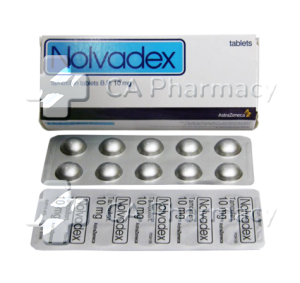
Anticancer Medications — Tamoxifen (Nolvadex) for Hormone Receptor–Positive
Medically reviewed by Dr. Sarah Mitchell, RPh, Clinical Pharmacist, Ontario College of Pharmacists #234567 — Updated January 2026
Breast cancer is the most commonly diagnosed cancer among Canadian women, affecting approximately 1 in 8 women over their lifetime — with roughly 30,000 new cases diagnosed in Canada annually. Approximately 70–75% of all breast cancers are hormone receptor–positive (ER+ or PR+), meaning the cancer cells carry estrogen receptors and rely on estrogen signalling to grow. For this majority, tamoxifen (brand name Nolvadex-D, AstraZeneca; generic alternatives: Teva-Tamoxifen, Tamofen) has been the cornerstone of adjuvant endocrine therapy for over 40 years — and remains one of the most extensively studied and clinically proven cancer medications in the world. Understanding exactly how tamoxifen works — and why its interaction with CYP2D6 inhibitors including certain antidepressants is one of the most critical drug interactions in Canadian oncology — is essential for every Canadian patient on tamoxifen therapy.
Critical — specialist supervision required: Tamoxifen is a prescription-only medication in Canada used under the care of an oncologist or specialist physician. Never stop tamoxifen without consulting your oncology team — early discontinuation significantly increases breast cancer recurrence risk. If you are taking tamoxifen, tell every physician and pharmacist you see — including your family doctor and any physician prescribing antidepressants — as drug interactions can critically reduce tamoxifen's efficacy.
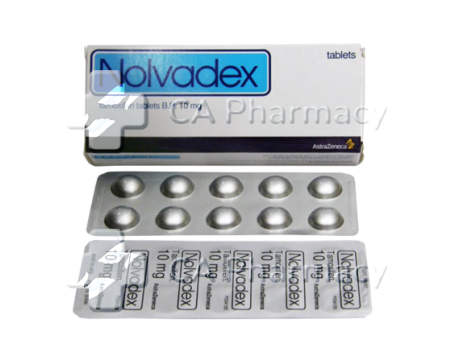
Tamoxifen (Nolvadex Generic) at a Glance
How Tamoxifen Works — The SERM Tissue-Specific Mechanism
Tamoxifen is classified as a Selective Estrogen Receptor Modulator (SERM) — a class of drugs that interact with estrogen receptors in a tissue-specific way, acting as an estrogen antagonist in some tissues and an estrogen agonist in others. This tissue selectivity is both tamoxifen's greatest clinical advantage and the source of its most important risks:
From Dr. Sarah Mitchell, RPh: The most important practical point about tamoxifen that many Canadian patients don't initially appreciate is that it is a prodrug. The tablet itself is not the active cancer-fighting agent — it becomes the active agent (endoxifen) only after your liver metabolises it via CYP2D6. This means that anything that reduces CYP2D6 activity — including certain very commonly prescribed antidepressants — can dramatically reduce the amount of endoxifen in your blood and potentially compromise tamoxifen's anti-cancer efficacy. This is why the antidepressant selection in women on tamoxifen is one of the most consequential prescribing decisions in Canadian breast cancer management.
The CYP2D6-Antidepressant Interaction — The Most Critical Drug Interaction in Tamoxifen Therapy
Depression and anxiety are common in Canadian women with breast cancer. Many require antidepressant therapy — but the choice of antidepressant is life-or-death important in women on tamoxifen. The following table is based on the BC Cancer Drug Manual and Cancer Care Ontario clinical guidelines:
⚠ Paroxetine (Paxil) co-administered with tamoxifen is associated with a 67% increased risk of death from breast cancer — increasing absolute mortality from 24% to 91% depending on duration of co-administration (Canadian pharmacoepidemiological data). If you are on tamoxifen and taking paroxetine or fluoxetine — tell your oncologist immediately.
| Antidepressant | CYP2D6 Inhibition | Effect on Endoxifen | Recommendation with Tamoxifen |
|---|---|---|---|
| Paroxetine (Paxil, Paxil CR) | Strong — potent inhibitor | Reduces endoxifen by ~64% | AVOID — associated with 67% increased breast cancer mortality |
| Fluoxetine (Prozac) | Strong — potent inhibitor | Significantly reduces endoxifen | AVOID |
| Sertraline (Zoloft) | Moderate inhibitor | Moderate reduction in endoxifen | Use with caution — discuss with oncologist |
| Duloxetine (Cymbalta) | Moderate inhibitor | Moderate reduction in endoxifen | Use with caution — discuss with oncologist |
| Venlafaxine (Effexor) | Weak / minimal | Minimal effect on endoxifen | PREFERRED — also treats hot flashes |
| Citalopram (Celexa) | Minimal | No significant reduction | PREFERRED |
| Escitalopram (Lexapro, Cipralex) | Minimal | No significant reduction | PREFERRED |
| Mirtazapine (Remeron) | Minimal | No significant reduction | PREFERRED (also helps with sleep and appetite) |
Note on hot flashes: Many Canadian women on tamoxifen experience hot flashes — a common reason antidepressants are prescribed concurrently. Venlafaxine (Effexor) is particularly useful in this context because it both treats depression/anxiety AND reduces hot flash frequency and severity by approximately 60% — while having minimal CYP2D6 inhibition and therefore minimal effect on tamoxifen's efficacy. Gabapentin and clonidine are additional non-serotonergic options for hot flash management in tamoxifen patients.
Other Important Drug Interactions with Tamoxifen
- Warfarin — tamoxifen significantly potentiates warfarin's anticoagulant effect; INR must be monitored closely after starting or stopping tamoxifen
- St. John's Wort (hypericum) — CYP3A4 inducer that increases tamoxifen metabolism and reduces plasma levels; avoid this herbal supplement
- Rifampicin / Rifampin — potent CYP3A4 inducer; significantly reduces tamoxifen plasma concentrations; avoid if possible
- Aromatase inhibitors — tamoxifen induces the metabolism of letrozole, significantly reducing letrozole concentrations; do not combine; use sequentially
- Hormone replacement therapy (HRT / estrogen) — directly counteracts tamoxifen's anti-estrogenic effect in breast tissue; avoid concurrent use
Duration of Tamoxifen Therapy — The 5 vs 10 Year Decision
The duration of tamoxifen therapy is one of the most important ongoing decisions in Canadian breast cancer management. Current evidence from the ATLAS (Adjuvant Tamoxifen: Longer Against Shorter) and aTTom trials informs these decisions:
The 10-year tamoxifen data (ATLAS trial): Extending tamoxifen from 5 to 10 years in ER+ breast cancer reduces breast cancer recurrence (relative risk 0.84) and breast cancer mortality (relative risk 0.83) during years 10–14. However, 10-year therapy also doubles the risk of endometrial cancer and carries additional VTE risk. This benefit-risk decision must be made individually with your oncology team, considering your recurrence risk, menopausal status, tolerance of side effects, and competing health risks.
Monitoring Requirements and Serious Side Effects
Serious risks — require immediate reporting
- Vaginal bleeding or spotting — may indicate endometrial abnormality; report to oncologist immediately; annual gynecological examination recommended
- DVT/PE warning signs — leg pain, swelling, redness (DVT); sudden shortness of breath, chest pain (PE). Tamoxifen approximately doubles DVT/PE risk. Call 911.
- Stroke symptoms — sudden weakness, speech difficulty, vision change; tamoxifen has small increased stroke risk
- Vision changes — tamoxifen can rarely cause ocular toxicity (retinopathy, corneal changes); annual ophthalmological examination recommended for long-term users
Common side effects — manageable
- Hot flashes — most common; affects up to 80% of users; venlafaxine, gabapentin, or clonidine may help without compromising tamoxifen efficacy
- Vaginal dryness and discharge — menopause-like symptoms; vaginal moisturisers (Replens) and lubricants acceptable; topical vaginal estrogen requires oncologist approval
- Mood changes and fatigue — common; exercise and cognitive behavioural support help
- Irregular menstrual periods — in premenopausal women; amenorrhoea (stopping of periods) may occur but does not indicate menopause
- Joint and muscle aches — less common than with AIs but reported
Monitoring schedule
- Gynaecological examination — annually; report any vaginal bleeding immediately regardless of schedule
- Ophthalmological examination — annually for patients on long-term therapy
- Bone density (DEXA scan) — at baseline and periodically, particularly if transitioning to AI
- Liver function tests — periodic; tamoxifen rarely causes hepatotoxicity
- Complete blood count — periodic; thrombocytopenia (low platelets) rarely reported
Tamoxifen in Men — Breast Cancer and Gynecomastia
While tamoxifen is predominantly discussed in the context of female breast cancer, it has important applications in men:
- Male breast cancer — approximately 1% of all breast cancers occur in men; the majority are ER+ and tamoxifen is the standard endocrine therapy (20mg daily) — same mechanism and duration guidelines apply
- Gynecomastia — tamoxifen 10–20mg daily is used to treat gynaecomastia (male breast tissue enlargement) caused by anabolic steroid use, anti-androgen therapy (for prostate cancer), or other hormonal causes; it acts as an estrogen antagonist in male breast tissue
- Post-cycle therapy (PCT) — following anabolic steroid cycles, tamoxifen blocks estrogen receptors at the hypothalamus and pituitary, removing estrogenic negative feedback and restoring endogenous LH, FSH, and testosterone production; standard PCT doses: 40mg daily for 2 weeks, then 20mg daily for 2 further weeks
Dosing
| Indication | Dose | Duration |
|---|---|---|
| Adjuvant ER+ breast cancer (pre- and postmenopausal) | 20mg once daily | 5 years (up to 10 years in selected patients) |
| Metastatic ER+ breast cancer | 20–40mg daily | Until disease progression or intolerable side effects |
| DCIS (ductal carcinoma in situ) | 20mg once daily | 5 years |
| Male breast cancer / gynecomastia | 10–20mg daily | Per oncologist / physician guidance |
| Post-cycle therapy (PCT) | 40mg daily × 2 weeks, then 20mg daily × 2 weeks | 4 weeks total |
Tamoxifen can be taken with or without food. Take at the same time each day. If a dose is missed — take as soon as remembered unless it is almost time for the next dose; never double up.
Frequently Asked Questions — Tamoxifen in Canada
My doctor wants to switch me from tamoxifen to an aromatase inhibitor — should I? For postmenopausal women, aromatase inhibitors (anastrozole, letrozole, exemestane) generally show superior recurrence reduction and breast cancer mortality benefit compared to tamoxifen as adjuvant therapy. However, AIs cannot be used in premenopausal women (unless combined with ovarian suppression), cause bone loss, and have different side effect profiles. The transition decision depends on your menopausal status, bone density, side effect tolerance, and specific breast cancer characteristics. Discuss this specifically with your oncologist — not all patients benefit equally from switching.
Can I get pregnant while taking tamoxifen? No — tamoxifen must not be taken during pregnancy. It is teratogenic (can cause fetal harm including genital malformations). Women of childbearing age must use reliable non-hormonal contraception (barrier methods — condoms, IUDs without hormones) throughout tamoxifen therapy and for at least 2 months after stopping. Hormonal contraceptives (estrogen-containing pills) are generally avoided during tamoxifen therapy. If you plan to become pregnant, discuss the possibility of a temporary tamoxifen treatment break with your oncologist.
I have heard tamoxifen doesn't work if you are a "poor metaboliser" — should I get genetic testing? CYP2D6 genetic testing can identify whether you are a poor, intermediate, normal, or ultra-rapid metaboliser of tamoxifen. Poor metabolisers produce substantially less endoxifen and may have compromised tamoxifen efficacy. Pharmacogenomic testing for CYP2D6 is available in Canada and is increasingly being used in oncology. Discuss with your oncologist whether testing is appropriate for your situation — it is not yet universally recommended but is particularly worth considering if you are also taking CYP2D6-inhibiting medications.
Can I drink alcohol while taking tamoxifen? Moderate alcohol consumption (1–2 drinks occasionally) is not acutely contraindicated with tamoxifen from a drug interaction perspective. However, alcohol itself increases the risk of breast cancer recurrence — independent of tamoxifen. Canadian Cancer Society guidelines recommend that breast cancer patients minimise alcohol consumption. For patients with any liver impairment, tamoxifen should be used with caution as it is hepatically metabolised.
Is generic tamoxifen as effective as Nolvadex-D? Yes. Teva-Tamoxifen, Tamofen, and other Health Canada–approved generic tamoxifen products are bioequivalent to Nolvadex-D (AstraZeneca) — they contain tamoxifen citrate at the same dose (10mg or 20mg) and meet Health Canada's bioequivalence standards. Generic tamoxifen is the covered product on most Canadian provincial drug formularies. There is no clinical evidence of any efficacy or safety difference between branded and generic tamoxifen.
How long does delivery take to my province? Standard delivery to all Canadian provinces and territories takes 4–9 business days. All orders ship in neutral packaging with no external reference to the pharmacy or medication.
Products in This Category
The content on this page is for educational purposes only and does not constitute medical or pharmacological advice. Tamoxifen is a prescription-only medication in Canada used under oncological supervision. Never start, stop, or modify tamoxifen therapy without guidance from your oncology team — early discontinuation significantly increases breast cancer recurrence risk. If you are on tamoxifen and considering any new medication, supplement, or herbal product — check for CYP2D6 interactions with your pharmacist or oncologist first. Report vaginal bleeding, leg swelling, shortness of breath, or vision changes to your physician immediately.