
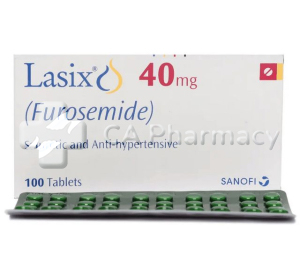
Heart Disease Medications — Furosemide (Lasix) for Heart Failure & Edema: How Loop Diuretics Work, Why Electrolyte Monitoring Is Critical, and What Every Canadian Patient on Furosemide Must Know
Reviewed by Dr. Sarah Mitchell, RPh, Clinical Pharmacist, Ontario College of Pharmacists #234567 — Updated January 2026
Heart failure affects approximately 750,000 Canadians and is one of the leading causes of hospitalisation in Canada. The hallmark symptom — fluid accumulation (edema) in the legs, lungs, and abdomen — results from the failing heart's inability to maintain adequate cardiac output, triggering a cascade of compensatory mechanisms that ultimately cause the kidneys to retain sodium and water. Loop diuretics, with furosemide (Lasix) as the most widely prescribed, are the cornerstone of symptomatic management: they act directly on the kidney's most powerful reabsorption site to force the elimination of this excess fluid. Understanding how furosemide works — at the molecular level — explains both its remarkable efficacy and its most clinically important risks.
Critical — prescription and monitoring required: Furosemide is a prescription-only medication in Canada. It requires regular blood monitoring (electrolytes, renal function) and should never be taken without physician supervision. If you experience sudden hearing loss or ringing in the ears, severe dizziness, or muscle cramps while taking furosemide — contact your physician or go to the emergency department immediately.
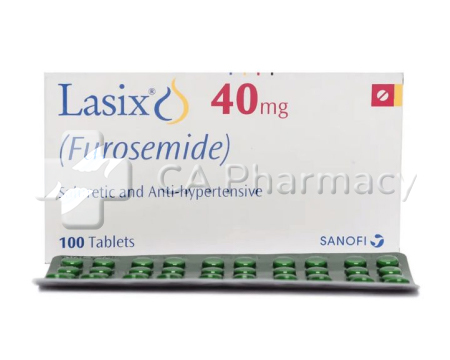
Furosemide (Lasix) at a Glance
How Furosemide Works — The NKCC2 Mechanism in the Loop of Henle
Furosemide is called a "loop diuretic" because it acts specifically on the thick ascending limb of the loop of Henle — the most powerful sodium-reabsorbing segment of the kidney tubule. Understanding this mechanism explains why furosemide is so much more potent than other diuretics:
From Dr. Sarah Mitchell, RPh: One of the most important things to understand about furosemide is that its bioavailability — the fraction of the oral dose that actually reaches the bloodstream and the kidney — is highly variable in heart failure patients. In healthy individuals, oral furosemide is approximately 51% absorbed. In patients with severe heart failure who have gut edema (swollen bowel wall), this can fall to 10–30%. This is one of the most common reasons Canadian heart failure patients on oral furosemide don't respond adequately: the drug isn't being absorbed, not that it isn't working. If your physician suspects gut edema is limiting absorption, switching to IV furosemide or an alternative loop diuretic with better oral bioavailability (torsemide — ~80%) may be recommended.
Electrolyte Monitoring — The Complete Guide for Canadian Patients on Furosemide
Regular blood monitoring is not optional on furosemide — it is a mandatory part of safe therapy. This is the most clinically important ongoing responsibility for patients on long-term furosemide:
| Electrolyte | Normal range | Action threshold | Why it matters with furosemide |
|---|---|---|---|
| Potassium (K⁺) | 3.5–5.0 mEq/L | <3.5 mEq/L — act | Most critical. Hypokalemia causes muscle weakness, cramps, cardiac arrhythmias. In patients on digoxin, even modest hypokalemia (K⁺ <3.5) dramatically increases digoxin toxicity risk — potentially fatal ventricular arrhythmia. Potassium supplementation (KCl) or potassium-sparing diuretic (spironolactone) often co-prescribed. |
| Sodium (Na⁺) | 135–145 mEq/L | <130 mEq/L — urgent | Hyponatraemia causes confusion, headache, seizures, and coma at severe levels. More common in elderly patients and those on excessive fluid restriction. Can paradoxically worsen in heart failure (dilutional hyponatraemia) despite furosemide therapy. |
| Magnesium (Mg²⁺) | 0.75–0.95 mmol/L | <0.75 — supplement | Often overlooked. Hypomagnesaemia causes muscle weakness, tremor, and cardiac arrhythmias — and critically makes hypokalaemia very difficult to correct. If a patient's potassium fails to rise with supplementation, check magnesium — low magnesium prevents cellular potassium uptake. |
| Calcium (Ca²⁺) | 2.15–2.55 mmol/L | <2.0 — monitor closely | Unlike thiazides (which cause hypercalcaemia), furosemide increases urinary calcium excretion. Hypocalcaemia causes numbness, tingling, muscle cramps, and at severe levels — cardiac arrhythmias and tetany. Less commonly monitored but clinically important in long-term therapy. |
| Creatinine / eGFR | eGFR >60 mL/min | Rising creatinine — review dose | Furosemide can cause pre-renal acute kidney injury through excessive volume depletion. In heart failure, the appropriate diuretic response is reduced perfusion pressure — an acceptable rise in creatinine of up to 20–30% is often tolerated. A larger rise suggests over-diuresis or genuine renal ischaemia. |
| Uric acid (urate) | 200–420 µmol/L | Gout attack | Furosemide competes with urate for tubular secretion — causing uric acid retention and hyperuricaemia. Patients with a history of gout are at significant risk of acute gout attacks on furosemide. Allopurinol dose may need adjustment. |
Canadian monitoring frequency guidance: When starting furosemide or changing dose — check electrolytes and creatinine within 1–2 weeks. On stable maintenance therapy — check every 3–6 months minimum, or more frequently with dose changes, inter-current illness (diarrhoea, vomiting, dehydration), or addition of new interacting medications. In elderly patients — check every 1–3 months. These are minimum intervals — your physician may recommend more frequent monitoring based on your clinical situation.
The Digoxin-Hypokalemia Interaction — The Most Clinically Dangerous Drug Interaction with Furosemide
Many Canadian patients with heart failure are prescribed both furosemide and digoxin. This combination requires meticulous potassium monitoring. Here is why:
Other Important Drug Interactions
Ototoxicity — The Hearing Loss Risk That Every Canadian Patient Must Know
Furosemide vs Torsemide — The Honest Comparison for Heart Failure
Torsemide (Demadex) is a newer loop diuretic that has attracted increasing attention in Canadian heart failure management. Understanding the key differences helps Canadian patients have informed conversations with their cardiologists:
| Factor | Furosemide (Lasix) | Torsemide (Demadex) |
|---|---|---|
| Oral bioavailability | ~51% — variable (10–30% in severe HF with gut edema) | ~80% — more consistent in heart failure |
| Duration of action | 4–6 hours | 6–8 hours |
| Potency equivalence | 40mg furosemide | 10–20mg torsemide |
| Heart failure outcomes | Standard of care for decades | Some evidence of lower rehospitalisation rates and improved HF symptoms; TRANSFORM-HF trial (2022): no mortality difference |
| Anti-aldosterone effect | None | Mild aldosterone-antagonist properties — may reduce myocardial fibrosis |
| Availability in Canada | Widely available — most provincial formularies | Available but less commonly prescribed; formulary coverage varies by province |
| Best for: | Most patients with HF edema; acute decompensation (IV available); first-line choice | Patients with inadequate response to furosemide; absorption concerns; chronic stable HF management |
Dosing — Health Canada Guidance for Oral Furosemide
| Indication | Starting dose | Maintenance dose | Maximum |
|---|---|---|---|
| Heart failure edema | 20–40mg once daily (morning) | 40–80mg once or twice daily — titrate to response | 600mg/day (severe edema) |
| Hypertension (adjunct) | 40mg twice daily | Adjust per blood pressure response | See physician |
| Elderly patients (≥65) | 10–20mg once daily — very low start | Titrate slowly — increased electrolyte and falls risk | Lower than standard |
| Renal impairment (eGFR <30) | Higher doses required | Reduced renal clearance of furosemide — may need 80–160mg to achieve adequate diuresis as eGFR falls | Physician-determined |
Practical timing — why morning dosing matters: Furosemide should generally be taken in the morning and, if twice-daily, no later than 2–3pm. Taking furosemide in the evening causes nocturia (excessive nighttime urination) that significantly disrupts sleep — one of the most common reasons patients on heart failure therapy have poor sleep quality. If you must take a second daily dose, try to take it by mid-afternoon.
When to Weigh Yourself — The Home Monitoring Approach for Heart Failure
For Canadian patients with heart failure on furosemide, daily weight monitoring is as important as taking the medication itself:
- Weigh yourself every morning — after urinating, before eating, in similar clothing. Record your weight daily.
- Establish your "dry weight" with your cardiologist or heart failure nurse — this is your target weight when optimally diuresed
- Weight gain of 1–2 kg (2–4 lbs) in 2–3 days — contact your heart failure team; early fluid re-accumulation requiring dose adjustment
- Weight gain of 2+ kg overnight — significant fluid retention; call your physician same day
- Unexpected weight loss of >1 kg/day — possible over-diuresis; if accompanied by dizziness, thirst, or dark urine — contact your physician
- Many Canadian hospitals and heart failure clinics have 24-hour heart failure hotlines — ask your cardiologist whether this is available in your area
Frequently Asked Questions — Furosemide in Canada
Can I eat potassium-rich foods to replace what furosemide wastes? Yes — and this is strongly encouraged. Foods rich in potassium include bananas (422mg/medium banana), oranges, potatoes (with skin), avocados, spinach, yogurt, and salmon. However, dietary potassium alone is often insufficient to maintain potassium balance on higher doses of furosemide — your physician will likely also prescribe a potassium supplement (KCl) or a potassium-sparing diuretic (spironolactone, amiloride) to complement dietary sources. Never change your potassium supplementation dose without blood work confirmation of your current potassium level.
Why am I more thirsty on furosemide? Furosemide causes significant sodium and water loss. The resulting reduction in circulating volume stimulates thirst as the body's normal compensatory response. Paradoxically, in heart failure, excessive fluid intake in response to thirst can re-accumulate the edema you're trying to eliminate. Most heart failure patients are advised to limit daily fluid intake to 1.5–2 litres per day. Ask your heart failure team what your specific daily fluid restriction should be.
Can I take furosemide if I have kidney disease? Yes — in fact, furosemide is often preferred over thiazide diuretics in patients with impaired renal function (eGFR <30 mL/min), because thiazides lose efficacy at low GFR while loop diuretics remain active. However, renal impairment reduces furosemide's own clearance — higher doses may be needed to achieve diuresis, but the risk of ototoxicity also increases. More frequent electrolyte and creatinine monitoring is essential.
My ankles are still swollen despite taking furosemide — why? Several reasons are possible: (1) inadequate dose — the dose may need to be increased; (2) poor absorption — gut edema in heart failure reduces oral furosemide bioavailability; (3) dietary sodium excess — a high-salt diet can overcome furosemide's effect; (4) NSAID use — ibuprofen and similar pain medications block furosemide's effect; (5) worsening heart failure — the underlying condition may be progressing. Discuss with your cardiologist rather than self-adjusting your dose.
Do I need a prescription for furosemide in Canada? Yes. Furosemide is a prescription medication in Canada requiring a valid prescription from a licensed Canadian physician or nurse practitioner. Routine blood monitoring is required for safe long-term use.
How long does delivery take to my province? Standard delivery to all Canadian provinces and territories takes 4–9 business days. All orders ship in neutral packaging with no external reference to the pharmacy or medication.
Products in This Category
The content on this page is for educational purposes only and does not constitute medical or pharmacological advice. Furosemide is a prescription medication in Canada requiring a valid prescription and regular laboratory monitoring. Never start, stop, or adjust furosemide without physician guidance. If you experience sudden hearing loss or tinnitus, severe dizziness, muscle cramps, chest pain, or significant swelling while taking furosemide — contact your physician or go to the nearest emergency department immediately. Patients on both furosemide and digoxin must maintain potassium levels ≥3.5 mEq/L to prevent life-threatening digoxin toxicity.