
Alcoholism Treatment — Antabuse (Disulfiram 500mg): How Aversion Therapy Works, Who It Helps, and the Hidden Alcohol Sources Every Patient Must Know
Reviewed by Dr. Sarah Mitchell, RPh, Clinical Pharmacist — Updated January 2026
Alcohol use disorder (AUD) affects an estimated 18% of Canadians at some point in their lives, and is the most prevalent substance use disorder in the country (CAMH, 2024). Antabuse (disulfiram) is one of the oldest pharmacological tools in addiction medicine — first approved in the 1950s — and works through a mechanism entirely different from other AUD medications: it does not reduce cravings, it does not address brain chemistry, and it does not make alcohol less pleasurable. Instead, it makes drinking acutely dangerous and deeply unpleasant by blocking the body's ability to metabolize acetaldehyde — a toxic alcohol byproduct. This page explains the mechanism, who benefits, the complete safety profile, and the critical list of hidden alcohol sources that every patient taking disulfiram must know.
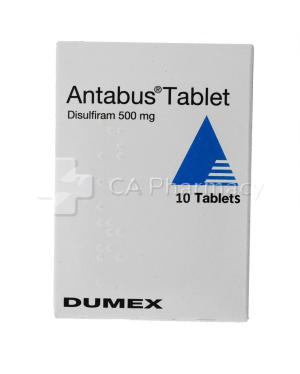
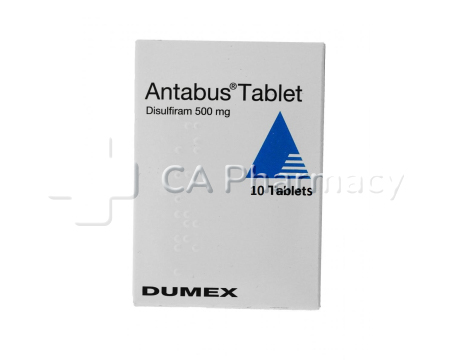
Important note for Canadian patients: Disulfiram is no longer manufactured in Canada as a commercial tablet product (CAMH, 2024). Canadian patients access disulfiram through licensed online pharmacies importing the medication, compounding pharmacies, or international sources. Antabuse tablets (Dumex brand) remain available and are the standard formulation used in Canadian clinical practice.
Antabuse at a Glance
How Antabuse Works — The Aldehyde Dehydrogenase Mechanism
Most AUD medications work on brain chemistry — cravings, reward pathways, opioid receptors. Disulfiram works differently: it intercepts the biochemical metabolism of alcohol in the liver and creates a toxic accumulation. Understanding this explains both why it is effective and why it carries significant risks:
From Dr. Sarah Mitchell, RPh: The therapeutic principle of disulfiram is classical aversion conditioning — every drink is linked to a genuinely unpleasant, and sometimes dangerous, physical experience. This makes it most effective for patients who are already motivated to stop drinking and want an additional pharmacological deterrent. It is least effective when compliance is unsupervised, as a patient who wants to drink can simply stop taking the tablet. CAMH guidelines note that disulfiram is most effective when taken under supervision of a partner, pharmacist, or recovery sponsor.
Who Benefits from Disulfiram — and Who Should Not Use It
Hidden Alcohol Sources — The List Every Patient on Antabuse Must Know
This is the section most competitor pharmacy sites fail to include — and it is one of the most clinically important aspects of disulfiram therapy. Even trace amounts of alcohol can trigger a disulfiram reaction. Many everyday products contain enough alcohol to cause symptoms:
Antabuse vs Other Alcohol Use Disorder Medications — The Honest Canadian Comparison
Disulfiram is one of three medications recognized by CAMH and Canadian addiction guidelines for alcohol use disorder. Understanding the differences helps patients and physicians choose the most appropriate approach:
| Factor | Antabuse (Disulfiram) | Naltrexone (Vivitrol / ReVia) | Acamprosate (Campral) |
|---|---|---|---|
| Mechanism | Blocks alcohol metabolism → toxic acetaldehyde accumulation → aversion reaction | Opioid antagonist — blocks the pleasurable effects and endorphin release from alcohol. Reduces cravings. | Modulates glutamate / GABA — restores brain chemistry balance disturbed by alcohol dependence. Reduces withdrawal discomfort. |
| How it helps | Deterrent — makes drinking dangerous and unpleasant. Does NOT reduce cravings. | Reduces cravings and alcohol's rewarding effects. First-line per CAMH guidelines. | Reduces post-acute withdrawal symptoms. Best for maintaining abstinence after detox. |
| Can be started while still drinking? | No — must be fully abstinent first | Yes — can be started while still drinking | After detox — not during active heavy drinking |
| Liver safety | Hepatotoxic — requires liver monitoring. Contraindicated in liver disease. | Use with caution in liver disease. Not for acute hepatitis. | Renally cleared — safe option in liver disease patients. |
| Health Canada status | Approved. No longer commercially manufactured in Canada — obtained via compounding or import. | Approved. First-line per CAMH. Oral (ReVia) and injectable monthly (Vivitrol) forms available. | Approved. Covered in Ontario with LU code. Requires dosage adjustment in renal impairment. |
| Best suited for | Motivated, abstinent patients wanting a strong deterrent tool, with adequate supervision | Most patients — first-line. Reduces cravings and relapse even without full abstinence commitment. | Post-detox patients with protracted withdrawal symptoms; liver-impaired patients who cannot use disulfiram or naltrexone. |
From Dr. Sarah Mitchell, RPh: Disulfiram is not the first-line pharmacological treatment for alcohol use disorder in Canadian clinical guidelines — naltrexone holds that position (CAMH, 2024). Disulfiram is particularly valuable as an adjunct for highly motivated patients who specifically want a deterrent mechanism and who have a reliable supervision structure. It should never be prescribed without accompanying counselling, behavioural therapy, and ideally a recovery support network. Prescribing disulfiram alone without psychosocial support is not clinically beneficial per published evidence.

Dosage Protocol
Side Effects
- During treatment (without alcohol): Drowsiness, fatigue, metallic or garlic-like taste in the mouth, skin rash, headache. These usually diminish after the first 1–2 weeks.
- Neurological: Peripheral neuropathy with long-term use. Depression and, rarely, psychosis have been reported. Report mood changes to your doctor.
- Hepatic (liver): Hepatitis and liver failure have been reported — rare but serious. Requires regular liver function monitoring. Do not use in patients with existing liver disease.
- With alcohol (disulfiram-alcohol reaction): Flushing, severe headache, nausea and vomiting, chest pain, rapid heartbeat, drop in blood pressure, dizziness, blurred vision, difficulty breathing, sweating. Severe reactions can include seizures, loss of consciousness, myocardial infarction, and death. Seek emergency medical care if a severe reaction occurs.
Frequently Asked Questions — Antabuse in Canada
Does disulfiram reduce alcohol cravings? No. This is a critical distinction from naltrexone and acamprosate. Disulfiram does not affect brain chemistry, opioid receptors, or the neurological drive to drink. It works purely as an aversive deterrent — if you drink, you become ill. It is most effective as a supplementary commitment device for patients who are already motivated to abstain.
Can I drink "a little" while on Antabuse? No. Even small amounts of alcohol — including trace quantities in food, medication, or topical products — can trigger the disulfiram-alcohol reaction. The reaction severity depends on both the dose of disulfiram and the amount of alcohol, but there is no safe threshold. Complete alcohol avoidance is mandatory during treatment and for up to 14 days after stopping.
Why is brand-name Antabuse no longer made in Canada? Disulfiram is no longer commercially manufactured in Canada as a branded tablet product (CAMH, 2024). This is a manufacturer commercial decision, not a safety or efficacy issue. Canadian patients access disulfiram through licensed online pharmacies, compounding pharmacies producing the formulation locally, or prescription imports. The Antabuse (Dumex) tablet remains the standard imported formulation used in Canadian clinical practice.
Do I need a prescription for Antabuse in Canada? Yes. Disulfiram is a prescription-only medication in Canada. It requires medical assessment, liver function testing before initiation, and ongoing monitoring. Never attempt to start disulfiram without physician supervision — the risks without proper assessment are significant.
Can Antabuse be used long-term? Yes — with appropriate monitoring. Clinical studies of up to 10 years show acceptable safety profiles with regular liver function monitoring. Many patients use disulfiram for years during their recovery. The decision to continue long-term is made jointly with the prescribing physician based on individual response and ongoing commitment to recovery.
How long does delivery take to my province? Standard delivery to all Canadian provinces and territories takes 4–9 business days. All orders are shipped in neutral packaging with no external reference to the pharmacy name or medication type.
Additional Resources for Alcohol Use Disorder in Canada
- CAMH (Centre for Addiction and Mental Health) — camh.ca — Canada's leading mental health and addiction authority
- CCSA (Canadian Centre on Substance Use and Addiction) — ccsa.ca
- Alcoholics Anonymous Canada — aa.org
- Crisis line: 1-800-668-6868 (Kids Help Phone) | Provincial addiction lines available in all provinces
The content on this page is for educational purposes only and does not constitute medical or pharmacological advice. Antabuse (disulfiram) is a prescription medication in Canada requiring physician supervision. Alcohol use disorder is a serious medical condition — treatment should be managed in partnership with a licensed Canadian healthcare provider, addiction specialist, or addiction medicine clinic. If you or someone you know is experiencing a crisis related to alcohol use, contact your provincial crisis line or go to your nearest emergency department.