

Antifungal Medications — Fluconazole (Diflucan): How It Disrupts Fungal Cell Membranes, What It Treats, and the Drug Interactions Every Patient Must Know
Reviewed by Dr. Sarah Mitchell, RPh, Clinical Pharmacist — Updated January 2026
Fungal infections affect an estimated 1 in 4 Canadians at some point — most commonly vaginal candidiasis (yeast infections), oral thrush, and skin or nail fungal infections. Fluconazole (Diflucan) is the most widely prescribed oral antifungal medication in Canada and globally, belonging to the triazole class. It works by starving the fungus of ergosterol — a critical component of fungal cell membranes that has no equivalent in human cells — making it a highly selective treatment with a strong safety profile. This page explains the mechanism in detail, the spectrum of activity (including which fungi fluconazole cannot treat), dosing by indication, and the important drug interactions every patient and prescriber must know.

Fluconazole at a Glance
How Fluconazole Works — The Ergosterol Biosynthesis Mechanism
Fluconazole's selectivity against fungi — with minimal toxicity to human cells — is explained by one key biological difference: fungi rely on ergosterol as the primary sterol in their cell membranes, while human cells use cholesterol. Fluconazole targets the fungal pathway specifically:
From Dr. Sarah Mitchell, RPh: The fungistatic nature of fluconazole is clinically important for immunocompromised patients. In a patient with a healthy immune system, fungistatic activity is usually sufficient — the immune system eliminates what the drug suppresses. In HIV-positive patients, transplant recipients, or those on chemotherapy, the immune system cannot complete this clearance, which is why recurrence rates are higher in these populations and why fungicidal agents like echinocandins or amphotericin B are sometimes required for serious systemic infections.
Fluconazole Spectrum of Activity — What It Treats and Its Critical Limitations
Why this matters for recurrent yeast infections: If you have had multiple yeast infections treated with fluconazole without resolution, your infection may involve a fluconazole-resistant strain (C. glabrata or C. krusei) or may not be a yeast infection at all — bacterial vaginosis and other conditions produce similar symptoms but require completely different treatment. Persistent symptoms after fluconazole treatment require culture and sensitivity testing to identify the causative organism.
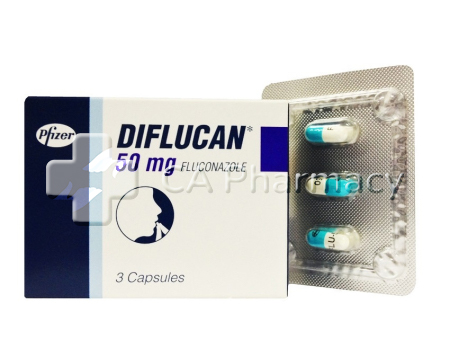
Dosage by Indication — Fluconazole Clinical Dosing Reference
| Indication | Loading dose | Maintenance | Duration |
|---|---|---|---|
| Vaginal candidiasis (yeast infection) | 150mg — single dose | — | One day |
| Oral thrush (oropharyngeal candidiasis) | 200mg day 1 | 100mg once daily | 7–14 days |
| Esophageal candidiasis | 200mg day 1 | 100–200mg once daily | Minimum 3 weeks; 2 weeks after symptom resolution |
| Recurrent vaginal candidiasis (suppressive) | 150mg | 150mg once weekly | 6 months (suppressive) |
| Candida UTI | 200mg day 1 | 50–200mg once daily | 7–14 days |
| Cryptococcal meningitis (consolidation) | 400mg day 1 | 200–400mg once daily | 10–12 weeks after CSF culture negative; indefinite in HIV |
All dosages are for adults with normal renal function. Dose adjustment required in renal impairment (GFR <50 mL/min). Always follow your physician's prescribed regimen.
Drug Interactions — Why Fluconazole Affects So Many Other Medications
Fluconazole is a potent inhibitor of CYP2C9 and a moderate inhibitor of CYP3A4 — two liver enzymes responsible for metabolising a large proportion of commonly prescribed medications. When fluconazole inhibits these enzymes, levels of co-administered drugs rise significantly, potentially causing toxicity. This is one of the most clinically important aspects of fluconazole therapy:
| Co-administered drug | Enzyme affected | Clinical consequence | Action |
|---|---|---|---|
| Warfarin (blood thinner) | CYP2C9 | ↑ warfarin levels → significantly elevated INR → major bleeding risk | Monitor INR closely; reduce warfarin dose |
| Statins (atorvastatin, simvastatin) | CYP3A4 | ↑ statin levels → increased risk of myopathy and rhabdomyolysis | Temporarily reduce statin dose or pause |
| Oral contraceptives (estrogen/progestin) | CYP3A4 | ↑ hormone levels — short-term effect with single-dose fluconazole is usually minimal; prolonged courses may reduce OCP efficacy | Inform prescriber; use barrier method if long course |
| Sulfonylureas (glipizide, glyburide) | CYP2C9 | ↑ sulfonylurea levels → severe hypoglycaemia risk in diabetic patients | Monitor blood glucose closely |
| QT-prolonging drugs (amiodarone, certain antipsychotics) | Direct QT effect | Additive QT prolongation → risk of torsades de pointes (serious arrhythmia) | Avoid combination or ECG monitoring |
| Tacrolimus / cyclosporine (transplant) | CYP3A4 | ↑ immunosuppressant levels → nephrotoxicity and other toxicity | Dose adjustment + level monitoring essential |
| Phenytoin (epilepsy) | CYP2C9 | ↑ phenytoin levels → toxicity (nystagmus, ataxia, confusion) | Monitor phenytoin levels; consider dose reduction |
From Dr. Sarah Mitchell, RPh: Before starting fluconazole — even for a single-dose yeast infection treatment — always tell your pharmacist or doctor every medication you are currently taking. Warfarin and sulfonylurea interactions can be serious even after a single 150mg dose. Many Canadians take warfarin for atrial fibrillation or previous blood clots and are unaware that a simple yeast infection treatment can dramatically elevate their INR. This interaction is preventable with a 30-second medication review.
Pregnancy Warning — Fluconazole and Birth Defects
Health Canada Warning: High-dose fluconazole (400–800mg/day) used in pregnancy has been associated with a pattern of birth defects (Antley-Bixler syndrome-like). Even single low doses (150mg) have been associated in some observational studies with an increased risk of spontaneous miscarriage and cardiac septal defects. The absolute risk increase from a single dose is debated and likely small — but fluconazole should be avoided in pregnancy whenever possible.
Canadian clinical guidance: For vaginal candidiasis during pregnancy, Health Canada and Canadian obstetric guidelines recommend topical azole creams (clotrimazole, miconazole) as first-line treatment instead of oral fluconazole. If you are pregnant, planning to become pregnant, or breastfeeding, discuss alternatives with your physician or pharmacist before using fluconazole.
Side Effects
Common (≥1%) — usually mild
- Nausea
- Headache
- Abdominal pain / stomach upset
- Diarrhoea
- Dizziness
- Skin rash
- Elevated liver enzymes (transient)
Less common — report to doctor
- QT interval prolongation (cardiac monitoring may be needed)
- Seizures (rare)
- Hair loss (alopecia) with prolonged use
- Adrenal insufficiency (rare; prolonged therapy)
- Thrombocytopenia (low platelet count)
Serious — seek immediate care
- Hepatotoxicity / liver failure — jaundice, dark urine, severe abdominal pain (rare but potentially fatal)
- Stevens-Johnson syndrome — severe blistering skin reaction; discontinue immediately if rash develops
- Anaphylaxis — severe allergic reaction
Contraindications
- Hypersensitivity to fluconazole, other azole antifungals (ketoconazole, itraconazole, voriconazole), or any ingredient
- Concurrent terfenadine or astemizole — absolute contraindication; risk of fatal cardiac arrhythmia
- Concurrent cisapride — absolute contraindication; serious QT prolongation
- Pregnancy — avoid unless essential. Topical antifungals are first-line in pregnancy.
- Severe hepatic impairment — use with extreme caution; monitor liver function
- Prolonged QT syndrome or concurrent QT-prolonging medications — assess risk/benefit carefully
Frequently Asked Questions — Fluconazole in Canada
Why didn't fluconazole work for my yeast infection? Several reasons are possible: the infection may involve a fluconazole-resistant strain (C. glabrata or C. krusei); the symptoms may not be caused by Candida at all — bacterial vaginosis, contact dermatitis, and other conditions mimic yeast infection symptoms; or the course may have been too short. A vaginal culture and sensitivity test will identify the organism and its resistance profile, guiding appropriate treatment.
Can I drink alcohol while taking fluconazole? Moderate alcohol consumption does not have a direct dangerous interaction with fluconazole. However, both alcohol and fluconazole are processed by the liver, and concurrent use adds hepatic stress. Avoid alcohol during any fluconazole course longer than a single dose, particularly if you have any liver condition.
How long does fluconazole take to work? For vaginal yeast infections (single 150mg dose), most patients notice significant improvement within 24–48 hours and full resolution within 3–7 days. For oral thrush, improvement typically occurs within 2–3 days of starting treatment. If symptoms have not improved after 5–7 days, contact your healthcare provider — the organism may be resistant or the diagnosis may need to be revisited.
Does fluconazole treat nail fungus (onychomycosis)? Yes — fluconazole is used off-label for nail fungus infections, typically 150mg once weekly for 3–6 months for fingernails and 6–12 months for toenails. It is less commonly used than terbinafine (Lamisil) for this indication, which has superior clinical trial evidence for dermatophyte nail infections. Discuss the best option with your doctor.
Do I need a prescription for fluconazole in Canada? Yes. Fluconazole is a prescription-only medication in Canada. Your family physician, nurse practitioner, or pharmacist (in some provinces where pharmacists have prescribing authority) can prescribe it.
How long does delivery take to my province? Standard delivery to all Canadian provinces and territories takes 4–9 business days. All orders are shipped in neutral packaging with no external reference to the pharmacy name or medication type.
Related Category
- Antifungals Category — overview of antifungal therapy in Canada
The content on this page is for educational purposes only and does not constitute medical or pharmacological advice. Fluconazole is a prescription medication in Canada. Consult a licensed Canadian healthcare provider before starting antifungal therapy, particularly if you are pregnant, breastfeeding, taking other medications, or have liver or kidney disease. Recurrent yeast infections should be evaluated by a physician to confirm the causative organism and rule out underlying conditions such as diabetes, immune deficiency, or antibiotic overuse.