


Medically reviewed by Dr. Sarah Mitchell, RPh, Clinical Pharmacist — Updated January 2026
What Is Lasix and How Does It Work?
Furosemide belongs to the loop diuretic drug class — named for the specific site in the kidney where it acts: the ascending loop of Henle. Loop diuretics are the most potent class of diuretics available, producing significantly greater fluid elimination than thiazide diuretics (hydrochlorothiazide) or potassium-sparing diuretics (spironolactone).
Mechanism of action: Furosemide inhibits the Na⁺-K⁺-2Cl⁻ cotransporter (NKCC2) in the thick ascending limb of the loop of Henle. This cotransporter normally moves sodium, potassium, and chloride from the tubular fluid back into the bloodstream. By blocking it, Furosemide prevents this reabsorption — large amounts of sodium, chloride, and water remain in the tubule and are excreted in the urine. This is why Furosemide produces dramatically more urine output than other diuretic classes.
Secondary effects: Because the NKCC2 transporter also reabsorbs potassium and magnesium, Furosemide causes significant losses of both — leading to hypokalaemia (low potassium) and hypomagnesaemia. This is the most clinically important side effect of Lasix, and is the reason potassium monitoring and often supplementation are mandatory during long-term therapy.
Onset and duration: Oral Furosemide: onset within 30 to 60 minutes, peak effect 1 to 2 hours, duration 6 to 8 hours. This is why Furosemide is typically taken in the morning, and why a second dose — if needed — should be taken no later than early afternoon to avoid significant nighttime urination.
Critical: Lasix works only in the presence of adequate kidney function. In patients with severe renal impairment, very high doses may be required to achieve therapeutic effect. Always take Lasix exactly as prescribed — never adjust your dose without consulting your physician.
Health Canada Approved Indications for Lasix in Canada
Furosemide (Lasix) is Health Canada-approved for the following indications:
- Edema associated with congestive heart failure (CHF): Lasix is the most commonly used diuretic in Canadian heart failure management. It rapidly reduces pulmonary congestion and peripheral oedema, improving breathing and reducing fluid overload
- Edema associated with liver cirrhosis: Used alongside spironolactone as the standard diuretic combination for cirrhotic ascites in Canadian hepatology practice
- Edema associated with renal disease: Including nephrotic syndrome and chronic kidney disease with fluid retention. Higher doses are often required as kidney function declines
- Hypertension: As an adjunct antihypertensive, particularly in patients with concurrent fluid retention or renal impairment. Less commonly used as first-line monotherapy for hypertension than thiazides in Canadian guidelines
- Acute pulmonary oedema: Intravenous Furosemide is a cornerstone emergency treatment for acute pulmonary oedema in Canadian emergency departments — producing rapid fluid elimination and venous vasodilation
- Hypercalcaemia: High-dose IV Furosemide with saline infusion is used to increase urinary calcium excretion in severe hypercalcaemia
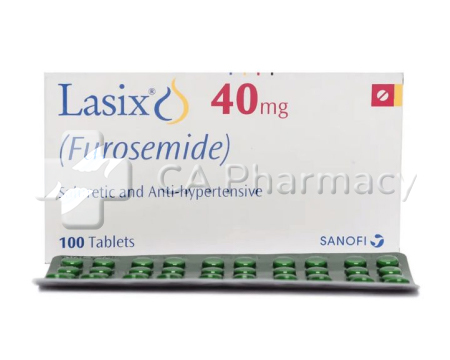
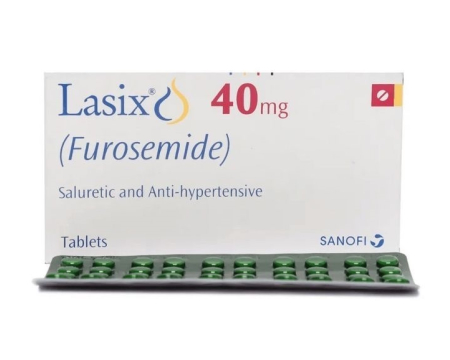
Lasix Brand vs Generic Furosemide in Canada
| Lasix Brand (Sanofi) | Generic Furosemide (Canadian pharmacy) | Furosemide Generic (drugs-canada.com) | |
|---|---|---|---|
| Active ingredient | Furosemide | Furosemide (identical) | Furosemide (identical) |
| Available dosages | 20 mg, 40 mg, 80 mg | 20 mg, 40 mg, 80 mg | 20 mg, 40 mg, 80 mg, 100 mg |
| Health Canada DIN | Yes — DIN registered | Yes — DIN registered | Not individually DIN-registered — personal importation |
| Provincial drug plan coverage | Covered for approved indications | Covered — preferred generic | Not covered — private purchase |
| Price per 40 mg tablet (private) | CAD$0.50–1.20 | CAD$0.20–0.60 | From $0.87 USD |
| Prescription required in Canada | Yes — Schedule I | Yes — Schedule I | Grey area — Personal importation |
Important for Canadian patients with covered indications: Generic Furosemide is covered by virtually all Canadian provincial drug plans — including Ontario Drug Benefit (ODB), BC PharmaCare, Alberta Blue Cross (AHCIP), and Quebec RAMQ — for heart failure, hypertension, and renal oedema. If you have a valid Canadian prescription for an approved indication, contact your provincial drug plan before purchasing privately.

Dosage Guide — Lasix (Furosemide) in Canada
Dosage is highly individualised based on indication, renal function, and patient response. Always follow your Canadian physician's specific prescription.
Edema in heart failure (oral):
- Initial dose: 20–40 mg once daily in the morning
- Titrate by 20–40 mg increments every 6–8 hours until desired diuretic response
- Typical maintenance: 40–80 mg daily (single or divided dose)
- Maximum oral dose: 600 mg/day in refractory cases (under specialist supervision)
Hypertension (oral):
- Initial dose: 40 mg twice daily
- Adjust based on blood pressure response
- Typically used in combination with other antihypertensives
Edema in chronic kidney disease (oral):
- Higher doses often required as GFR declines
- 40–120 mg daily is common; doses up to 200–600 mg may be needed in advanced CKD
- Always under nephrologist supervision
When to take Lasix: Take your dose in the morning. If a second daily dose is prescribed, take it no later than 4 to 6 PM. Taking Lasix late in the day causes nighttime urination that disrupts sleep — one of the most common causes of poor adherence in Canadian patients.
With or without food: Furosemide can be taken with or without food. Taking it with food may reduce nausea but can slightly delay absorption. Consistency matters more than fed/fasted state.
Missed dose: Take as soon as you remember — unless it is late afternoon or evening, in which case skip that dose and continue with your next scheduled morning dose. Never double dose.
Critical Safety — Hypokalaemia and Electrolyte Monitoring
Hypokalaemia (low blood potassium) is the most clinically significant and most common adverse effect of Furosemide therapy in Canadian patients. It is directly caused by the mechanism of action of loop diuretics — potassium is lost in the urine along with sodium and water.
Why hypokalaemia matters:
- Cardiac arrhythmias: Low potassium destabilises the cardiac membrane potential, increasing the risk of ventricular arrhythmias — particularly in patients with pre-existing heart disease
- Digoxin toxicity — life-threatening interaction: This is the most important drug interaction involving Furosemide in Canadian cardiology. Digoxin (used for heart failure and atrial fibrillation) has a narrow therapeutic window. Hypokalaemia caused by Furosemide dramatically increases myocardial sensitivity to digoxin, causing digoxin toxicity at blood levels that would otherwise be safe. Symptoms include nausea, vomiting, visual disturbances (yellow/green halos), bradycardia, and potentially fatal arrhythmias. Any Canadian patient taking both Furosemide and Digoxin must have potassium levels monitored regularly and maintained in the normal range.
- Muscle weakness and cramps: Symptomatic hypokalaemia causes muscle weakness, leg cramps, and fatigue
- Increased risk with other medications: Corticosteroids (prednisone), laxatives, and other diuretics further deplete potassium
Mandatory electrolyte monitoring for all Canadian patients on long-term Furosemide:
- Serum potassium — check before starting, at 1 week, then every 3 months minimum
- Serum sodium — monitor for hyponatraemia
- Serum magnesium — Furosemide depletes magnesium, which also causes arrhythmias
- Serum creatinine and eGFR — monitor kidney function
- Blood glucose — Furosemide can cause hyperglycaemia in diabetic patients
- Uric acid — Furosemide reduces uric acid excretion and can precipitate gout
Potassium supplementation: Many Canadian physicians prescribe potassium chloride (KCl) supplements or potassium-sparing diuretics (spironolactone, amiloride) alongside Furosemide to prevent hypokalaemia. Do not take potassium supplements without your doctor's instruction — hyperkalemia is equally dangerous.
Potassium-rich foods to include in your diet while taking Furosemide: Bananas, avocado, oranges, potatoes, sweet potatoes, tomatoes, beans, lentils, dairy products, nuts, salmon, and spinach. A balanced diet rich in these foods supports potassium levels, though supplements may still be required.
Drug Interactions — What Canadian Patients Must Know
Furosemide has several clinically significant drug interactions. Inform your Canadian doctor and pharmacist about all medications — prescription, over-the-counter, and natural health products — before starting Lasix.
Life-threatening interactions — never combine without specialist supervision:
- Digoxin (Lanoxin): Furosemide-induced hypokalaemia greatly increases digoxin toxicity risk. Potassium must be maintained in normal range. Mandatory close monitoring of both potassium and digoxin blood levels
- Aminoglycoside antibiotics (gentamicin, tobramycin, amikacin): Both Furosemide and aminoglycosides are independently ototoxic (damage hearing). The combination dramatically increases the risk of permanent hearing loss. Avoid unless absolutely necessary, and never use together in patients with renal impairment
- Lithium: Furosemide reduces lithium excretion, increasing lithium blood levels and the risk of lithium toxicity (tremor, confusion, cardiac arrhythmias). Close lithium level monitoring is essential if this combination is unavoidable
Important interactions — inform your doctor:
- NSAIDs (ibuprofen/Advil, naproxen/Aleve, diclofenac): Reduce the diuretic and antihypertensive effect of Furosemide, and increase the risk of acute kidney injury when combined. Many Canadian patients do not realise their over-the-counter pain relievers are blunting their diuretic treatment. Acetaminophen (Tylenol) is the preferred analgesic for patients on Furosemide
- ACE inhibitors and ARBs (ramipril, perindopril, lisinopril, candesartan, valsartan): Additive blood pressure lowering. First-dose hypotension can be significant — reduce ACE inhibitor dose when adding Furosemide and monitor blood pressure closely
- Other antihypertensives: Additive hypotension. Monitor blood pressure particularly when changing doses
- Corticosteroids (prednisone, dexamethasone): Both cause potassium loss — combination increases hypokalaemia risk significantly
- Antidiabetic medications: Furosemide can raise blood glucose. Diabetic Canadian patients may need adjustment of insulin or oral antidiabetic drugs
- Probenecid: Reduces Furosemide's renal secretion, decreasing its diuretic effect
- Sucralfate (Sulcrate): Reduces Furosemide absorption — separate doses by at least 2 hours
Natural health products:
- Licorice root: Can cause potassium loss, worsening Furosemide-induced hypokalaemia. Avoid
- St. John's Wort: May reduce Furosemide levels. Avoid during therapy
Side Effects of Lasix (Furosemide)
Very common side effects — related to diuretic mechanism:
- Increased urination — expected and therapeutic. Onset 30–60 minutes after oral dose
- Thirst
- Electrolyte disturbances — hypokalaemia, hyponatraemia, hypomagnesaemia (monitor regularly)
- Dizziness and lightheadedness — particularly on standing (orthostatic hypotension)
Common side effects:
- Muscle cramps and weakness — often a sign of hypokalaemia
- Headache
- Nausea
- Hyperuricaemia — Furosemide reduces uric acid excretion. Can precipitate acute gout attacks in susceptible Canadian patients. Inform your doctor if you have a history of gout
- Hyperglycaemia — blood glucose elevation, particularly relevant for Canadian patients with diabetes or pre-diabetes
- Photosensitivity — increased sensitivity to sunlight. Use sunscreen and protective clothing during outdoor activities
Less common but important:
- Ototoxicity — hearing loss or tinnitus, particularly at high doses, with rapid IV administration, or in combination with aminoglycoside antibiotics. Can be irreversible. Report any hearing changes immediately
- Dehydration — particularly in elderly Canadian patients, during hot weather, or with fever/vomiting/diarrhoea. Signs: extreme thirst, dry mouth, decreased urine output, confusion, rapid heartbeat
- Acute kidney injury — can occur with excessive fluid depletion or NSAIDs combination
- Allergic reactions — Furosemide contains a sulfonamide group. Patients with sulfonamide antibiotic allergy should inform their doctor, though cross-reactivity with loop diuretics is uncommon but possible
- Thrombocytopenia — rare reduction in platelet count
Seek immediate medical attention — call 911 or go to your nearest emergency department if you experience:
- Severe muscle weakness, cramps, or paralysis — may indicate severe hypokalaemia
- Irregular heartbeat or palpitations
- Sudden hearing loss or severe tinnitus
- Signs of severe dehydration — confusion, very low urine output, rapid weak pulse
- Severe allergic reaction — swelling of face, lips, tongue, or throat; difficulty breathing
- Chest pain
Who Should Not Take Lasix
Furosemide is contraindicated or requires specialist supervision in patients who:
- Have anuria (no urine production) — Furosemide cannot work without kidney filtration
- Have severe electrolyte depletion — particularly hypokalaemia or hyponatraemia — before correction
- Are allergic to Furosemide or sulfonamide-containing compounds (with caution)
- Are in the first trimester of pregnancy — Furosemide is generally avoided; discuss risk-benefit with your Canadian obstetrician
- Are breastfeeding — Furosemide passes into breast milk and may suppress lactation
- Have severe liver failure with hepatic encephalopathy — electrolyte disturbances from diuretics can worsen encephalopathy
- Have Addison's disease — adrenal insufficiency
- Are taking aminoglycoside antibiotics — avoid combination due to ototoxicity risk unless absolutely essential
Use with caution in: Elderly Canadian patients (high risk of dehydration, falls, electrolyte disturbances), patients with diabetes (monitor blood glucose), patients with gout (monitor uric acid), patients with prostate hypertrophy (urinary retention risk), and patients with low blood pressure at baseline.

Legal Status in Canada — Prescription and Importation
Health Canada status: Furosemide (Lasix) is a Schedule I prescription-only medication in Canada. A valid prescription from a licensed Canadian physician is required to purchase it at a Canadian pharmacy.
Provincial drug plan coverage: Generic Furosemide is covered under virtually all Canadian provincial drug plans for approved indications — including Ontario Drug Benefit (ODB), BC PharmaCare, Alberta Blue Cross (AHCIP), Quebec RAMQ, Nova Scotia Pharmacare, and others. Canadian patients with heart failure, hypertension, or renal oedema being treated by their physician should confirm coverage with their provincial drug plan before purchasing privately.
Personal importation: Purchasing Furosemide from international online pharmacies for personal use in small quantities exists in a legal grey area in Canada. The Canada Border Services Agency (CBSA) may intercept shipments of Schedule I medications. Enforcement against personal-use quantities from reputable sources is rare — but not guaranteed.
Our recommendation: All Canadian patients using Furosemide — whether for heart failure, hypertension, or renal disease — should do so under the supervision of a licensed Canadian physician with regular electrolyte and kidney function monitoring. Furosemide is not a medication that should be self-adjusted. Telehealth platforms including Maple, Dialogue, and Tia Health offer convenient consultations for cardiovascular and general health management across Canada.
Delivery to All Canadian Provinces
drugs-canada.com ships discreetly to all Canadian provinces and territories. Standard delivery: 4–9 business days.
Ontario (Toronto, Ottawa, Mississauga, Hamilton, Brampton) — British Columbia (Vancouver, Victoria, Surrey, Kelowna) — Quebec (Montreal, Quebec City, Laval, Gatineau) — Alberta (Calgary, Edmonton, Red Deer) — Manitoba (Winnipeg) — Saskatchewan (Saskatoon, Regina) — Nova Scotia (Halifax) — New Brunswick (Moncton, Fredericton) — and all remaining provinces and territories.
Frequently Asked Questions — Lasix (Furosemide) in Canada
What is Lasix used for in Canada? Lasix (Furosemide) is Health Canada-approved for treatment of oedema (fluid retention) associated with heart failure, liver cirrhosis, and kidney disease, and for management of hypertension. It is one of the most commonly prescribed medications in Canadian cardiology and nephrology. It is also used in emergencies for acute pulmonary oedema.
Is Lasix the same as Furosemide? Yes — Lasix is the brand name (Sanofi) for the generic drug Furosemide. Both contain the same active ingredient at the same dosage and are therapeutically equivalent. Generic Furosemide is covered by most Canadian provincial drug plans and is significantly less expensive than brand Lasix when purchased privately.
What time of day should I take Lasix in Canada? Take your dose in the morning. If your physician has prescribed a second daily dose, take it no later than 4 to 6 PM. Taking Lasix in the evening causes significant nighttime urination that disrupts sleep — the most common reason Canadian patients miss doses.
How quickly does Lasix work? Oral Furosemide begins working within 30 to 60 minutes of taking it. Peak diuretic effect occurs at 1 to 2 hours. Duration of action is 6 to 8 hours. You will notice significantly increased urination for several hours after your dose — this is expected and therapeutic.
What foods should I eat while taking Lasix? Furosemide causes potassium loss. Include potassium-rich foods in your diet: bananas, avocado, oranges, potatoes, sweet potatoes, beans, lentils, tomatoes, dairy, and salmon. Your doctor may also prescribe potassium supplements. Limit salt intake as directed for heart failure or hypertension management. Drink enough water to stay hydrated, but follow your fluid restriction instructions if your doctor has prescribed a fluid limit.
Can I take ibuprofen (Advil) with Lasix? No — this is one of the most important interactions for Canadian patients to know. NSAIDs including ibuprofen (Advil, Motrin) and naproxen (Aleve) significantly reduce Furosemide's diuretic effect and increase the risk of kidney injury. Use acetaminophen (Tylenol) instead for pain relief while taking Furosemide.
Why does my doctor check my blood tests while I take Lasix? Furosemide causes loss of potassium, sodium, and magnesium in the urine. Low potassium (hypokalaemia) is common and dangerous — it causes muscle cramps, weakness, and heart arrhythmias, and is particularly dangerous for patients also taking Digoxin. Regular blood tests (electrolytes, creatinine, glucose) are mandatory for safe long-term Furosemide use.
How long does Lasix stay in your system? The half-life of Furosemide is approximately 1 to 2 hours in healthy adults — but can extend to 12 hours or more in patients with significant kidney disease. The diuretic effect lasts 6 to 8 hours after an oral dose.
Is Lasix covered by my provincial drug plan in Canada? Yes — generic Furosemide is covered by virtually all Canadian provincial drug plans for approved indications including heart failure, hypertension, and renal oedema. Contact your provincial drug plan or pharmacist to confirm your coverage.
Can I drink alcohol while taking Lasix? Alcohol should be minimised or avoided. Both alcohol and Furosemide lower blood pressure, and the combination increases the risk of significant hypotension, dizziness, and falls — particularly dangerous for elderly Canadian patients.
How long does delivery to Canada take? Standard delivery to all Canadian provinces takes 4 to 9 business days. All orders are delivered in plain, unmarked packaging with no reference to the contents or sender. A tracking number is provided with every order.