


Medically reviewed by Dr. Sarah Mitchell, RPh, Clinical Pharmacist — Updated April 2026
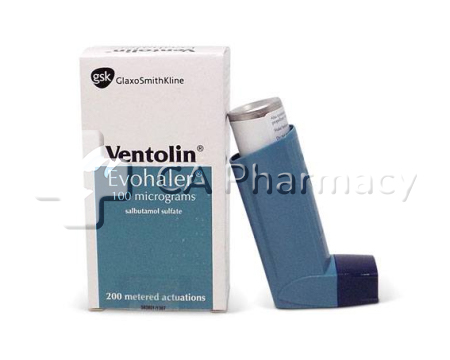
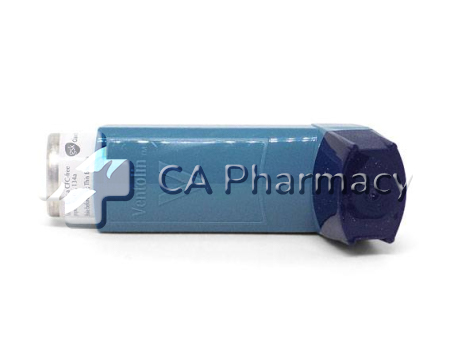
What Is Ventolin Inhaler (Salbutamol)? — Complete Mechanism of Action
Salbutamol is a selective beta-2 adrenergic agonist — it binds to beta-2 adrenergic receptors located on the smooth muscle cells that surround the bronchi and bronchioles in the lungs. Understanding the mechanism explains why it works so quickly and why inhaled delivery is vastly superior to oral:
The bronchospasm pathophysiology in asthma: In asthma, chronic airway inflammation makes the bronchial smooth muscle abnormally reactive (hyperresponsive) — exposing the airways to triggers (allergens, cold air, exercise, viral infections, smoke) causes the smooth muscle to contract, dramatically narrowing the airway lumen. This bronchoconstriction is what produces the characteristic asthma symptoms: the wheeze (turbulent airflow through narrowed tubes), chest tightness, reduced airflow, and air trapping that causes the sensation of breathlessness and the inability to fully exhale.
Salbutamol's bronchodilation cascade:
- Beta-2 receptor activation: Salbutamol binds selectively to beta-2 adrenergic receptors on bronchial smooth muscle cells — these are G-protein-coupled receptors linked to stimulatory G-proteins (Gs)
- Adenylyl cyclase activation → cAMP increase: Beta-2 receptor activation stimulates membrane-bound adenylyl cyclase, increasing the intracellular concentration of cyclic adenosine monophosphate (cAMP)
- Protein kinase A (PKA) activation: Elevated cAMP activates protein kinase A, which phosphorylates myosin light chain kinase (MLCK) — reducing its activity and preventing muscle contraction
- Smooth muscle relaxation → bronchodilation: With MLCK inhibited, myosin-actin cross-bridge cycling ceases, and the smooth muscle relaxes — the bronchial wall loosens and the airway lumen widens (bronchodilates)
- Result: Airway calibre increases within 5 minutes — airflow resistance falls, wheezing diminishes, and the sensation of breathlessness rapidly resolves
Why inhaled delivery is superior to oral salbutamol for acute asthma: Inhaled salbutamol delivers the active drug directly to the airway smooth muscle — achieving therapeutic bronchodilator concentrations in the lungs at doses hundreds of times lower than would be required orally. This topical delivery dramatically reduces systemic side effects (tremor, tachycardia) while maximising local efficacy. The inhaled route also produces bronchodilation within 5 to 15 minutes, compared to 30 to 60 minutes for the oral tablet. In acute asthma, the 5 to 15 minute inhaled onset can be life-saving.
Health Canada-Approved Indications
1. Acute asthma relief — the primary indication: Ventolin inhaler is the standard rescue medication for acute asthma symptoms in Canadian patients of all ages. It is used on an as-needed basis when asthma symptoms occur despite regular controller therapy. Every Canadian with asthma should carry their Ventolin inhaler at all times — at school, at work, during exercise, and on travel.
2. Exercise-induced bronchoconstriction (EIB) prevention: Exercise-induced bronchoconstriction is one of the most common asthma presentations in Canadian clinical practice — affecting approximately 90% of Canadians with asthma and up to 10% of the general population without diagnosed asthma. During vigorous exercise, rapid breathing of large volumes of air causes airway heat and water loss that triggers mast cell degranulation and bronchoconstriction in susceptible individuals. Cold, dry Canadian winter air dramatically amplifies EIB — making outdoor winter exercise particularly challenging for Canadian asthma patients.
- Protocol: 2 puffs (200mcg) of Ventolin inhaler taken 15 to 30 minutes before exercise prevents EIB in approximately 80% of susceptible individuals
- If exercising in cold air (below -10°C — common across most Canadian provinces from November through March), a scarf or balaclava over the mouth and nose warms and humidifies inspired air and reduces EIB trigger intensity
- Warm-up period (6–10 minutes of moderate-intensity exercise) before vigorous activity can reduce EIB severity by inducing a refractory period
3. COPD acute exacerbations: Salbutamol provides bronchodilator relief in acute exacerbations of COPD — typically used alongside ipratropium bromide (another bronchodilator class) in Canadian practice. COPD affects approximately 800,000 diagnosed Canadians, with substantially more undiagnosed.
4. Other reversible airway obstruction: Including acute bronchitis with bronchospasm, bronchospasm associated with allergic reactions, and bronchospasm during anaesthesia.
Ventolin Inhaler vs Ventolin Tablets — When to Use Which
| Ventolin Inhaler (MDI 100mcg) | Ventolin Tablets (2mg/4mg) | |
|---|---|---|
| Route of administration | Inhaled — direct lung delivery | Oral — systemic absorption |
| Onset of action | 5–15 minutes — faster | 30–60 minutes — slower |
| Effective lung dose | Much lower — 100–200mcg per dose | Much higher systemic exposure required |
| Systemic side effects | Minimal — targeted delivery | More pronounced — tremor, palpitations |
| Best for acute relief | Yes — first choice | Not appropriate for acute attacks |
| Canadian guidelines preference | Strongly preferred — all asthma guidelines | Use only when inhaler not possible |
| Best use case | All acute asthma, EIB prevention, most COPD | Young children unable to use inhaler; specific clinical situations |
Ventolin Inhaler vs Long-Acting Bronchodilators — Understanding Your Asthma Medications
A common source of confusion for Canadian asthma patients is the distinction between short-acting (rescue) and long-acting (controller) bronchodilators. Understanding this distinction is fundamental to safe asthma management:
| Ventolin/Salbutamol (SABA) | Long-Acting Beta-2 Agonists (LABA — Salmeterol, Formoterol) | Inhaled Corticosteroids (ICS — Fluticasone, Budesonide) | |
|---|---|---|---|
| Duration of action | 4–6 hours | 12+ hours | Ongoing anti-inflammatory effect |
| Onset | 5–15 minutes — fastest | 15–30 minutes (some rapid-onset LABAs faster) | Hours to weeks for full effect |
| Use for acute rescue | Yes — primary rescue medication | No — LABAs must not be used as rescue alone | No effect on acute bronchospasm |
| Use for prevention/control | As needed only — not a controller | Yes — daily scheduled controller (with ICS) | Yes — primary controller, reduces inflammation |
| Canadian CTS/GINA recommendation | Rescue inhaler for all asthma patients | Add-on to ICS when uncontrolled; never LABA alone | Foundation of asthma control therapy |
The critical Canadian clinical message: Ventolin (salbutamol) is a rescue medication — it quickly reverses bronchospasm when symptoms occur, but it does not treat the underlying airway inflammation that causes asthma. If you are using your Ventolin inhaler more than 2 days per week (on average, not counting exercise pre-treatment), your asthma is not adequately controlled. Canadian Thoracic Society guidelines recommend initiating or stepping up controller therapy (inhaled corticosteroids, combination ICS/LABA) rather than relying on increasing SABA use. Discuss frequent Ventolin use with your Canadian physician or respiratory specialist.
Correct Inhaler Technique — Step-by-Step Canadian Guide
Incorrect inhaler technique is one of the most common reasons Canadian asthma patients receive inadequate benefit from their Ventolin inhaler — studies suggest that 70–80% of patients have suboptimal technique. Even a single technique error significantly reduces lung deposition of salbutamol. Follow these steps precisely:
Before first use or if inhaler has not been used for more than 2 weeks: Prime the inhaler by releasing 4 test sprays into the air (away from face).
- Shake the inhaler vigorously for 5 full seconds. The canister contains a suspension — inadequate shaking results in non-uniform dose delivery. Shake before every single puff, including between multiple puffs in one session
- Remove the mouthpiece cap and inspect the mouthpiece. Check for visible debris, dust, or obstructions. Clean if needed by wiping with a dry cloth — do not wash with water and then immediately use while wet
- Use a spacer device if available — and for all children. A spacer (also called a valved holding chamber or aerochamber) significantly improves lung deposition by slowing the aerosol plume, allowing better inhalation coordination and reducing oropharyngeal deposition. In Canada, aerochamber spacers (AeroChamber Plus brand is dominant) are available at pharmacies and partially covered by some provincial drug benefit plans and private insurance. Canadian asthma guidelines recommend spacers for all patients, especially children and the elderly
- Stand upright or sit upright — do not use lying down if possible. Upright posture maximises airway patency and lung expansion
- Breathe out completely — exhale fully away from the inhaler mouthpiece. This creates maximal inspiratory capacity for the subsequent deep inhalation. Do not breathe out into the inhaler
- Place the mouthpiece firmly between your teeth and seal your lips around it (or use the spacer mouthpiece if applicable). Ensure no gaps around the seal — air leaks reduce dose delivery substantially
- Begin breathing in slowly and steadily — simultaneously press the canister down once firmly. The inhalation should be slow (over 3–5 seconds) and deep — NOT a rapid, forceful breath. Slow inhalation allows smaller aerosol particles to travel deep into the lower airways where beta-2 receptors are concentrated. Rapid forceful inhalation causes impaction of drug particles in the throat rather than lung deposition
- Continue inhaling as deeply as possible until lungs are fully expanded.
- Remove the inhaler from your mouth and hold your breath for 10 seconds (or as long as comfortably possible — aim for at least 5 seconds). This allows aerosol particles to deposit in the airway walls. Breathing out immediately after actuation significantly reduces lung deposition
- Breathe out slowly through your nose or through pursed lips.
- If a second puff is prescribed: wait 30–60 seconds, shake the inhaler again, and repeat from step 5.
After each use: Replace the mouthpiece cap to prevent contamination. Rinse your mouth with water and spit — reduces any salbutamol deposited in the oropharynx that could be swallowed (minor systemic absorption).

Canadian Dosing — Standard Clinical Protocol
Acute asthma symptom relief (rescue use):
- Adults and children over 12 years: 1 to 2 puffs (100–200mcg) as needed, up to every 4 hours. In an acute attack, repeat every 20 minutes for the first hour if needed (up to 3 rounds of 2 puffs) while awaiting medical attention or emergency services
- Children 4–11 years: 1 to 2 puffs as needed. Always use with a spacer in this age group — child-sized spacer (AeroChamber Plus with mask for children under 4; mouthpiece model for 4 and over)
- Children under 4 years: Use with face mask spacer; physician supervision for dosing in this age group
Exercise-induced bronchoconstriction prevention:
- 2 puffs (200mcg) 15 to 30 minutes before exercise. Protection typically lasts 2 to 4 hours
- Do not use more than 2 additional relief doses (on top of exercise pre-treatment) in 24 hours without reassessment
Warning signal — when Ventolin use indicates poor asthma control:
- Using rescue inhaler more than 2 days per week → discuss with your physician
- Going through more than 1 inhaler per month → asthma is poorly controlled; urgent physician review needed
- Waking from sleep with asthma symptoms more than once per month → poorly controlled asthma; physician review needed
Canadian Asthma Action Plan — Yellow Zone and Red Zone
Every Canadian asthma patient should have a written Asthma Action Plan — a document prepared with their physician that specifies what to do based on symptom severity. Ventolin plays a central role in the Yellow Zone and Red Zone management:
Green Zone (Good control — no action needed): No symptoms, no nighttime waking, can do all activities. Use Ventolin only for exercise prevention if needed. Continue regular controller medications.
Yellow Zone (Caution — take action): Some symptoms present — waking at night, symptoms affecting activities, or using rescue inhaler more than 2 days per week. Action: take 2 to 4 puffs of Ventolin. Reassess in 20 minutes. If improving, continue monitoring. If not improving — move to Red Zone response. Contact your physician to adjust controller therapy.
Red Zone (Danger — urgent action required): Severe symptoms — severe shortness of breath, can barely speak, difficulty walking, Ventolin not providing relief lasting at least 4 hours. Action: take 4 to 8 puffs of Ventolin immediately. Call 911 or have someone drive you to the emergency department. Do not drive yourself. Continue Ventolin every 20 minutes while awaiting emergency services.
Call 911 immediately if:
- Lips, fingernails, or skin are turning blue (cyanosis)
- Cannot speak in full sentences due to breathlessness
- Breathing is very rapid and laboured
- Ventolin is providing no relief after 4–6 puffs
- Level of consciousness is reduced

Side Effects — Complete Guide
Common — affecting a significant proportion of patients:
- Tremor (shakiness): The most characteristic beta-2 agonist side effect — salbutamol activates beta-2 receptors not only in the lungs but in skeletal muscle throughout the body, causing the fine hand tremor many patients notice after using their inhaler. More pronounced with oral tablets than with inhaled therapy. Usually mild and resolves within 30–60 minutes. Not harmful
- Tachycardia (increased heart rate): A modest increase in heart rate (typically 5–20 beats per minute) due to reflex tachycardia from slight peripheral vasodilation and direct beta-1 adrenergic effects. Usually clinically insignificant at standard inhaled doses. More pronounced with repeated high doses during acute attacks
- Headache: Common especially with higher doses; usually resolves spontaneously
- Nervousness/agitation: Mild central nervous system stimulation — particularly noted in children. Usually resolves within an hour of use
- Throat irritation: From propellant or drug deposition in the oropharynx — reduced by using a spacer and rinsing mouth after use
- Dry mouth: From propellant effects; rinsing mouth with water after use helps
Less common but important:
- Hypokalaemia (low potassium): High-dose salbutamol (as used in acute severe asthma treatment in hospital) can significantly lower serum potassium — clinically relevant in the emergency department context but not typically significant with standard rescue doses at home
- Paradoxical bronchospasm: Rare — instead of bronchodilating, the first puff of a new inhaler or after very infrequent use may paradoxically cause bronchospasm. This is more common with non-CFC formulations or if the inhaler propellant triggers reactivity. Stop using the inhaler, use an alternative bronchodilator if available, and seek medical attention
- Palpitations: Awareness of one's heartbeat — usually benign and related to the mild tachycardia effect
Seek immediate medical attention if:
- Chest pain occurs after using the inhaler
- Significant irregular heartbeat (arrhythmia)
- Allergic reaction: skin rash, urticaria, swelling of the face, lips, or throat, difficulty breathing — stop immediately and call 911
- Paradoxical worsening of breathing after using the inhaler
Provincial Coverage for Ventolin Inhaler in Canada
Ventolin inhaler (salbutamol MDI) is covered by most Canadian provincial drug benefit programs for eligible patients:
- Ontario: Ontario Drug Benefit (ODB) program covers salbutamol inhaler for ODB-eligible patients (seniors, social assistance recipients, high-cost drug program participants)
- British Columbia: BC PharmaCare covers salbutamol inhaler under regular benefits for eligible BC residents
- Quebec: RAMQ (Régie de l'assurance maladie du Québec) covers salbutamol inhaler for RAMQ-insured individuals
- Alberta: Alberta Human Services drug benefit program covers salbutamol for eligible Alberta residents
- Manitoba, Saskatchewan, Nova Scotia, New Brunswick, PEI, Newfoundland: Provincial drug benefit programs cover salbutamol inhaler for eligible registered beneficiaries
- Private insurance: Virtually all Canadian employer-sponsored extended health benefit plans cover prescription salbutamol inhaler as an essential medication

Inhaler Maintenance — Keeping Your Ventolin Effective
- Cleaning: Remove the canister, run warm water through the plastic actuator body (not through the canister) once a week. Shake excess water out and allow to air dry completely before replacing the canister and using. A clogged actuator significantly reduces dose delivery
- Checking doses remaining: Most modern Ventolin inhalers have a dose counter on the canister — check regularly. Do not float the canister in water to check how full it is — this damages the canister and gives unreliable results. Replace the inhaler before it runs out; order refills before you need them
- Storage: Store at room temperature (15–25°C) — do not leave in cars in Canadian summer heat (>25°C) or winter cold. Extreme cold makes the aerosol propellant less effective. Warm the inhaler in your hands for 30 seconds before use if it has been exposed to cold (below 0°C)
- Expiry: Use before the expiry date printed on the canister. Expired inhalers may deliver suboptimal doses
- Travel: Keep your inhaler in hand luggage when flying — cargo holds reach extreme temperatures. Inform airport security that you carry a prescription inhaler
Delivery to All Canadian Provinces and Territories
drugs-canada.com ships Ventolin Inhaler discreetly to all Canadian provinces and territories. Standard delivery: 4–9 business days.
Ontario (Toronto, Ottawa, Hamilton, London, Brampton, Mississauga, Kitchener-Waterloo) — Quebec (Montreal, Quebec City, Laval, Gatineau, Sherbrooke) — British Columbia (Vancouver, Surrey, Burnaby, Victoria, Kelowna, Abbotsford) — Alberta (Calgary, Edmonton, Red Deer, Lethbridge) — Manitoba (Winnipeg, Brandon) — Saskatchewan (Saskatoon, Regina) — Nova Scotia (Halifax, Sydney) — New Brunswick (Moncton, Saint John, Fredericton) — Newfoundland and Labrador (St. John's, Corner Brook) — Prince Edward Island (Charlottetown) — Northwest Territories (Yellowknife) — Yukon (Whitehorse) — Nunavut (Iqaluit).
All orders are dispatched in plain, unmarked packaging with no reference to the contents or sender. Every order includes a tracking number.
Frequently Asked Questions — Ventolin Inhaler in Canada
How often can I use my Ventolin inhaler? For acute symptom relief, 1 to 2 puffs every 4 to 6 hours as needed is the standard dosing for adults and children over 12. In a severe acute attack, up to 4 to 8 puffs every 20 minutes for the first hour is acceptable while awaiting emergency care — but if this level of use is required, call 911. As a general rule: if you are using your Ventolin inhaler more than 3 times per week for symptom relief (not counting exercise pre-treatment), your asthma is inadequately controlled and you should contact your Canadian physician about adjusting your controller therapy.
Why isn't my Ventolin working as well as it used to? Several possibilities: (1) Incorrect inhaler technique — the most common reason (see the step-by-step guide above); (2) Empty or near-empty inhaler — check the dose counter; (3) Dirty mouthpiece — clean the actuator body; (4) Worsening asthma control requiring escalation of controller therapy — discuss with your physician; (5) Paradoxical bronchospasm from a new inhaler (rare). If Ventolin is providing significantly less relief than previously, contact your Canadian physician — this is a signal of changed asthma control requiring medical assessment.
Do I need a spacer (aerochamber) with my Ventolin inhaler? Spacers are strongly recommended for virtually all patients — they are not just for children. A spacer significantly increases the amount of salbutamol that reaches the lower airways (where it needs to act) by slowing the aerosol plume and allowing better coordination between actuation and inhalation. Studies consistently show improved clinical outcomes with spacer use. In Canada, AeroChamber Plus Flow-Vu is the most widely used spacer — available at Shoppers Drug Mart, Rexall, and most other Canadian pharmacies. Ask your pharmacist which size is appropriate for you.
Can I use Ventolin for COPD? Yes — salbutamol is an appropriate rescue bronchodilator for COPD acute exacerbations and breakthrough dyspnoea in COPD patients. However, COPD management differs from asthma management — the primary controller bronchodilators used in COPD are long-acting muscarinic antagonists (LAMAs — tiotropium, umeclidinium) and long-acting beta-2 agonists (LABAs), not inhaled corticosteroids as in asthma. COPD patients should have their specific management plan established by a Canadian physician or respirologist.
Is Ventolin inhaler safe during pregnancy? Salbutamol inhaler is generally considered the bronchodilator of choice for managing acute asthma during pregnancy in Canada — untreated acute asthma during pregnancy poses significant risks to both mother and fetus (reduced oxygen delivery to the fetus). The risk of salbutamol use at standard inhaled doses during pregnancy is far outweighed by the risk of an untreated asthma attack. Pregnant Canadian women with asthma should discuss their complete medication regimen (including controller therapy) with their obstetrician and family physician.
How long does delivery to Canada take? Standard delivery to all Canadian provinces and territories takes 4 to 9 business days. All orders arrive in plain, unmarked packaging with no reference to the contents or sender. Every order includes a tracking number.
All information on this page is for general informational purposes only and does not constitute medical advice. Ventolin Inhaler (salbutamol) is a Schedule F prescription medicine in Canada — a valid prescription from a licensed Canadian healthcare provider is required. Always consult a qualified Canadian physician, nurse practitioner, or pharmacist before starting any new respiratory medication. For asthma emergencies — call 911 immediately. If you are experiencing severe breathing difficulty that does not respond to your inhaler, seek emergency care without delay.