
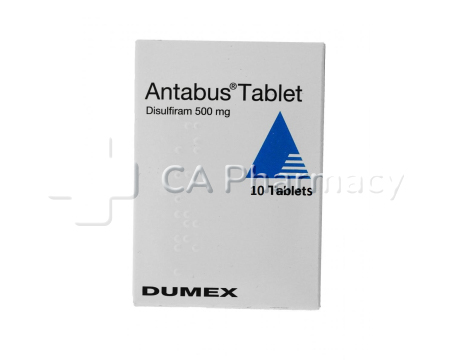
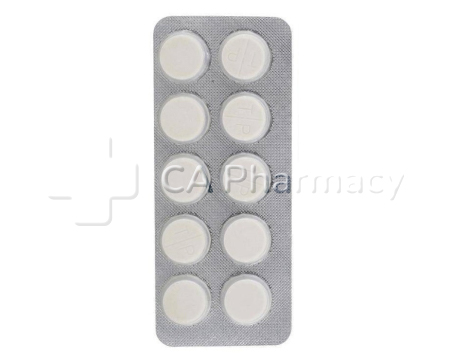


Canadian availability note: Brand-name Antabuse (Sanofi) is no longer commercially manufactured in Canada (CAMH, 2024). The Antabuse tablet (Dumex brand, 500mg disulfiram) available through this pharmacy is the standard imported formulation used in Canadian clinical practice and is therapeutically equivalent.

Antabuse at a Glance
How Disulfiram Works — The Aldehyde Dehydrogenase Mechanism
Disulfiram does not act on the brain — it acts on the liver. It intercepts alcohol metabolism at a specific enzymatic step, causing a toxic substance to accumulate in the blood. Here is exactly what happens:
The Disulfiram-Alcohol Reaction — Severity by Amount of Alcohol
The reaction is not binary — its severity is dose-dependent on the amount of alcohol consumed while on disulfiram:
| Alcohol amount | Reaction severity | Typical symptoms | Action required |
|---|---|---|---|
| Trace (mouthwash, cough syrup) | Mild | Flushing, headache, mild nausea | Monitor — contact doctor |
| Small amount (1 drink) | Moderate | Severe headache, nausea/vomiting, rapid heartbeat, dizziness, chest discomfort, sweating | Contact doctor immediately |
| Moderate to large amount (2+ drinks) | Severe | All above + significant hypotension, tachyarrhythmia, respiratory distress, blurred vision, near-syncope | Emergency — call 911 |
| Large amount in cardiac patient | Life-threatening | Seizures, myocardial infarction, loss of consciousness, respiratory failure | Emergency — call 911 |
From Dr. Sarah Mitchell, RPh: If a disulfiram-alcohol reaction occurs, do not try to manage it at home for anything beyond a mild flush. Even a moderate reaction can rapidly progress to cardiovascular compromise — particularly in older patients or those with any underlying heart condition. A severe reaction is a medical emergency. The therapeutic deterrent effect of disulfiram works because the patient knows this reaction is predictable, real, and potentially dangerous.

Hidden Alcohol Sources — The Complete List Every Antabuse Patient Must Know
This is the most practically important section for daily patient safety. Even trace quantities of alcohol are sufficient to trigger a disulfiram reaction. Many common products contain enough alcohol to cause symptoms — and most patients are not warned about them:
Dosage Protocol — Canadian Clinical Guidelines (CAMH)
Contraindications
- Hypersensitivity to disulfiram or thiuram-related compounds (found in rubber and some pesticides)
- Cardiovascular disease — coronary artery disease, heart failure, history of myocardial infarction. The hemodynamic effects of the reaction can be fatal in cardiac patients.
- Liver disease — hepatic cirrhosis, acute hepatitis, significant impairment. Disulfiram itself is hepatotoxic and requires healthy liver function to be used safely.
- Psychosis or severe psychiatric illness — disulfiram can worsen psychotic symptoms and cause depression
- Cognitive impairment — patients must understand the risks and comply with complete abstinence
- Pregnancy — contraindicated due to fetal risk
- Concurrent metronidazole (Flagyl) — severe interaction producing psychotic reaction; never combine
- Patients who have consumed alcohol within the past 12–24 hours — must be fully abstinent before first dose
Drug Interactions
- Warfarin (blood thinner) — disulfiram inhibits warfarin metabolism, significantly increasing INR and bleeding risk. Close monitoring required; warfarin dose adjustment likely needed.
- Phenytoin (Dilantin) — disulfiram increases phenytoin blood levels, potentially causing toxicity. Monitor levels closely.
- Benzodiazepines — disulfiram can increase benzodiazepine levels. Use with caution.
- Isoniazid (TB medication) — combination can cause neurological and psychiatric side effects.
- Metronidazole (Flagyl) — absolute contraindication. Can cause acute psychotic reaction.
- Any alcohol-containing medication — will trigger the disulfiram-alcohol reaction.
Side Effects
Common (without alcohol)
- Drowsiness and fatigue (especially in first 1–2 weeks)
- Metallic or garlic-like taste in the mouth
- Mild headache
- Skin rash or acne
- Impotence (reported in some men)
Most diminish after the first 2 weeks of treatment.
Less common — report to doctor
- Peripheral neuropathy (tingling/numbness in hands or feet — especially with long-term use)
- Depression or mood changes
- Optic neuritis (rare — blurred vision)
- Psychosis (rare)
Serious — seek immediate care
- Hepatitis / liver failure — yellowing of skin or eyes, dark urine, severe abdominal pain. Rare but potentially fatal.
- Disulfiram-alcohol reaction — any alcohol ingestion triggers reaction; severe reactions are medical emergencies
- Severe allergic reaction (rash, difficulty breathing, swelling)

Frequently Asked Questions — Antabuse in Canada
Does Antabuse reduce alcohol cravings? No — this is the most important clinical distinction from naltrexone and acamprosate. Disulfiram does not affect the brain's reward pathways, opioid receptors, or the neurological drive to drink. It works purely as an aversive deterrent: if you drink, you become severely ill. Patients who experience strong alcohol cravings may benefit more from naltrexone (which directly reduces cravings) combined with or instead of disulfiram.
Can I have "just one drink" while on Antabuse? No. There is no safe threshold. Even small amounts of alcohol — including trace amounts in food, medications, or topical products — can trigger the disulfiram-alcohol reaction. The reaction severity is dose-dependent on alcohol consumed, but it is unpredictable at low quantities. Complete alcohol abstinence is mandatory throughout treatment and for 14 days after stopping.
Does Antabuse have to be taken every day to work? Yes — daily administration maintains consistent disulfiram blood levels. However, because disulfiram is eliminated slowly, a single missed dose does not immediately remove the deterrent effect. The medication persists for several days in the body. Consistency is still important to maintain therapeutic levels.
Can I take Antabuse long-term? Yes, with appropriate monitoring. Some patients use disulfiram for several years as part of a long-term recovery plan. Long-term use requires regular liver function testing (every 3 months) and periodic neurological assessment given the risk of peripheral neuropathy with extended use.
I am also taking warfarin — is this safe? Use with caution only, with close medical supervision. Disulfiram inhibits the liver enzyme that metabolises warfarin, causing warfarin blood levels to rise significantly. This increases bleeding risk. Your INR must be monitored closely and your warfarin dose will likely need to be reduced. Inform your prescribing physician before starting disulfiram.
Do I need a prescription for Antabuse in Canada? Yes. Disulfiram is a prescription-only medication in Canada. It requires a medical assessment, liver function testing before initiation, and regular follow-up. Never attempt to start disulfiram without physician supervision — the risks without proper evaluation and monitoring are significant.
How long does delivery take to my province? Standard delivery to all Canadian provinces and territories takes 4–9 business days. All orders are shipped in neutral packaging with no external reference to the pharmacy name or medication type.
Related Products
- Alcoholism Treatment Category — full guide to alcohol use disorder medications in Canada including Disulfiram vs Naltrexone vs Acamprosate comparison
The content on this page is for educational purposes only and does not constitute medical or pharmacological advice. Antabuse (disulfiram) is a prescription medication in Canada requiring physician supervision. Alcohol use disorder is a serious medical condition best managed in partnership with a licensed Canadian healthcare provider, addiction specialist, or addiction medicine clinic. If you or someone you know is in crisis related to alcohol use, contact your provincial crisis line or go to your nearest emergency department.