
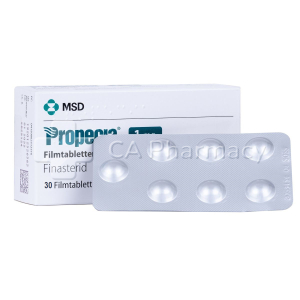
Against Hair Loss — Propecia Generic (Finasteride 1mg): The Science, the Evidence, and What to Realistically Expect
Reviewed by Dr. Sarah Mitchell, RPh, Clinical Pharmacist — Updated January 2026
Male pattern hair loss (androgenetic alopecia) affects approximately 50% of Canadian men by age 50. It is not caused by poor circulation, stress, or vitamin deficiency — it is caused by a genetically programmed sensitivity of hair follicles to dihydrotestosterone (DHT), a hormone derived from testosterone. Finasteride (Propecia Generic, 1mg) is the only oral medication approved by Health Canada for this specific mechanism — it blocks the enzyme that converts testosterone into DHT, slowing or halting follicle miniaturization. This page explains the biology, the clinical evidence, the realistic timeline, and the complete side effect profile including the information most competitor pages leave out.
Finasteride for Hair Loss — Key Numbers
Why Hair Falls Out — The DHT Mechanism Explained
Most men are told hair loss is "genetic." This is true — but genetics determines your follicles' sensitivity to DHT, not whether DHT exists. Understanding the mechanism explains both why finasteride works and why it must be taken daily and indefinitely:
Who Finasteride Helps — and Where It Has Limits
From Dr. Sarah Mitchell, RPh: The most important thing I tell patients starting finasteride is: the earlier you start, the better. The goal in the first two years is primarily preservation — stopping what you have from falling out. Regrowth, when it occurs, is a bonus. Men who wait until they have significant visible loss often find limited options because many follicles are already fully dormant. If you notice thinning, that is the time to discuss treatment — not when the thinning becomes dramatic.
Realistic Timeline — What to Expect Month by Month
Finasteride works slowly because hair growth cycles are slow. Understanding the timeline prevents premature discontinuation — the most common reason treatment fails:
Side Effects — The Complete Profile Including What Most Sites Leave Out
Common — mild and usually reversible
- Reduced libido / sex drive (~1–2%)
- Erectile dysfunction (~1–2%)
- Decreased ejaculate volume
- Breast tenderness or enlargement (gynecomastia — rare)
- Testicular discomfort (rare)
Reported in <2% in pivotal trials. Most resolved on discontinuation.
PSA — critical for prostate screening
Finasteride reduces PSA (Prostate-Specific Antigen) levels by ~50%. If your doctor monitors PSA for prostate cancer screening, you must inform them you are taking finasteride — otherwise your result will be artificially low and screening unreliable. The standard correction is to double the measured PSA value.
Post-Finasteride Syndrome (PFS) — rare but real
A small number of men report persistent sexual dysfunction, depression, and cognitive changes continuing after stopping finasteride. Known as Post-Finasteride Syndrome (PFS). Health Canada and the FDA have added warnings about persistent side effects to finasteride prescribing information. PFS affects a minority of users — but patients should be aware of this risk before starting and should discuss it with their physician.
From Dr. Sarah Mitchell, RPh: The sexual side effects of finasteride occur in a minority of users and are reversible in most cases upon discontinuation. Post-finasteride syndrome is rare but documented and should be discussed with every patient before starting. Finasteride has a strong 30+ year evidence base for efficacy. The decision to start should be made with full information about both benefits and risks.
Dosage and How to Take Propecia Generic
Frequently Asked Questions — Finasteride in Canada
Does finasteride lower testosterone? No. Finasteride blocks the conversion of testosterone to DHT — it does not reduce testosterone production itself. Testosterone levels remain normal or may even rise slightly (because less is being converted). This is a common misconception that causes men to avoid a clinically effective treatment unnecessarily.
Can I take finasteride with minoxidil? Yes — they work through entirely different mechanisms and can be used simultaneously. Finasteride reduces the hormonal trigger (DHT) while minoxidil improves blood flow to follicles and prolongs the anagen phase. Most Canadian hair loss specialists consider combination therapy more effective than either alone for moderate hair loss.
What is the difference between finasteride 1mg and 5mg? The active molecule is identical. The 1mg dose (Propecia) is specifically for hair loss. The 5mg dose (Proscar) is approved for benign prostatic hyperplasia. Some physicians prescribe 5mg tablets cut into quarters as a cost-saving strategy — discuss this option with your prescribing physician.
Do I need a prescription for finasteride in Canada? Yes. Finasteride is prescription-only in Canada. Your family doctor, dermatologist, or urologist can prescribe it. Many Canadian men now access it through licensed online medical clinics offering virtual consultations.
How long before I lose the hair gained if I stop? Regained and preserved hair is typically lost within 9–12 months of stopping. The miniaturization process resumes at pre-treatment pace once DHT recovers. There is no benefit to "taking a break" — consistent daily use is required.
How long does delivery take to my province? Standard delivery to all Canadian provinces and territories takes 4–9 business days in neutral packaging with no external reference to the pharmacy name or medication type.
The content on this page is for educational purposes only and does not constitute medical or pharmacological advice. Finasteride is a prescription medication in Canada. Consult a licensed Canadian healthcare provider before starting treatment. Women of childbearing potential must not handle crushed or broken finasteride tablets. Men with prostate cancer concerns should inform their physician before starting finasteride as it affects PSA levels used in screening.