
Anticoagulant Medications in Canada — Warfarin vs DOACs: How They Work, When to Use Each, and What the 2024 Canadian Evidence Says About Apixaban vs Rivaroxaban
Reviewed by Dr. Sarah Mitchell, RPh, Clinical Pharmacist, Ontario College of Pharmacists #234567 — Updated January 2026
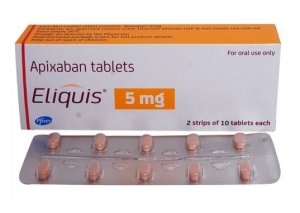
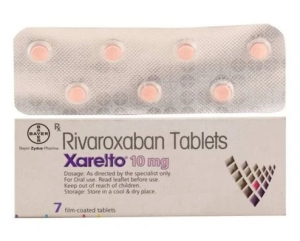
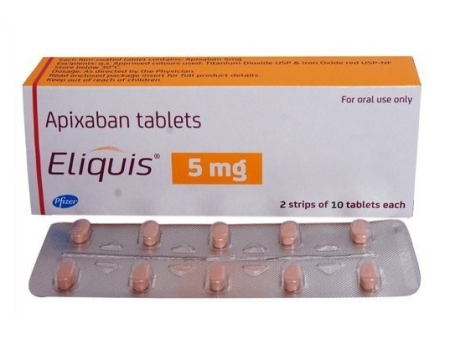
Anticoagulants — medications that reduce the blood's ability to clot — are among the most widely prescribed and clinically important medications in Canada. Approximately 12 million anticoagulant prescriptions are dispensed annually by Canadian retail pharmacies, primarily for two indications: stroke prevention in atrial fibrillation (AF) and treatment or prevention of venous thromboembolism (VTE — deep vein thrombosis and pulmonary embolism). Five oral anticoagulants are currently available in Canada: warfarin (Coumadin) and four direct oral anticoagulants (DOACs) — apixaban (Eliquis), rivaroxaban (Xarelto), dabigatran (Pradaxa), and edoxaban (Lixiana). Understanding how they differ — mechanistically, clinically, and practically — is essential for every Canadian patient taking these medications.
Critical safety notice: All anticoagulants significantly increase bleeding risk. They require careful patient selection, appropriate dosing, and — for warfarin — regular INR monitoring. Never start, stop, or change your anticoagulant dose without guidance from a licensed Canadian physician or pharmacist. If you experience unusual bleeding, blood in urine or stool, coughing blood, or sudden severe headache while taking any anticoagulant — call 911 or go to the nearest emergency department immediately.
Anticoagulants in Canada at a Glance
How Anticoagulants Work — The Coagulation Cascade
All five Canadian oral anticoagulants interrupt the coagulation cascade — the series of enzymatic reactions that converts liquid blood into a clot. Understanding where each drug acts explains their clinical differences:
From Dr. Sarah Mitchell, RPh: The most important practical difference between warfarin and the DOACs for Canadian patients is predictability. DOACs produce a predictable, consistent anticoagulant effect at a fixed dose — no routine blood tests needed. Warfarin's effect varies significantly between patients and over time in the same patient, which is why INR monitoring every 4–6 weeks (or more frequently when starting or adjusting dose) is mandatory. For most Canadian patients with atrial fibrillation or VTE who are eligible, DOACs are now the first-line recommendation from the Canadian Cardiovascular Society.
Warfarin vs DOACs — The Complete Canadian Comparison
This is the most important clinical decision in Canadian anticoagulation practice. The following table provides an honest, evidence-based comparison across all clinically relevant parameters:
| Factor | Warfarin | Apixaban (Eliquis) | Rivaroxaban (Xarelto) | Dabigatran (Pradaxa) |
|---|---|---|---|---|
| Mechanism | Vitamin K antagonist (factors II, VII, IX, X) | Factor Xa inhibitor | Factor Xa inhibitor | Direct thrombin (IIa) inhibitor |
| INR monitoring required | Yes — every 4–6 weeks (target INR 2.0–3.0) | No | No | No |
| Dosing | Variable — adjusted by INR result | Fixed — 5mg twice daily (AF); 10mg twice daily initial (VTE) | Fixed — 20mg once daily (AF, with evening meal) | Fixed — 150mg twice daily (standard) |
| Food interactions | Significant — Vitamin K in greens (kale, spinach) reduces effect; keep diet consistent | None known | Must be taken with food (increases absorption) | None — take with or without food |
| Renal elimination | Minimal — hepatic metabolism | ~27% renal — most DOAC-safe in renal impairment | ~33% renal | ~80% renal — avoid if eGFR <30; contraindicated eGFR <15 |
| Reversal agent available | Yes — Vitamin K (slow), prothrombin complex concentrate (fast) | Yes — andexanet alfa (Ondexxya) | Yes — andexanet alfa (Ondexxya) | Yes — idarucizumab (Praxbind) — specific and rapid |
| Mechanical heart valves | YES — only anticoagulant proven safe | CONTRAINDICATED | CONTRAINDICATED | CONTRAINDICATED |
| Pregnancy | Contraindicated 1st and 3rd trimester — teratogenic | Avoid — limited safety data | Avoid — limited safety data | Avoid — limited safety data |
| Cost (generic, approximate) | Very low — generic available for decades | Significantly lower since 2023 generic (–75%) | Significantly lower since 2023 generic (–75%) | Lower since 2023 generic (–25%) |
| CCS first-line for AF? | No — second-line when DOACs inappropriate | Yes — preferred DOAC (2024 Canadian evidence) | Yes — first-line DOAC | Yes — first-line DOAC |
Apixaban vs Rivaroxaban — What the 2024 Canadian Evidence Shows
Apixaban and rivaroxaban are the two most commonly prescribed DOACs in Canada for atrial fibrillation. A 2024 systematic review by the University of British Columbia Therapeutics Initiative — analysing 27 observational studies involving over 2.1 million patients — provides the clearest current Canadian guidance on choosing between them:
Important context: No randomised clinical trial directly comparing the DOACs against each other has been conducted. The 2024 UBC evidence is based on observational studies, not head-to-head randomised trials. Individual patient factors — renal function, bleeding history, adherence likelihood, cost, other medications — remain critical in the choice between DOACs. Always discuss DOAC selection with your Canadian physician or pharmacist, not based on general population preferences alone.
Switching from Warfarin to a DOAC — The Canadian Protocol
Many Canadian patients currently on warfarin are candidates for switching to a DOAC. The switching process requires careful timing to avoid a period of subtherapeutic anticoagulation (clot risk) or supratherapeutic overlap (bleeding risk). Thrombosis Canada recommends the following:
From Dr. Sarah Mitchell, RPh: The single most important thing Canadian patients must know when switching from warfarin to a DOAC: never stop warfarin and immediately start a DOAC the same day. This creates dangerous supratherapeutic anticoagulation. The INR threshold protocol exists precisely to prevent this. When your physician initiates a switch, the timing of warfarin's last dose and the DOAC's first dose should be explicitly coordinated — not left to the patient to figure out.
When Warfarin Remains the Right Choice
Despite DOACs being first-line for most Canadian patients with AF or VTE, warfarin remains the preferred or only appropriate choice in specific situations:
- Mechanical prosthetic heart valves — absolute. DOACs are contraindicated due to demonstrated increased thromboembolic risk in RE-ALIGN trial (dabigatran) and limited evidence for Factor Xa inhibitors. Warfarin is the only proven safe oral anticoagulant for mechanical valves.
- Antiphospholipid syndrome (APS) with triple-positive antibody profile — Canadian guidelines recommend warfarin (INR 2.0–3.0) over DOACs for triple-positive APS
- Severe renal impairment — when eGFR falls below 15 mL/min, all DOACs are contraindicated; warfarin may be continued with dose adjustment and close INR monitoring
- Pregnancy — low molecular weight heparin (LMWH) is the anticoagulant of choice throughout pregnancy; neither warfarin nor DOACs are appropriate
- Cost/access barriers — warfarin remains significantly cheaper than DOACs even after generic availability; for patients with access barriers, warfarin with good INR control is highly effective
Bleeding Risk — The Most Important Risk for All Anticoagulants
All anticoagulants increase bleeding risk — this is an inherent consequence of their therapeutic mechanism. Canadian patients on any anticoagulant should know the warning signs of serious bleeding:
Common minor bleeding — monitor
- Easy bruising
- Prolonged bleeding from minor cuts
- Nosebleeds more frequent than usual
- Heavier menstrual periods
- Minor gum bleeding
Serious bleeding — call 911 immediately
- Blood in urine (pink, red, or dark brown)
- Blood in stool — black tarry stools or bright red blood
- Coughing or vomiting blood
- Sudden severe headache — possible intracranial bleed
- Sudden vision changes, weakness, or speech difficulty
- Uncontrollable bleeding from any wound
Frequently Asked Questions — Anticoagulants in Canada
Do I need to take a DOAC with food? It depends on the DOAC. Rivaroxaban (Xarelto) must be taken with the evening meal — without food, absorption is reduced by approximately 40%, significantly reducing anticoagulant effect. Apixaban and dabigatran can be taken with or without food. Edoxaban can be taken with or without food. For warfarin, food doesn't affect absorption — but the Vitamin K content of what you eat over time affects how much warfarin you need, which is why consistent diet matters.
Can I take ibuprofen (Advil) while on an anticoagulant? Non-steroidal anti-inflammatory drugs (NSAIDs) including ibuprofen (Advil, Motrin) and naproxen (Aleve) significantly increase bleeding risk when combined with any anticoagulant — both by reducing platelet function and by increasing GI bleeding risk. Canadian pharmacists and physicians consistently advise that patients on anticoagulants should use acetaminophen (Tylenol) instead of NSAIDs for pain and fever. Discuss any over-the-counter pain medication with your pharmacist before taking it while on an anticoagulant.
What happens if I miss a dose of my DOAC? For twice-daily DOACs (apixaban, dabigatran): if a dose is missed, take it as soon as you remember on the same day. If it is already time for the next dose, skip the missed dose — never take two doses in one day to make up. For once-daily DOACs (rivaroxaban, edoxaban): take the missed dose on the same day as soon as you remember. If not remembered until the next day, skip the missed dose and resume normal schedule. Never double up. If you miss more than one dose — contact your physician or pharmacist for guidance.
I eat a lot of leafy greens — does that affect my anticoagulant? Only if you are on warfarin. Warfarin works by blocking Vitamin K — and leafy greens (kale, spinach, broccoli, Swiss chard) are high in Vitamin K. Eating significantly more or less of these foods than usual changes how much warfarin you need to maintain your INR in range. The key is consistency — not eliminating leafy greens, but keeping your intake roughly consistent from week to week. If you are on a DOAC (apixaban, rivaroxaban, dabigatran, edoxaban), dietary Vitamin K has no effect on your anticoagulation.
Are generic DOACs as effective as the brand-name versions? Yes. Generic apixaban, rivaroxaban, and dabigatran received Health Canada approval in 2023 and are bioequivalent to their branded counterparts — they contain the same active ingredient at the same dose and must demonstrate equivalent absorption and blood levels. The 75% cost reduction for generic apixaban and rivaroxaban makes these medications substantially more accessible for Canadian patients.
How long does delivery take to my province? Standard delivery to all Canadian provinces and territories takes 4–9 business days. All orders ship in neutral packaging with no external reference to the pharmacy name or medication type.
Products in This Category
The content on this page is for educational purposes only and does not constitute medical or pharmacological advice. All anticoagulants are prescription medications in Canada requiring a valid prescription from a licensed Canadian physician or healthcare provider. Never start, stop, or adjust anticoagulant therapy without physician guidance. If you experience signs of serious bleeding — blood in urine or stool, coughing blood, or sudden severe headache — call 911 or go to the nearest emergency department immediately. Patients with mechanical heart valves must never switch from warfarin to a DOAC without specialist cardiology guidance.