
Antibiotics in Canada — Amoxicillin, Ciprofloxacin, Doxycycline, Bactrim, Metronidazole
Medically reviewed by Dr. Sarah Mitchell, RPh, Clinical Pharmacist — Updated January 2026
Antibiotics are prescription antimicrobial agents regulated by Health Canada under Schedule F of the Food and Drug Regulations — one of the most clinically important and widely prescribed drug classes in Canadian medicine. Each year, Canadian physicians, nurse practitioners, and pharmacists prescribe over 20 million antibiotic courses — for respiratory tract infections, urinary tract infections, sexually transmitted infections, skin infections, and gastrointestinal infections, among many other conditions. The Public Health Agency of Canada (PHAC) and the Canadian antimicrobial stewardship programme actively monitor antibiotic use and resistance trends — emphasising appropriate prescribing to preserve antibiotic effectiveness for future generations. At drugs-canada.com we offer five clinically established, widely-used generic antibiotics covering the most common bacterial infections encountered by Canadians: Amoxil Generic (Amoxicillin), Bactrim Generic (Sulfamethoxazole/Trimethoprim), Ciprofloxacin, Doxycycline, and Flagyl Generic (Metronidazole). All products are sourced from WHO-GMP certified manufacturers and delivered discreetly to all Canadian provinces and territories in 4 to 9 business days.
Our Antibiotics — Overview
| Product | Active Ingredient | Antibiotic Class | Primary Canadian Indications | From |
|---|---|---|---|---|
| Amoxil Generic | Amoxicillin | Aminopenicillin (beta-lactam) | Strep throat, otitis media, sinusitis, community-acquired pneumonia, dental infections, H. pylori (combination) | $0.49/pill |
| Bactrim Generic | Sulfamethoxazole + Trimethoprim (SMX/TMP) | Sulfonamide + dihydrofolate reductase inhibitor | UTIs, community-acquired MRSA skin infections, Pneumocystis pneumonia (PCP), traveller's diarrhoea | $0.74/pill |
| Ciprofloxacin | Ciprofloxacin | Fluoroquinolone | Complicated UTIs, prostatitis, respiratory infections, traveller's diarrhoea, anthrax post-exposure | $0.90/pill |
| Doxycycline | Doxycycline hyclate | Tetracycline | Chlamydia, Lyme disease (Ontario/BC high-risk), acne, atypical pneumonia, malaria prophylaxis, rosacea | $1.17/pill |
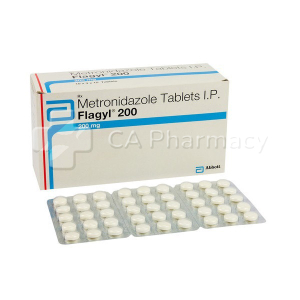
| Flagyl Generic | Metronidazole | Nitroimidazole | Bacterial vaginosis, trichomoniasis, C. difficile (mild-moderate), H. pylori (combination), dental/oral infections, anaerobic infections | $0.46/pill |
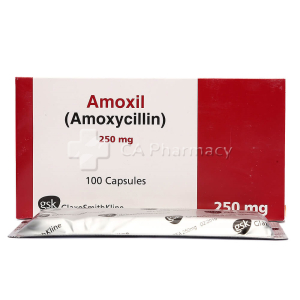
Amoxil Generic (Amoxicillin) — Canada's Most Prescribed Antibiotic
Amoxil Generic (Amoxicillin) is a broad-spectrum aminopenicillin — the single most prescribed antibiotic in Canada and most other developed countries. Amoxicillin belongs to the beta-lactam class of antibiotics and works by irreversibly inhibiting bacterial cell wall synthesis — binding to penicillin-binding proteins (PBPs) and preventing cross-linking of peptidoglycan chains, causing osmotic lysis and bacterial cell death. Its bactericidal activity, excellent oral bioavailability (~93%), and favourable safety profile make it the first-line choice for a wide range of common Canadian infections.
Primary indications in Canada — per Bugs & Drugs and Canadian clinical guidelines:
- Streptococcal pharyngitis (Strep throat): Amoxicillin 500mg twice daily or 1g once daily for 10 days — Streptococcus pyogenes (Group A Streptococcus) remains universally susceptible to penicillins/amoxicillin in Canada. First-line per AMMI Canada guidelines. Treatment prevents acute rheumatic fever — rare but serious complication still occurring in Canadian Indigenous populations in remote communities
- Acute otitis media (middle ear infection): Most common antibiotic indication in Canadian children. Amoxicillin 80–90mg/kg/day (high dose) for 5–10 days. High-dose amoxicillin overcomes intermediate resistance in Streptococcus pneumoniae
- Community-acquired pneumonia (outpatient, mild): Amoxicillin 1g three times daily is recommended by the Canadian Infectious Disease Society (CID/AMMI) for mild outpatient CAP in patients without comorbidities — narrower spectrum than azithromycin for typical pneumococcal pneumonia
- Acute bacterial sinusitis: When antibiotics are indicated (persistent symptoms >10 days or deterioration) — amoxicillin 500mg three times daily or 875mg twice daily for 5–7 days
- Dental and oral infections: Periapical abscess, periodontal infections — first-line when systemic antibiotics are clinically necessary; amoxicillin 500mg three times daily for 3–5 days per the Canadian Dental Association guidance
- Helicobacter pylori eradication (combination therapy): Standard triple therapy — amoxicillin 1g twice daily + clarithromycin 500mg twice daily + PPI (omeprazole) twice daily for 10–14 days. First-line per Canadian H. pylori Consensus Group for treatment-naive patients
- Lyme disease (early localised, single erythema migrans): Amoxicillin 500mg three times daily for 14–21 days — Health Canada and PHAC recommend amoxicillin as one of three first-line options (along with doxycycline and cefuroxime) for early Lyme disease. Important in Ontario, Manitoba, Quebec, Nova Scotia, New Brunswick where Ixodes scapularis blacklegged tick exposure is established
Amoxicillin and penicillin allergy in Canada: Approximately 10% of Canadians report penicillin allergy — but over 90% of these patients can safely tolerate penicillins/amoxicillin when formally tested. The Canadian Society of Allergy and Clinical Immunology (CSACI) actively promotes penicillin allergy assessment and de-labelling — patients unnecessarily labelled as penicillin-allergic are more likely to receive broader-spectrum antibiotics with higher resistance risk. If you have been told you are penicillin-allergic, discuss formal allergy assessment with your Canadian physician.
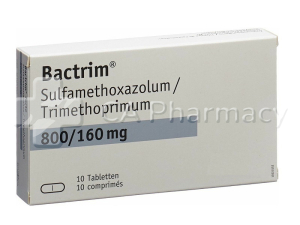
Bactrim Generic (Sulfamethoxazole/Trimethoprim) — Broad-Spectrum Combination
Bactrim Generic contains sulfamethoxazole (SMX) and trimethoprim (TMP) in a fixed 5:1 ratio — a synergistic antibacterial combination that provides sequential blockade of the bacterial folate synthesis pathway. Sulfonamides inhibit dihydropteroate synthase (DHPS) — preventing incorporation of PABA into dihydrofolic acid. Trimethoprim inhibits dihydrofolate reductase (DHFR) — blocking conversion of dihydrofolate to tetrahydrofolate. Together, these two inhibitory steps produce a synergistic bactericidal effect on folate-dependent bacterial DNA synthesis, while leaving human folate metabolism largely unaffected (since humans cannot synthesise folate de novo and acquire it through diet — they are not affected by DHPS inhibition).
Primary indications in Canada:
- Urinary tract infections (UTIs): SMX/TMP DS (double strength: 800/160mg) twice daily for 3 days (uncomplicated cystitis in women) or 7–14 days (complicated UTI, men, pyelonephritis). First-line in Canadian communities where local E. coli resistance to TMP/SMX remains below 20% — resistance rates vary by Canadian region; local antibiogram data guides prescribing. British Columbia and Ontario hospital antibiograms show variable resistance
- Community-acquired MRSA (CA-MRSA) skin and soft tissue infections: A critically important Canadian indication — CA-MRSA has been endemic in Canadian Indigenous communities (particularly in Prairie provinces) since the late 1990s. The Canadian strain (CMRSA10/USA300) is typically susceptible to TMP/SMX. Recommended dose: TMP/SMX DS twice daily for 5–7 days for uncomplicated skin infections. Health Canada and PHAC surveillance data confirm TMP/SMX susceptibility rates >95% for CA-MRSA
- Pneumocystis jirovecii pneumonia (PCP) — prophylaxis and treatment: TMP/SMX DS once daily (or three times weekly) is the gold standard prophylaxis for PCP in HIV-positive patients with CD4 <200 cells/µL, organ transplant recipients, and patients on high-dose corticosteroids. Treatment: TMP/SMX 15–20mg/kg/day (trimethoprim component) in divided doses for 21 days for confirmed PCP — still a relevant complication in Canadians with undiagnosed or untreated HIV
- Traveller's diarrhoea: TMP/SMX DS twice daily for 3 days — effective against many enterotoxigenic E. coli strains in certain travel destinations, though ciprofloxacin is now often preferred for regions with higher resistance
- Stenotrophomonas maltophilia infections: TMP/SMX is the drug of choice for this intrinsically resistant gram-negative organism — relevant in cystic fibrosis patients at Canadian CF centres
Important Canadian safety note: TMP/SMX is one of the most common causes of drug-induced adverse reactions in Canada — including severe skin reactions (Stevens-Johnson syndrome, toxic epidermal necrolysis), hyperkalaemia (particularly in elderly patients on ACE inhibitors or ARBs, which are very commonly prescribed in Canadian hypertensive patients), and acute kidney injury. Patients over 65 on concurrent renin-angiotensin system drugs should be monitored for hyperkalaemia when receiving TMP/SMX.
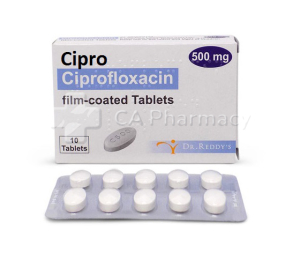
Ciprofloxacin — Fluoroquinolone for Serious Infections
Ciprofloxacin is a second-generation fluoroquinolone — one of the most potent broad-spectrum oral antibiotics available in Canada, with activity against gram-negative organisms (including Pseudomonas aeruginosa), some gram-positive organisms, and atypical intracellular pathogens. Ciprofloxacin works by inhibiting bacterial DNA gyrase (topoisomerase II) and topoisomerase IV — enzymes essential for DNA replication, transcription, repair, and recombination. This dual-target mechanism produces rapid bactericidal activity and makes resistance development more difficult (requiring simultaneous mutations in both targets).
Primary indications in Canada — with important stewardship context:
- Complicated urinary tract infections and acute pyelonephritis: Ciprofloxacin 500mg twice daily for 7 days (uncomplicated pyelonephritis) or 500–750mg twice daily for 10–14 days (complicated UTI). Preferred over TMP/SMX when local E. coli fluoroquinolone resistance is below 10% and when broader coverage is needed — for example in patients who have recently received TMP/SMX, in diabetics, or in immunocompromised patients
- Prostatitis (bacterial, acute and chronic): Ciprofloxacin 500mg twice daily for 28 days (chronic bacterial prostatitis) or 2–4 weeks (acute). Fluoroquinolones achieve superior prostate tissue penetration compared to most other oral antibiotics — making ciprofloxacin the preferred first-line oral agent for bacterial prostatitis per Canadian Urological Association guidance
- Traveller's diarrhoea: Ciprofloxacin 500–750mg twice daily for 1–3 days — self-treatment in travellers from Canada visiting endemic regions. Effective against most causative E. coli, Salmonella, Shigella, and Campylobacter strains in most destinations (though Campylobacter resistance in Southeast Asia is high)
- Anthrax post-exposure prophylaxis: Ciprofloxacin 500mg twice daily for 60 days — Public Health Agency of Canada emergency stockpile protocol. While not a routine indication, Canadians should be aware that ciprofloxacin is the primary post-exposure treatment for anthrax bioterrorism events
- Certain respiratory infections: Nosocomial pneumonia, severe COPD exacerbations with Pseudomonas risk — under specialist guidance
Critical Health Canada / Canadian prescribing guidance — fluoroquinolone stewardship: Health Canada has issued multiple safety communications emphasising that fluoroquinolones (including ciprofloxacin) should be reserved for conditions where no suitable alternative exists — due to risk of serious, potentially disabling, and potentially irreversible adverse effects: tendinitis and tendon rupture (particularly Achilles tendon), peripheral neuropathy, CNS effects, QT prolongation, and aortic aneurysm/dissection. The AMMI Canada and Choosing Wisely Canada campaigns actively discourage fluoroquinolone use for uncomplicated UTIs (where TMP/SMX or nitrofurantoin are preferred), simple respiratory infections, and other conditions where narrower agents are effective. Ciprofloxacin should not be used as a first-line agent for uncomplicated cystitis in Canada.
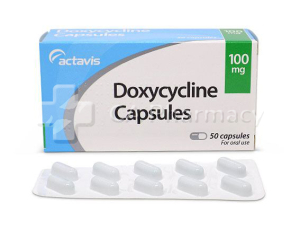
Doxycycline — Tetracycline for STIs, Lyme Disease, and Acne
Doxycycline is a second-generation tetracycline antibiotic — one of the most versatile antibiotics in Canadian practice, with an exceptionally broad spectrum encompassing gram-positive and gram-negative bacteria, atypical intracellular organisms (Chlamydia, Mycoplasma, Rickettsia, Coxiella, Anaplasma), and the Borrelia burgdorferi spirochete responsible for Lyme disease. Doxycycline inhibits bacterial protein synthesis by reversibly binding to the 30S ribosomal subunit — blocking attachment of aminoacyl-tRNA to the mRNA-ribosome complex. Unlike tetracycline, doxycycline's lipophilicity enables superior tissue penetration and convenient once or twice-daily dosing.
Primary indications in Canada — with Canadian-specific context:
- Chlamydia trachomatis (genital infection): Doxycycline 100mg twice daily for 7 days — now the preferred treatment for chlamydia in Canadian STI guidelines (PHAC Canadian Guidelines on Sexually Transmitted Infections), including for rectal and pharyngeal chlamydia where azithromycin single-dose has lower efficacy. Chlamydia is the most commonly reported STI in Canada, with over 130,000 confirmed cases annually per PHAC surveillance. Young Canadians aged 15–29 account for the majority of cases
- Lyme disease — critically important in Canada: Doxycycline 100mg twice daily for 14–21 days (early localised) or 14–28 days (early disseminated with multiple erythema migrans, carditis, or facial palsy) is the first-line treatment per Health Canada and PHAC guidelines. Lyme disease is the most commonly reported vector-borne disease in Canada — transmitted by Ixodes scapularis (eastern Canada: Ontario, Quebec, Nova Scotia, New Brunswick, Manitoba) and Ixodes pacificus (British Columbia). Risk areas are expanding northward as climate change drives tick range expansion. PHAC maps updated annually showing confirmed tick surveillance areas — Ontario's Long Point, Rondeau Provincial Park, and the Kingston area are established high-risk zones
- Acne vulgaris (moderate to severe): Doxycycline 50–100mg once or twice daily — commonly prescribed by Canadian dermatologists and GPs for inflammatory acne. Sub-antimicrobial dose doxycycline 40mg (modified release — Apprilon in Canada) is available for anti-inflammatory acne treatment and rosacea without promoting resistance
- Atypical community-acquired pneumonia: Doxycycline 100mg twice daily for 5–7 days — effective against Mycoplasma pneumoniae, Chlamydophila pneumoniae, and Legionella pneumophila. Alternative to azithromycin for outpatient CAP — particularly valuable in patients with macrolide resistance concerns or Mycoplasma genitalium co-infection
- Malaria prophylaxis for Canadian travellers: Doxycycline 100mg daily — started 1–2 days before travel, continued throughout, and for 4 weeks after return. CATMAT (Committee to Advise on Tropical Medicine and Travel) recommends doxycycline for Canadian travellers to chloroquine-resistant malaria regions including Sub-Saharan Africa, Southeast Asia (especially Thailand-Myanmar border where mefloquine resistance is reported), and the Amazon basin
- Rosacea: Doxycycline (sub-antimicrobial dose) — common dermatological use in Canadian adults with papulopustular rosacea
- Rickettsia and tick-borne diseases: Rocky Mountain Spotted Fever (though rare in Canada), Anaplasma phagocytophilum — doxycycline is the drug of choice for all rickettsial infections
Flagyl Generic (Metronidazole) — For Anaerobic and Protozoal Infections
Flagyl Generic (Metronidazole) is a nitroimidazole antibiotic and antiprotozoal — one of the few antibiotics with a truly unique mechanism of action: metronidazole is a prodrug activated only in anaerobic or microaerophilic conditions. Anaerobic bacteria and certain protozoa possess nitroreductase enzymes that reduce metronidazole's nitro group, generating reactive toxic intermediates (free nitro radical anions) that damage bacterial DNA by strand breakage and disrupt DNA structure. This mechanism is highly selective — it activates only in environments (anaerobic organisms) that can reduce the nitro group, making human cells largely spared at therapeutic concentrations. The result is potent, bactericidal activity specifically against obligate anaerobes and certain protozoal pathogens, with essentially no activity against aerobic organisms.
Primary indications in Canada:
- Bacterial vaginosis (BV): Metronidazole 500mg twice daily for 7 days (oral) or metronidazole gel 0.75% intravaginally once daily for 5 days — first-line treatment per PHAC Canadian STI Guidelines. BV is the most common vaginal infection in Canadian women of reproductive age, with Gardnerella vaginalis and anaerobic overgrowth disrupting the normal Lactobacillus-dominant vaginal microbiome. Recurrence rates are high (~30% at 3 months) — repeat courses or maintenance therapy may be needed
- Trichomonas vaginalis (trichomoniasis): Metronidazole 2g orally as a single dose (preferred for compliance) or 500mg twice daily for 7 days — first-line per PHAC STI Guidelines. Sexual partner(s) must be treated simultaneously. Trichomoniasis is the most common non-viral STI globally and is underdiagnosed in Canada
- Clostridioides difficile infection (CDI) — mild to moderate: Metronidazole 500mg three times daily for 10–14 days — historically first-line for non-severe CDI in Canada, though vancomycin (oral) and fidaxomicin are now preferred by AMMI Canada guidelines for all episodes due to superior outcomes. Metronidazole remains an acceptable option for mild CDI when vancomycin is unavailable. CDI is an important healthcare-associated infection in Canadian hospitals
- Helicobacter pylori eradication: Metronidazole 500mg twice or three times daily as part of bismuth quadruple therapy (bismuth subsalicylate + tetracycline + metronidazole + PPI) — preferred as second-line therapy in Canada when clarithromycin-based triple therapy has failed, or as first-line in areas of high clarithromycin resistance. The Canadian H. pylori Consensus Group recommends bismuth quadruple therapy for 14 days
- Dental and periodontal infections: Metronidazole 400–500mg three times daily for 5–7 days — targeting anaerobic oral pathogens. Often combined with amoxicillin for synergistic coverage of mixed aerobic/anaerobic dental infections, per the Canadian Dental Association
- Giardiasis and intestinal amebiasis: Metronidazole 250mg three times daily for 5–7 days (Giardia lamblia — acquired by Canadians from contaminated water, a significant issue in Canadian wilderness/backcountry travel). For intestinal amebiasis: 500–750mg three times daily for 7–10 days
- Anaerobic coverage in mixed infections: Intra-abdominal infections, aspiration pneumonia, diabetic foot infections — metronidazole is the cornerstone of anaerobic coverage in combination regimens with a gram-negative agent (ciprofloxacin + metronidazole for intra-abdominal infections)
The Alcohol Interaction — most commonly asked patient question: Metronidazole inhibits aldehyde dehydrogenase — the enzyme that metabolises acetaldehyde (the toxic intermediate of alcohol metabolism). Concurrent alcohol consumption causes acetaldehyde accumulation, producing a disulfiram-like reaction: severe nausea, vomiting, flushing, headache, tachycardia, and hypotension. Patients must avoid all alcohol during metronidazole treatment and for at least 48 hours after the last dose. This applies to all alcoholic beverages and alcohol-containing products including mouthwashes and some cough syrups.
Antibiotic Stewardship — A Canadian Responsibility
Canada has one of the highest per-capita antibiotic use rates in the developed world — a significant driver of antimicrobial resistance (AMR). The Canadian Antimicrobial Resistance Surveillance System (CARSS), coordinated by PHAC, documents increasing resistance in Canadian clinical isolates to multiple antibiotic classes. Antibiotic resistance is estimated to cause approximately 14,000 deaths in Canada annually — a figure projected to increase substantially without meaningful stewardship action.
Key principles of appropriate antibiotic use for Canadians:
- Antibiotics treat bacterial infections only — they have no effect on viral infections including common cold, influenza, most sore throats, most bronchitis, and COVID-19. Using antibiotics for viral illnesses provides no benefit and contributes to resistance
- Complete the prescribed course — stopping early when you feel better leaves partially susceptible bacteria that may regrow and develop resistance
- Do not share antibiotics — prescriptions are tailored to specific infections, organisms, and individual patient factors
- Do not save antibiotics for later use — the antibiotic prescribed for one infection may be inappropriate for a different infection
- Report side effects to your pharmacist or physician — Canadian pharmacovigilance through Health Canada's Canada Vigilance Programme allows side effect reporting
Delivery to All Canadian Provinces and Territories
drugs-canada.com ships all antibiotics discreetly to all Canadian provinces and territories. Standard delivery: 4–9 business days.
Ontario (Toronto, Ottawa, Hamilton, London, Brampton, Mississauga, Kitchener-Waterloo) — Quebec (Montreal, Quebec City, Laval, Gatineau, Sherbrooke) — British Columbia (Vancouver, Surrey, Burnaby, Victoria, Kelowna, Abbotsford) — Alberta (Calgary, Edmonton, Red Deer, Lethbridge) — Manitoba (Winnipeg, Brandon) — Saskatchewan (Saskatoon, Regina) — Nova Scotia (Halifax, Sydney) — New Brunswick (Moncton, Saint John, Fredericton) — Newfoundland and Labrador (St. John's, Corner Brook) — Prince Edward Island (Charlottetown) — Northwest Territories (Yellowknife) — Yukon (Whitehorse) — Nunavut (Iqaluit).
All orders are dispatched in plain, unmarked packaging with no reference to the contents or sender. Every order includes a tracking number.
Frequently Asked Questions — Antibiotics in Canada
Which antibiotic is most commonly prescribed in Canada? Amoxicillin is the single most prescribed antibiotic in Canada — used for streptococcal pharyngitis, otitis media, sinusitis, dental infections, community-acquired pneumonia, H. pylori eradication, and Lyme disease. It is the first-line choice for many common bacterial infections due to its narrow spectrum, excellent safety profile, and low resistance rates for its primary target organisms in Canada.
What is the best antibiotic for chlamydia in Canada? Current PHAC Canadian STI Guidelines favour doxycycline 100mg twice daily for 7 days as the preferred treatment for genital, rectal, and pharyngeal chlamydia — due to superior efficacy for rectal chlamydia compared to the azithromycin 1g single dose that was previously standard. Azithromycin 1g single dose remains acceptable for uncomplicated genital chlamydia and is preferred in pregnancy (where doxycycline is contraindicated). All sexual partners from the preceding 60 days must be tested and treated simultaneously.
Is Lyme disease common in Canada? Yes — Lyme disease is Canada's most commonly reported vector-borne disease and is expanding geographically as Ixodes scapularis tick populations spread northward with climate warming. Key risk areas include southern Ontario (Long Point, Rondeau, Kingston, Thousand Islands), southern Quebec, Nova Scotia, New Brunswick, and coastal British Columbia. PHAC publishes annual tick surveillance maps showing confirmed tick risk areas. Doxycycline is the first-line treatment and can also be used as post-exposure prophylaxis (single 200mg dose within 72 hours of a high-risk tick bite) in certain circumstances per PHAC guidance.
Why can't I just use ciprofloxacin for everything? Ciprofloxacin is a powerful broad-spectrum antibiotic — but Health Canada, AMMI Canada, and Choosing Wisely Canada strongly discourage its routine use for common infections (uncomplicated UTIs, respiratory infections) where narrower antibiotics work equally well. Fluoroquinolones carry unique serious risks — tendon rupture, peripheral neuropathy, aortic aneurysm, and C. difficile colitis. Preserving fluoroquinolones for infections where they offer genuine advantages (Pseudomonas, prostatitis, complicated UTIs) helps maintain their effectiveness and protects patients from serious side effects.
What is the alcohol rule with metronidazole (Flagyl)? Absolutely no alcohol during metronidazole treatment and for 48 hours after the last dose. Metronidazole inhibits the enzyme that breaks down acetaldehyde (alcohol's toxic metabolite), causing a disulfiram-like reaction — severe nausea, vomiting, flushing, headache, and palpitations. This applies to all alcoholic drinks and alcohol-containing products. This is one of the most important drug-alcohol interactions in Canadian pharmacy practice.
How long does delivery to Canada take? Standard delivery to all Canadian provinces and territories takes 4 to 9 business days. All orders arrive in plain, unmarked packaging with no reference to the contents or sender. Every order includes a tracking number.
All information on this page is for general informational purposes only and does not constitute medical advice. Antibiotics are prescription medicines in Canada — always consult a qualified Canadian healthcare provider (physician, nurse practitioner, or pharmacist with prescribing authority) before starting antibiotic therapy. Using antibiotics without a confirmed bacterial indication contributes to antimicrobial resistance.