
Prescription Skin Care in Canada — Accutane (Isotretinoin), Tretinoin Cream & Gel
Medically reviewed by Dr. Sarah Mitchell, RPh, Clinical Pharmacist — Updated April 2026
Prescription retinoid medications represent the most evidence-based, clinically proven pharmacological treatments available for acne and photoageing — the two most common skin concerns among Canadian adults and adolescents. Acne vulgaris affects approximately 85% of Canadians between the ages of 12 and 24, and a significant proportion of adults well into their 30s and 40s, making it one of the most prevalent skin conditions managed by Canadian dermatologists and family physicians. Tretinoin (retinoic acid) and isotretinoin (13-cis-retinoic acid) are both Vitamin A derivatives — retinoids — that work at the level of the skin cell nucleus to normalise keratinocyte differentiation, reduce sebaceous gland activity, and exert powerful anti-inflammatory effects that no over-the-counter acne product can replicate. At drugs-canada.com we offer three prescription-strength retinoid products: Accutane Generic (Isotretinoin) for severe nodular and cystic acne, Tretinoin Cream for inflammatory and comedonal acne and photoageing, and Tretinoin Gel for oily-skin acne. All products are sourced from WHO-GMP certified manufacturers and delivered discreetly to all Canadian provinces and territories in 4 to 9 business days.
Our Skin Care Products — Overview
| Product | Active Ingredient | Form | Primary Indications | From |
|---|---|---|---|---|
| Accutane Generic | Isotretinoin 10mg / 20mg / 40mg | Oral capsule | Severe nodular/cystic acne, acne resistant to antibiotics and topical therapy | $0.94/pill |
| Tretinoin Cream | Tretinoin 0.025% / 0.05% / 0.1% | Topical cream | Acne vulgaris, photoageing (fine lines, uneven tone, pigmentation), skin texture | $13.95/tube |
| Tretinoin Gel | Tretinoin 0.01% / 0.025% | Topical gel | Acne vulgaris (preferred for oily/combination skin), comedonal acne | $24.32/tube |
Understanding Retinoids — How They Work
All three products in this category are retinoids — derivatives of Vitamin A (retinol) that work at the molecular level by binding to nuclear retinoic acid receptors (RARs) and retinoid X receptors (RXRs). These receptor complexes act as transcription factors — regulating the expression of hundreds of genes involved in skin cell differentiation, proliferation, sebum production, and inflammation.
The retinoid cascade in acne — why retinoids work when other treatments fail:
- Normalisation of follicular keratinisation: Acne begins with abnormal keratinocyte (skin cell) differentiation in the hair follicle — cells don't shed properly and accumulate, forming the microcomedo (the invisible precursor of all acne lesions). Retinoids normalise this process, preventing the initial blockage that leads to both comedones (blackheads/whiteheads) and inflammatory lesions
- Reduction of sebaceous gland activity: Isotretinoin (oral) reduces sebaceous gland size by up to 90% and sebum secretion by 70–90% — the most powerful antisebaceous effect of any known agent. Topical tretinoin has a more modest but clinically meaningful effect on sebum production
- Anti-comedonal effect: Retinoids accelerate the turnover of follicular epithelial cells — helping existing comedones open and expel their contents, and preventing new ones from forming
- Anti-inflammatory effect: Retinoids reduce inflammatory cytokine production and modulate innate immune responses in the skin — reducing the redness, swelling, and pain of inflammatory acne lesions
- Indirect antibacterial effect: By reducing sebum (the primary nutrient source for Cutibacterium acnes bacteria) and normalising the follicular environment, retinoids reduce the proliferation of acne bacteria without directly killing them — this avoids the antibiotic resistance problem that plagues systemic and topical antibiotic acne treatments
Retinoids for photoageing — the anti-ageing mechanism: Tretinoin is the only topical agent with substantial, replicated, Level 1 evidence from randomised controlled trials for reversing photoageing — the cumulative skin damage from UV radiation that produces fine lines, wrinkles, uneven pigmentation, rough texture, and loss of skin elasticity. Tretinoin increases collagen synthesis in the dermis, reverses epidermal thinning, reduces abnormal melanocyte activity (treating brown spots/hyperpigmentation), and stimulates angiogenesis — restoring the pink, healthy glow of younger skin. No over-the-counter retinol product produces comparable clinical results — retinol requires conversion to retinoic acid in the skin (a less efficient process), while prescription tretinoin is already the active form.
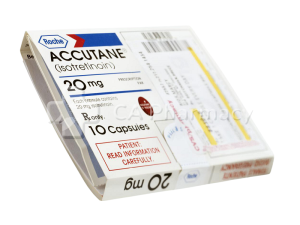
Accutane Generic (Isotretinoin) — For Severe Acne
Accutane Generic (Isotretinoin) is the most powerful and potentially curative treatment for severe acne in existence — an oral retinoid that produces permanent remission in approximately 85% of patients after a single treatment course. No other acne medication comes close to isotretinoin's efficacy for severe nodular and cystic acne — scarring, disfiguring acne that has failed or is unlikely to respond to antibiotics and topical therapy.
What isotretinoin does that no other acne treatment can:
- Reduces sebaceous gland size by up to 90% — permanently altering the gland's capacity to produce acne-causing sebum
- Achieves approximately 85% complete, durable remission after one course — many patients never require acne treatment again
- Reduces C. acnes colonisation of follicles as a consequence of sebum reduction — without contributing to antibiotic resistance
- Normalises follicular keratinisation and skin cell shedding — addressing the root cause of acne formation
- Reduces acne scarring by resolving active nodular and cystic lesions that would otherwise leave permanent scars
Canadian indications for isotretinoin (per Canadian Dermatology Association guidelines):
- Severe nodular or cystic acne — large, painful, deep acne lesions causing or at high risk of causing permanent scarring
- Moderate acne unresponsive to adequate trials of oral antibiotics (minimum 3 months at therapeutic doses) combined with topical retinoids and benzoyl peroxide
- Acne causing significant psychological distress, depression, or social impairment — even if not classified as objectively severe
- Acne in patients wishing to avoid long-term antibiotic use due to resistance concerns
- Acne that rapidly relapses after stopping antibiotics
Standard Canadian isotretinoin dosing protocol:
- Starting dose: 0.5 mg/kg/day — typically 20–40mg daily depending on body weight
- Maintenance dose: 1 mg/kg/day after 4–8 weeks if tolerated
- Course duration: 4–6 months — determined by cumulative dose target
- Target cumulative dose: 120–150 mg/kg total — achieving this cumulative dose strongly correlates with durable remission
- Taken with food: Isotretinoin is highly lipophilic — absorption increases 2-fold with a high-fat meal. Always take with the largest meal of the day
- Monitoring: Monthly liver function tests, lipids (cholesterol/triglycerides), and blood count during treatment; pregnancy test before each monthly prescription for women of childbearing potential
LIMELIGHT program — Health Canada's iPLEDGE equivalent for Canadian women: Isotretinoin is a potent human teratogen — Pregnancy Category X — causing severe birth defects in virtually every exposed fetus. Health Canada requires that Canadian women of childbearing potential enrolled in isotretinoin therapy use two simultaneous forms of effective contraception beginning one month before treatment, throughout treatment, and continuing for one month after the last dose. Monthly urine pregnancy tests are mandatory. This is not optional — Canadian dermatologists and prescribers are required to counsel patients on these requirements before prescribing. In Canada, isotretinoin is distributed under the Isotretinoin Teratogenicity Awareness Program, managed through the prescribing dermatologist.
The "initial flare" — what Canadian patients must know: Approximately 5–10% of isotretinoin patients experience a transient worsening of acne in the first 4–6 weeks of treatment (the "initial flare" or "purge") before improvement begins. This is caused by rapid mobilisation of retained sebum from glands. Patients should be counselled to persist through this period — it does not indicate treatment failure. A lower starting dose (0.5 mg/kg/day) and gradual dose escalation reduces the severity of initial flare.
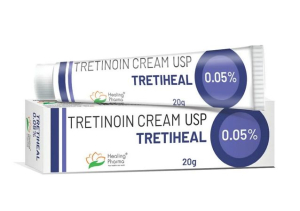
Tretinoin Cream — For Acne and Anti-Ageing
Tretinoin Cream contains all-trans retinoic acid — the biologically active form of Vitamin A — in a cream vehicle formulated for normal to dry skin types. Available in three concentrations in Canada: 0.025% (lowest, for sensitive skin or beginners), 0.05% (standard, most common starting concentration), and 0.1% (highest concentration, for experienced users or dermatologist-directed therapy).
Acne treatment with tretinoin cream: Tretinoin cream is a cornerstone of evidence-based acne management in Canada, included in all Canadian Dermatology Association (CDA) acne treatment algorithms as a first-line topical agent. It works by normalising follicular keratinisation (preventing comedone formation), accelerating cell turnover to expel existing comedones, and reducing inflammation. Tretinoin is typically combined with:
- Benzoyl peroxide (morning) + tretinoin cream (night) — the most evidence-based topical acne combination in Canada; benzoyl peroxide kills C. acnes bacteria directly and prevents antibiotic resistance; tretinoin normalises the follicle
- Topical antibiotic (clindamycin or erythromycin) — for inflammatory acne; always combined with benzoyl peroxide to prevent resistance; tretinoin complements with comedonal activity
- Oral antibiotic (doxycycline or minocycline) for moderate-severe inflammatory acne — tretinoin used concomitantly to address comedonal component and prevent relapse after antibiotics are stopped
Anti-ageing / photoageing treatment with tretinoin cream — Canadian context: Tretinoin is the most evidence-based prescription topical anti-ageing ingredient available in Canada — backed by over 30 years of randomised controlled trial data demonstrating significant improvement in fine lines, wrinkles, skin texture, pigmentation irregularities, and skin tone after 6–12 months of consistent use. Canadian dermatologists commonly prescribe tretinoin cream for:
- Fine lines and wrinkles — particularly periorbital (around eyes — with care to avoid mucous membranes) and perioral (around mouth)
- Solar lentigines (age spots / sun spots) — especially prevalent in Canadians with significant sun exposure history, cottage/outdoor culture, or a history of not using adequate SPF
- Uneven skin tone and post-inflammatory hyperpigmentation (PIH) — common in acne patients, tretinoin accelerates fading of dark spots left after acne lesions resolve
- Rough skin texture / keratosis pilaris-like roughness from photoageing
- Skin quality improvement in patients seeking cosmetic enhancement without aesthetic procedures
Starting tretinoin cream in Canada — the correct approach:
- Begin with the lowest appropriate concentration: 0.025% or 0.05% for most patients; 0.025% for sensitive skin or rosacea-prone individuals
- Apply a pea-sized amount to the entire face every second or third night for the first 4 weeks — not nightly initially. This allows the skin to acclimatise and reduces retinoid dermatitis
- Increase to nightly use after 4 weeks if tolerated, then consider increasing concentration after 3–6 months if further results desired
- Apply to clean, completely dry skin — wait 20–30 minutes after washing (the "dry skin sandwich" technique reduces irritation)
- Always apply SPF 30+ broad-spectrum sunscreen every morning — tretinoin increases photosensitivity significantly
- Avoid application around eyes, nostrils, and mouth unless specifically directed by a dermatologist
- Moisturiser can be applied over tretinoin ("sandwich" technique: moisturiser → wait → tretinoin → moisturiser) or after tretinoin is absorbed to reduce irritation
Retinoid dermatitis — the expected adjustment period: Most Canadians starting tretinoin cream experience a 4–8 week adjustment period characterised by dryness, flaking, redness, and tightness. This is a normal, expected response — not an allergy — as the skin adapts to accelerated cell turnover. It subsides with continued use in the vast majority of patients. Using a gentle, non-comedogenic moisturiser twice daily and reducing application frequency during the initial weeks minimises this adjustment response.
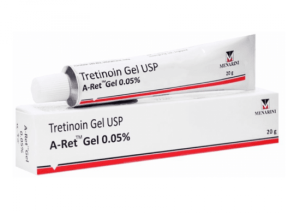
Tretinoin Gel — For Oily and Acne-Prone Skin
Tretinoin Gel contains the same active ingredient as Tretinoin Cream — all-trans retinoic acid — but in a gel (hydroalcoholic) vehicle specifically formulated for oily and combination skin types. The gel vehicle offers several advantages over cream for acne-prone patients:
- Non-comedogenic vehicle: The lightweight gel base is less likely to clog pores than cream formulations — important for acne-prone Canadians
- Enhanced penetration in oily skin: The hydroalcoholic gel vehicle penetrates more effectively through oily skin surfaces where cream formulations may sit on top without adequate follicular penetration
- Matte finish: No greasy residue — better cosmetic acceptability for daily use
- Lower concentrations available: Tretinoin Gel is available in 0.01% and 0.025% — the 0.01% is the lowest concentration available across any tretinoin formulation, making it ideal for extremely sensitive skin or patients new to retinoids
Tretinoin Gel vs Tretinoin Cream — which is right for you:
| Tretinoin Cream | Tretinoin Gel | |
|---|---|---|
| Vehicle | Cream (emollient base) | Gel (hydroalcoholic base) |
| Concentrations available | 0.025%, 0.05%, 0.1% | 0.01%, 0.025% |
| Best skin type | Normal, dry, mature, sensitive | Oily, combination, acne-prone |
| Moisturising effect | Yes — emollient base hydrates | No — can be drying |
| Finish | May feel slightly greasy | Matte, lightweight |
| Anti-ageing use | Preferred — more hydrating | Less commonly used for anti-ageing |
| Acne use | Effective | Preferred for oily/acne-prone skin |
| Canadian climate consideration | Better for dry Canadian winters | Better for humid summer months |
| Starting strength for beginners | 0.025% cream | 0.01% gel (lowest available) |
Canadian climate and tretinoin: Canada's harsh winters — particularly in Ontario, Quebec, Manitoba, Saskatchewan, Alberta, and the Prairies — produce extremely dry, cold air that exacerbates tretinoin-induced skin dryness and irritation. Many Canadian dermatologists recommend starting tretinoin in spring or summer when the skin is less prone to baseline dryness, or switching to the cream formulation during winter months. Humidifiers in the bedroom and rich, non-comedogenic moisturisers (Cerave, Vanicream, La Roche-Posay Toleriane) are particularly important for Canadian tretinoin users during the winter months from November through March.
Accutane vs Tretinoin — When to Use Which
| Accutane (Isotretinoin) | Tretinoin (Cream or Gel) | |
|---|---|---|
| Route | Oral — systemic | Topical — local skin action |
| Potency | Most powerful acne treatment available | Moderate — effective for mild-moderate acne |
| Acne severity for use | Severe nodular/cystic, antibiotic-resistant | Mild to moderate acne (comedonal, inflammatory) |
| Remission after treatment | ~85% permanent remission | Acne returns if treatment stopped |
| Anti-ageing use | No | Yes — Level 1 evidence for photoageing |
| Pregnancy safety | Category X — absolute contraindication | Category C — avoid, especially 1st trimester |
| Side effect burden | Significant — dry skin/lips, joint pain, lipids, mood | Moderate local irritation — manageable |
| Canadian monitoring requirements | Monthly labs + pregnancy test (women) | Minimal — routine dermatology follow-up |
| Health Canada program | Isotretinoin Teratogenicity Awareness Program | Standard prescription |
| Treatment duration | 4–6 months (one course) | Ongoing (maintenance therapy) |
Acne in Canada — The Scope of the Problem
Acne vulgaris is the most common skin disease in Canada — affecting approximately 85% of Canadians between the ages of 12 and 24, and persisting into adulthood in approximately 25–40% of affected individuals. Adult acne (acne in patients over 25) is increasingly recognised as a distinct entity with hormonal, dietary, and stress-related drivers — particularly prevalent in Canadian women where hormonal fluctuations, polycystic ovary syndrome (PCOS), and the psychological stresses of modern working life contribute to adult acne persistence and relapse.
The Canadian Dermatology Association (CDA) estimates that acne imposes significant psychological burden — with rates of depression, anxiety, social withdrawal, and reduced quality of life comparable to serious chronic diseases including asthma and arthritis. Scarring acne in particular causes permanent physical and psychological harm that justifies early aggressive treatment — the argument for early isotretinoin use rather than prolonged antibiotic courses that delay definitive treatment and allow ongoing scarring.
Antibiotic resistance and Canadian acne management: C. acnes antibiotic resistance is an increasing problem in Canadian dermatology. The routine prolonged use of tetracycline antibiotics (doxycycline, minocycline) for acne — sometimes for years — has contributed to rising resistance rates. The CDA and Choosing Wisely Canada now recommend limiting antibiotic courses for acne to a maximum of 3 months, always combining with topical benzoyl peroxide (which does not contribute to resistance), and transitioning to retinoid-based maintenance therapy. Isotretinoin avoids antibiotic resistance entirely — it is the antibiotic-free path to acne remission for appropriate candidates.
Delivery to All Canadian Provinces and Territories
drugs-canada.com ships all skin care products discreetly to all Canadian provinces and territories. Standard delivery: 4–9 business days.
Ontario (Toronto, Ottawa, Hamilton, London, Brampton, Mississauga, Kitchener-Waterloo) — Quebec (Montreal, Quebec City, Laval, Gatineau, Sherbrooke) — British Columbia (Vancouver, Surrey, Burnaby, Victoria, Kelowna, Abbotsford) — Alberta (Calgary, Edmonton, Red Deer, Lethbridge) — Manitoba (Winnipeg, Brandon) — Saskatchewan (Saskatoon, Regina) — Nova Scotia (Halifax, Sydney) — New Brunswick (Moncton, Saint John, Fredericton) — Newfoundland and Labrador (St. John's, Corner Brook) — Prince Edward Island (Charlottetown) — Northwest Territories (Yellowknife) — Yukon (Whitehorse) — Nunavut (Iqaluit).
All orders are dispatched in plain, unmarked packaging with no reference to the contents or sender. Every order includes a tracking number.
Frequently Asked Questions — Prescription Skin Care in Canada
What is the difference between Accutane and tretinoin? Accutane (isotretinoin) is an oral retinoid that produces a permanent, dramatic reduction in sebaceous gland activity — achieving complete acne remission in approximately 85% of patients after one course. It is reserved for severe or antibiotic-resistant acne. Tretinoin (cream or gel) is a topical retinoid applied directly to the skin for mild-to-moderate acne and photoageing. Tretinoin must be continued long-term — acne returns when it is stopped. Tretinoin also has Level 1 evidence for reversing photoageing (fine lines, pigmentation, texture); isotretinoin does not have an anti-ageing indication.
Why is isotretinoin (Accutane) so tightly regulated in Canada? Isotretinoin is classified as Pregnancy Category X — it causes severe, characteristic birth defects in virtually every exposed fetus. Even one dose taken during pregnancy can cause craniofacial malformations, cardiac defects, and CNS abnormalities incompatible with life. This is why Health Canada requires all women of childbearing potential on isotretinoin to use two simultaneous forms of effective contraception, have monthly pregnancy tests, and be enrolled in the Isotretinoin Teratogenicity Awareness Program managed by their prescribing dermatologist. These safeguards are non-negotiable.
Is tretinoin the same as retinol? No — tretinoin and retinol are related but distinctly different. Tretinoin (retinoic acid) is the biologically active form — it binds directly to nuclear retinoid receptors without requiring metabolic conversion. Retinol (found in OTC products) must first be converted to retinaldehyde and then to retinoic acid in the skin — a multi-step conversion that is slow and incomplete, resulting in approximately 20 times less potency than tretinoin at equivalent concentrations. OTC retinol products cannot replicate the clinical results of prescription tretinoin.
How long does tretinoin take to work for acne in Canada? Most Canadian dermatologists counsel patients to expect a 8 to 12 week minimum before significant acne improvement with topical tretinoin, with continued improvement through 6 months of consistent use. For anti-ageing benefits (fine lines, texture, pigmentation), 6 to 12 months of consistent nightly use are required before significant cosmetic improvement is visible. The initial 4 to 8 weeks often feel discouraging due to purging and retinoid dermatitis — persistence through this period is essential.
Do I need a prescription for tretinoin or isotretinoin in Canada? Yes — both tretinoin and isotretinoin are Schedule F prescription drugs in Canada regulated by Health Canada, available only with a valid Canadian prescription at regulated pharmacies. Canadian dermatologists and family physicians prescribe these medications. Telehealth platforms including Maple, Dialogue, and Tia Health allow online dermatology consultations that can facilitate prescriptions. We strongly recommend consulting a Canadian dermatologist or physician before starting either medication.
How long does delivery to Canada take? Standard delivery to all Canadian provinces and territories takes 4 to 9 business days. All orders arrive in plain, unmarked packaging with no reference to the contents or sender. Every order includes a tracking number.
All information on this page is for general informational purposes only and does not constitute medical advice. Isotretinoin and tretinoin are prescription medicines in Canada — always consult a qualified Canadian dermatologist or physician before starting treatment. Isotretinoin must never be taken during pregnancy or by women not using two effective contraception methods simultaneously.